Once upon a time, the path to a Counter-Strike Major was paved with nothing more than a game client, five hopeful souls, and a dream wrapped in bandwidth. The open qualifier stood like an ancient, welcoming tree—its branches low enough for anyone to climb, its shade promising a chance at glory. A college student with midnight snacks, a veteran clinging to fading reflexes, a teenager whose desk was a kitchen table—all could step into the same digital arena and, for a few breathtaking hours, believe they might touch the stars. Then, in 2024, the door that had swung wide for two decades began to close, not with a slam, but with a quiet, administrative click.
It was the year of the Shanghai Major, the second Counter-Strike 2 spectacle in the calendar, and Perfect World—the tournament’s orchestrator—unfurled a blueprint that left the old guard gasping. For North America, Europe, and South America, there would be no open bracket. No Cinderella stories, no anonymous war cries echoing from server to server. Instead, the closed qualifier would open its velvet rope only to those who had already proven their worth in the cold arithmetic of Valve’s regional rankings.
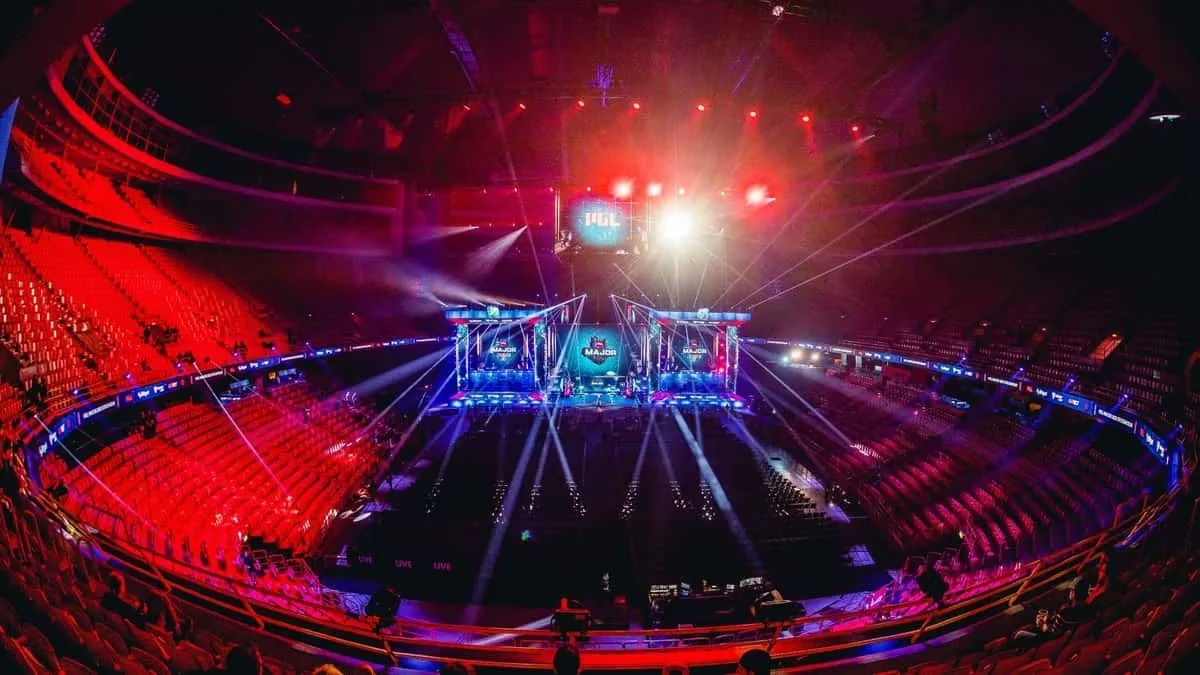
Valve, the keeper of the rules, had drawn a line in the sand. Their logic was precise, almost surgical: open qualifiers had become a smuggler’s route for cheaters. By culling the open bracket, they could starve the rule-breakers of oxygen and let only the verified elite breathe the rarified air of Major contention. The rulebook stated plainly—open qualifiers would only exist where a region lacked enough high-ranked teams to fill a closed slate. And in Europe, North America, and South America, the shelves were full. The system looked at the numbers, shrugged its mechanical shoulders, and decided the little guys could stay home.
It moved the Counter-Strike 2 circuit closer to how Riot Games operates its Valorant Champions Tour. But the resemblance, fans were quick to point out, was only skin-deep. In Valorant, top teams compete in centralized leagues and claw through playoff brackets for major tickets. Rankings are backstage whispers, not the main act. And Riot had handpicked its International League rosters, rarely letting tier-two dreamers through the gate. Valve, at least, didn’t pick names from a velvet bag. It let the rankings—an unforgiving mirror of past results—do the choosing.
‘Hey, you know what this reminds me of?’ the community whispered to itself in Discord servers and Twitter threads. ‘Remember when a bunch of nobodies could just show up and almost win the whole damn thing?’ The open qualifier was the soul of Counter-Strike—a chaotic, beautiful mess where miracles were born in overtime. Hac1, a voice that carried far, put it bluntly on social media: “Removing open qualifiers where everyone with a dream could make it to the major is insane, it’s what set CS apart from games like VALORANT.”
And they weren’t wrong. The shift felt like a betrayal of the very mythos the game had built. A closed circuit, they cried, is a country club where only the invited can sip champagne. A petition bloomed on Change.org, its plea simple: Don’t let Counter-Strike become a gated garden. The echo was loud, but would it reach ears that mattered?
Now, in 2026, the dust has settled and the landscape has reshaped itself around that quiet click. The Major remains a cathedral of competition, its ceremonies as grand as ever, but the pilgrimage routes have narrowed. Smaller organizations, the ones who used to unearth rough diamonds from the open qualifier mines, now wander a barren field. Tier-two talent, once fueled by the chance to stun the world, finds fewer stages to scream on. The open bracket’s absence has not killed the dream—dreams are stubborn—but it has chained them to a ladder that feels vertical and endless.
Valve, for its part, has not been deaf. The whispers in the corridors of 2026 suggest a middle path is being carved—perhaps a hybrid system where a limited open gauntlet funnels into the closed qualifier, or a residency program that feeds new blood into the ranked ecosystem. ‘Look, they can’t just pull up the drawbridge and walk away, right?’ That’s what the hopeful say, half-believing it themselves. But nothing is certain yet. The rulebook remains a stern guardian, and the rankings—those cold, hard digits—continue to sort the worthy from the wistful.
The poetry of Counter-Strike was always in its accessibility. A Major victory was never just a trophy; it was a testimony that the game’s heart beat equally for the king and the peasant. The closed era has reminded us that even legends must adapt to safer, more predictable rhythms. Yet, every time a new star emerges from an unexpected corner—a young squad that climbed the ranking mountain against all odds—the old spark flickers. Perhaps the open qualifier’s spirit wasn’t in the brackets themselves, but in the stubborn, irrational belief that anyone, anywhere, could be next. That belief, at least, no admin can delete.
So here we stand, at a crossroads where a beloved chaos was traded for order, where the gatekeeper’s list grew longer and the walk-in line was removed. The game is still beautiful. The headshots still crackle. The clutches still make us leap from our chairs. But somewhere, in a dimly lit room, a kid with a dream logs on anyway—not for an open bracket that no longer exists, but for the grind that might, someday, turn a number into a name, and a name into a legend. The door is no longer wide open, but it isn’t sealed shut. It’s just… heavier now. And that, perhaps, is the quietest tragedy of all.