I remember the exact moment I stopped trusting my kill feed. I had just sprayed an enemy through a smoke cloud on Taego, and before I could even process the knock, my squadmate said, 'That guy was definitely walling.' We didn't celebrate. We just reported him and requeued. That feeling—the quiet resignation after yet another suspicious death—was exactly what the PUBG: BATTLEGROUNDS Anti-Cheat Roadmap addressed when it finally landed.
For a long time, I thought anti-cheat was just the game's way of saying we banned some accounts. But the roadmap admitted something more uncomfortable: illegal software has evolved so much that old detection methods can't keep up. Cheats are smarter, subtler, and faster than before. Reading that felt validating, because as a player, I have felt it.
The Structural Shift We Needed
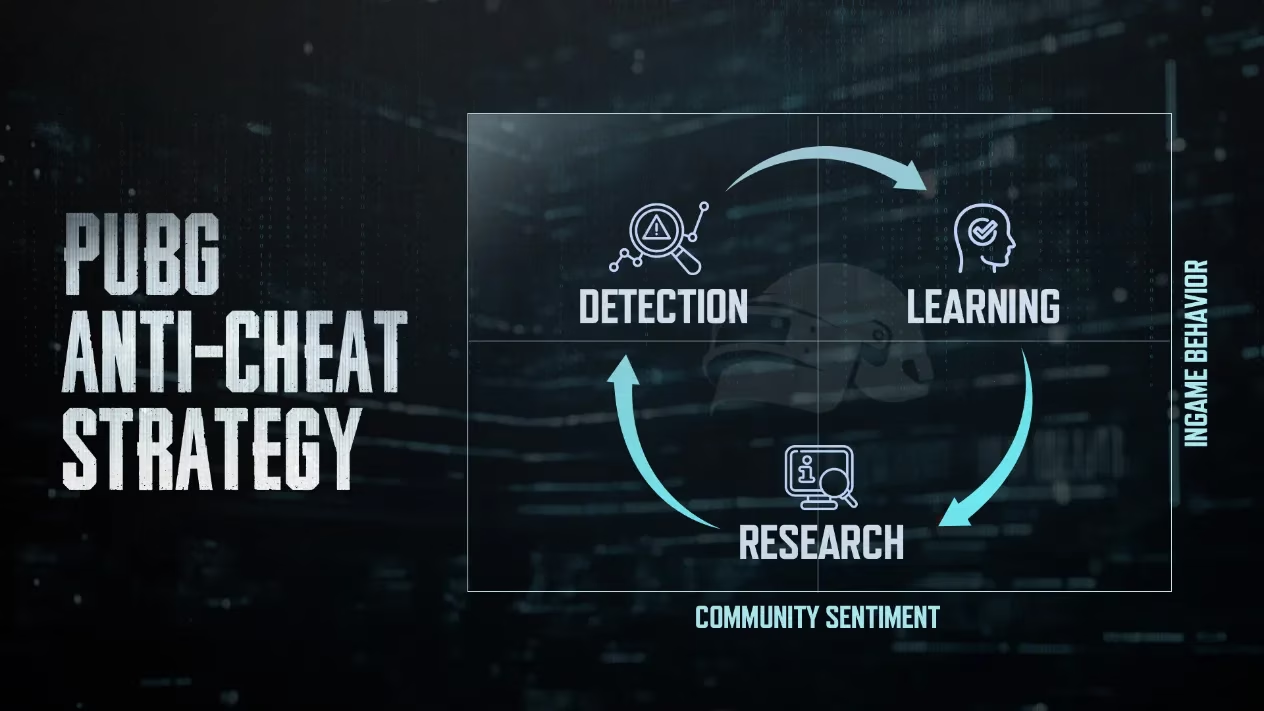
The biggest change isn't a single new anti-cheat feature. It's a shift in philosophy. Instead of the old whack-a-mole style of blocking one cheat function at a time, PUBG is trying to build a self-sustaining system that detects, learns, classifies, and adapts on its own. That sounds technical, but in practice it means the game should get better at recognizing cheaters before they ruin my evening, not after.
I've reported players and wondered if the report even mattered. The old system had two major problems: first, there was a delay between my report and any actual ban. Second, the ban criteria didn't always match how I actually experienced cheating in a match. The roadmap directly addressed both.
Inside the Game: Faster and More Accurate Detection
On the detection side, PUBG is using AI-powered tools to analyze gameplay patterns and suspicious behavior in real time. This isn't just looking for obvious aimbots. They're rolling out more precise detection technologies that can identify specific abnormal behaviors and trigger automatic bans quickly.
What I appreciate is that they didn't pretend reports alone would solve things. Instead, reports, gameplay data, and community feedback are supposed to feed into the system like a compass. That matters to me because I don't report for revenge—I report because I want the next match to feel fair.
Some key in-game detection goals from the roadmap:
-
🔍 Analyze suspicious actions, abnormal movements, and repetitive patterns
-
🤖 Use AI to detect potential cheat usage in real time
-
⚡ Trigger automatic bans with speed and accuracy
-
🧠 Build a positive feedback loop of detection, learning, and refinement
Outside the Game: Blocking Cheaters Before They Get In
This was the part that surprised me most. Cheating isn't just an in-game problem anymore. Access routes, stolen accounts, and cheat distribution networks all matter. PUBG is now working on a layered defense that blocks cheaters from entering or re-entering the game altogether.
One planned feature is two-factor authentication to stop stolen accounts from being used for cheating. If an account is leaked, only the rightful owner can log in. That's a huge deal, because a lot of cheaters don't use their own accounts. They steal someone else's, buy a boost, or create endless new identities. The team also mentioned legal obligations like GDPR in Europe, Korea's Personal Information Protection Act, and China's Data Security Law, which means the rollout may take time. But the direction is clear.
They're also developing hardware-based authentication to prevent banned users from returning on the same device with a new account. And they're preparing to enforce certain Windows OS security features by default. That could stop illegal programs from running in the first place. The cautious part is understandable—PUBG has to account for different regions and system environments before forcing changes.
False Bans Still Scare Me
I won't lie: as a legitimate player, the more aggressive their detection becomes, the more I worry about being falsely banned. I've built my inventory, my stats, and my rank honestly. The roadmap acknowledged this concern, which I respect.
They mentioned they are working on systems to better distinguish cheaters from legitimate players. One idea under review is an automated unban system using identity verification. That sounds useful, but they also admitted it comes with security and operational risks, so they are taking time to assess it. I'd rather they move carefully than hand another tool to cheaters.
Reports and the Human Side
There is also a two-track ban system: automated anti-cheat and AI penalties, plus manual review by the anti-cheat team using evidence from in-game and community reports. The roadmap said they revised their review and ban criteria to make manual work more efficient and accurate.
The plan to expand operations staff to five times the current size caught my attention. That means more human eyes on reports, faster response from report to resolution, and more real-time monitoring of community sentiment. Regional managers are supposed to analyze what players are actually experiencing in their region, not just look at global numbers.
This table helped me understand the layers:
| Layer | What It Does |
|---|---|
| In-game detection | AI and anti-cheat tools analyze gameplay and ban cheaters quickly |
| Behavior classification | Uses gameplay style, account activity, and reports to reduce false positives |
| Out-of-game protection | Blocks stolen accounts, enforces security features, and pursues cheat distributors |
| Community feedback | Turns player reports and sentiment into system improvements |
What I'm Watching in 2026
Going into 2026, I'm not expecting a perfect game. Cheaters are persistent. But for the first time in a long while, the conversation feels honest. PUBG said they were cautious in the past because they didn't want to expose their methods to cheat developers. I understand that. But silence made many of us feel ignored.
The roadmap is more than a list of promises. It's a signal that they know short-term suppression isn't enough. They want to block entry routes, detect in match, ban accurately, protect innocent players, and communicate more openly. That's the kind of system I can get behind.
I still report suspicious players. I still get frustrated when I die through cover. But now I feel like my reports and my experience might actually help shape the anti-cheat system. And for a solo queue player who just wants one clean final circle, that means more than any new skin ever could.