I still remember how different yay looked during his OpTic Gaming peak. From the outside, he was the calm, mechanical star who could turn a Valorant server into his own private shooting range. So when Bleed Esports head coach Nikola 'LEGIJA' Ninić explained on Duncan 'Thorin' Shields’ interview what happened in 2024, I found myself nodding like a ranked player who has seen the same story play out in lobbies a hundred times: talent alone does not survive a broken system.
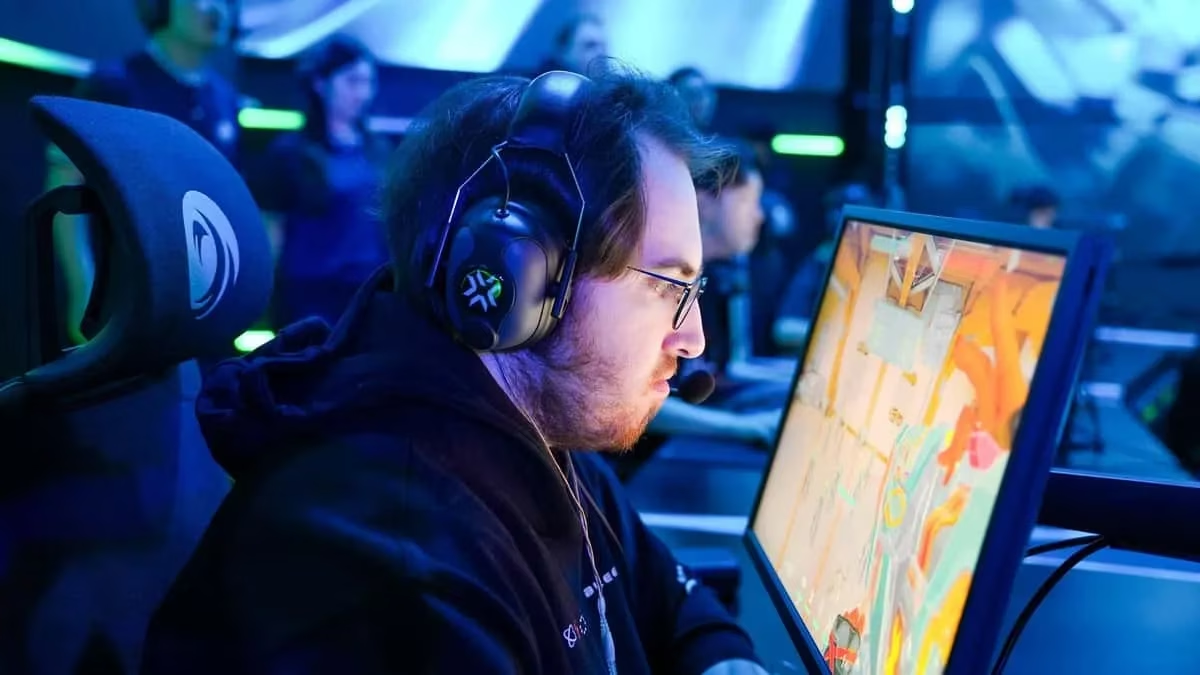
As a regular player watching VCT Pacific from the outside, the headline is simple but brutal. yay’s 2024 season with Bleed was not a case of a star suddenly forgetting how to aim. According to LEGIJA, it was a collision of internal conflict, stage pressure, social-media self-scouting and a playstyle mismatch. The coach said yay almost immediately had issues with in-game leader Ngô 'crazyguy' Công Anh. yay tried to solve the problem, but LEGIJA described crazyguy as not really cooperative, and that tension became a big problem. The coach also explained why Bleed could not simply bench yay: the team had spent too much money on the star signing. That is the kind of roster-building knot that turns a promising project into a pressure cooker with a faulty release valve: the heat was real, but there was no safe way for it to escape.
🎯 The stage was the fracture point
LEGIJA’s most revealing claim was about yay’s mental state. He said yay would dominate scrims but overthink everything during stage matches. In the coach’s words, the moment yay got on stage, the pressure hit him so hard that he lost himself completely. I have felt a smaller version of that in ranked games: you practice a setup, you know the angles, and then one bad round makes you start rewriting the whole map in your head. At the professional level, that spiral is magnified by cameras, standings and the knowledge that a huge transfer fee is sitting on your shoulders.
That is where yay’s habits outside the server made things worse. LEGIJA said yay would go on social media and seek out posts about himself. He also tried to analyze opponents’ previous matches, which caused him to overthink what the enemy was doing during the game. In pivotal rounds, yay would make calls and plays the team had not practiced. For me, that sounds like a chess grandmaster trying to win a blitz game by reciting every opening line he has ever read: the knowledge is impressive, but it can freeze the hand at the exact moment instinct is needed.
🧠 Why the Bleed experiment failed
| Area | What LEGIJA said | Why it mattered |
|---|---|---|
| Team chemistry | yay had issues with crazyguy almost immediately | The in-game leader and star player were not aligned |
| Roster flexibility | Bleed could not bench yay because of his cost | The team was locked into a failing structure |
| Stage mentality | yay dominated scrims but lost himself under pressure | Practice form did not translate to official matches |
| Preparation | yay overanalyzed opponents and sought social-media posts | He added noise instead of clarity |
| Role fit | LEGIJA said yay was a great fragger but lacked aggressive Duelist tendencies | The team needed pressure, not just precision |
LEGIJA also pushed back on the idea that yay was simply a bad player. He called yay a great fragger, but said the North American lacked the aggressive tendencies required to play Duelist at a high level. That distinction matters. In Valorant, a Duelist is not only a kill machine; the role asks for tempo, entry pressure and a kind of reckless confidence that pulls a team through chokepoints. If yay was overthinking every enemy rotation, he was playing like a lighthouse keeper who reads every shipwreck report before steering his own boat: cautious, informed, and somehow less able to move.
📉 The numbers behind the story
yay’s fall is jarring because his Envy/OpTic Gaming run was so strong. He made multiple major tournaments and won a Masters trophy. The Masters Reykjavík 2022 winner looked like one of the most reliable stars in the world. Then 2023 arrived: across his time with Cloud9 and Disguised, he won only one match at the professional level. In 2024 with Bleed, he matched that total with one win. That is not the resume of a player who forgot how to click heads. It is the resume of a player caught in a bad environment, bad timing and bad mental feedback loops.
Looking back from 2026, the 2024 Bleed chapter still feels like a warning for every VCT roster that tries to buy its way into instant contention. A star signing can raise a team’s ceiling, but only if the locker room, the in-game leadership and the player’s headspace are ready for it. LEGIJA’s account makes Bleed sound less like a superteam and more like a group trying to assemble a puzzle with pieces from different boxes.
🔄 What happens next
yay was listed as a restricted free agent after the Bleed stint, and the natural question was whether another VCT team would take the gamble for 2025 and beyond. As an ordinary player, I would still bet on the talent. The OpTic version of yay was not a mirage. But I would also want any future team to ask harder questions: Can the IGL and the star actually communicate? Is the Duelist role built around yay’s strengths? Does the player have a plan for handling stage pressure that does not involve scrolling through every post about himself?
Those are not glamorous questions. They do not fit neatly into a highlight reel. But they are the difference between a roster that looks terrifying on paper and one that actually wins on stage. LEGIJA’s interview did not bury yay; it explained a collapse in human terms. And for anyone who has ever queued into a match believing talent should be enough, that is the uncomfortable lesson: sometimes the server is the easiest part.