It’s 2026, and Valve’s long-running drama with loot boxes just keeps writing new chapters—like a slot machine that never stops spinning. The company behind Steam and Counter-Strike 2 is once again in the legal crosshairs, this time from consumers in Washington state. Less than two weeks after the New York Attorney General dropped a bombshell lawsuit demanding “full restitution” for players, a fresh class-action complaint now alleges that Valve’s entire loot box ecosystem is a carefully engineered gambling trap, not just a harmless feature for surprise-hunters. The case, filed on February 25, paints Steam’s marketplace as a digital casino where the house always wins, and where the algorithmic roulette wheel has been rigged from the start.

The new complaint leans heavily on Washington state’s own legal definition of gambling: “staking or risking something of value upon the outcome of a contest of chance or a future contingent event not under the person’s control or influence.” According to the plaintiffs, Valve’s loot boxes tick every single box. You put in real money (or Steam Wallet funds, which translate directly to real cash), you spin the virtual wheel, and what pops out is entirely beyond your control. But the argument goes deeper than just abstract definitions. It zeroes in on the deliberate architecture of the Steam market, where those shiny virtual items—from weapon skins to graffiti—can be resold for Steam Wallet credit. That credit, in turn, buys actual games, hardware, or more cases. It’s a closed loop of value that erases the fantasy line between “just for fun” and “financial stakes.”
Think of Valve’s design as a master illusionist who has built a hall of mirrors where every reflection shows a dollar sign. The items feel real because they can be traded, sold, and obsessed over. The complaint describes this tangible monetary value not as a byproduct, but as “a product of Valve’s intentional design choices.” And the psychology behind it? Pure Vegas. The filing states that loot boxes use the same unpredictable reward schedules as casino games, slot-machine-like audio-visual fanfares, “near miss” animations that trick the brain into thinking a victory was just a pixel away, and 24/7 availability without a single cooling-off period. It’s as if a neuroscientist and a game designer sat down together and decided to build a Skinner box that accepts credit cards instead of cheese pellets.
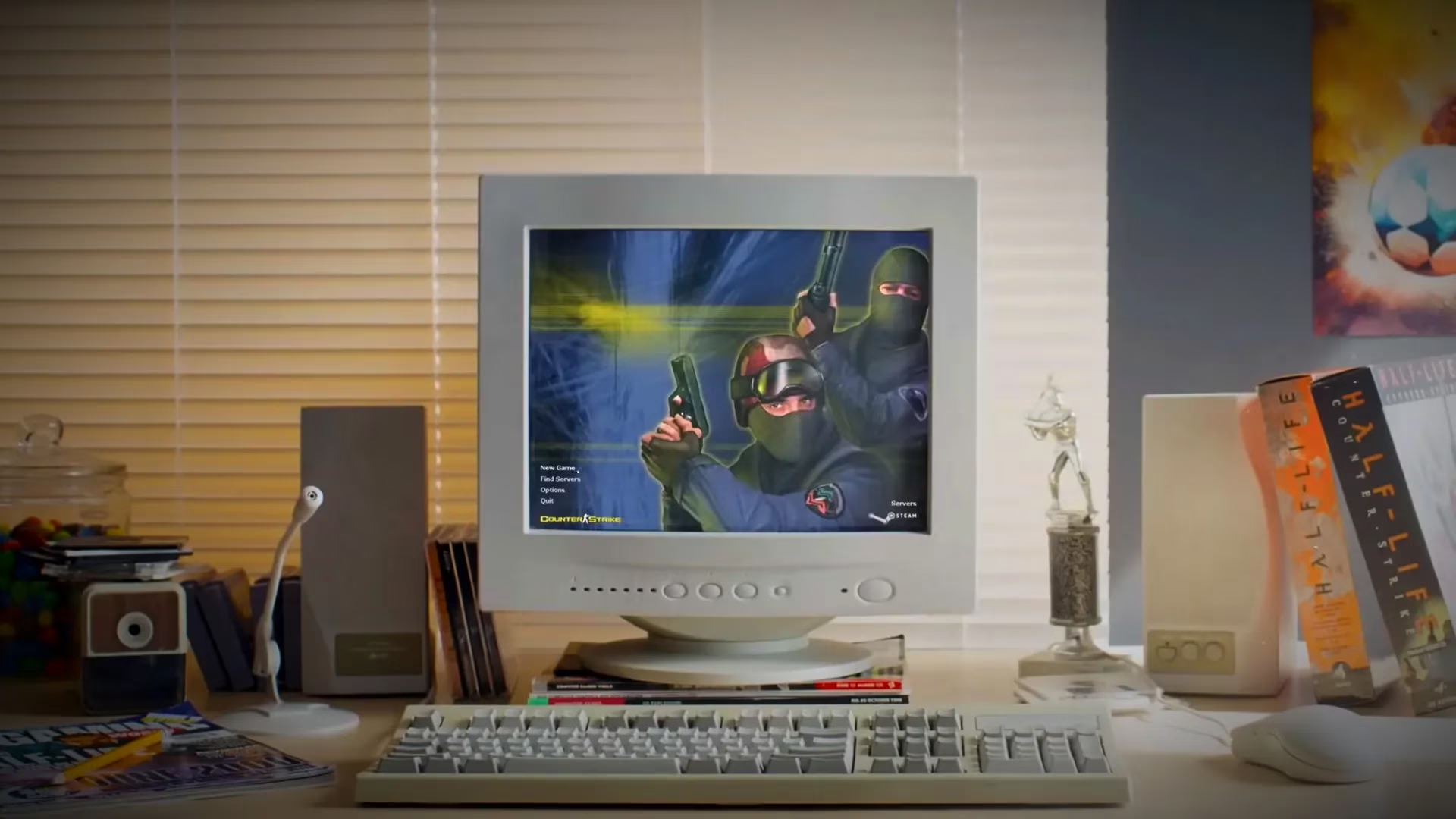
One of the most pointed allegations is that Valve knew children were on the other end of these transactions—and did nothing meaningful to stop it. The lawsuit claims there’s no robust age verification or parental consent mechanism in place, effectively allowing minors to gamble with real money. Instead of erecting safety rails, the company allegedly optimized the experience to extract even more cash from younger players. This echoes earlier criticisms, but now it’s woven into a formal legal argument with the potential for sweeping restitution. Steve Berman, the attorney behind the class action, didn’t mince words: “Consumers played these games for entertainment, unaware that Valve had allegedly already stacked the odds against them. We intend to hold Valve accountable and put money back in the pockets of consumers.”
It’s not the first time Valve has tried to deflect such criticism. In previous motions, the company argued that “people enjoy surprises” and that opening cases is fundamentally no different from buying a Kinder Egg. But the comparison crumbles under scrutiny. A Kinder Egg gives you a fixed toy; the joy is in the unwrapping, not in a chance to resell the plastic figurine on a marketplace for real money. Moreover, the lawsuit highlights how the Steam Community Market itself becomes a temptation vortex—an engine that turns rare skins into obsession currency. And with Counter-Strike 2’s economy now boasting billions of dollars in annual case openings and skin trades, the stakes have never been higher.

What makes this moment particularly dangerous for Valve is the pincer movement of litigation. On one side, a state government is demanding accountability under consumer protection laws. On the other, private citizens in Washington are building a case that could open the floodgates to class certification and massive damages. And unlike the earlier YouTube crackdowns on gambling content, which only nudged the platform’s visibility, these lawsuits target the foundational revenue model that helped make Steam a titan. If the courts agree that loot boxes are illegal gambling, the ramifications could reshape not just Counter-Strike 2 but the entire free-to-play and live-service industry.
Valve has always been something of a reluctant emperor—a company that prefers to let algorithms run the kingdom while it retreats into hardware projects and game development. But the hands-off approach is exactly what critics point to as evidence of deliberate indifference. The lawsuit alleges that the system didn’t just emerge organically; it was engineered. Every facet, from the drop rates to the market fees, was tuned like a finely calibrated instrument designed to maximize engagement and revenue, with safety measures left conspicuously absent. It’s the difference between a playground and a casino floor: both might have games of chance, but only one is built to keep you inside and spending until your wallet is light.
Looking ahead, 2026 could become the year that legal pressure finally forces Valve to change course. Whether through settlement, regulatory intervention, or a landmark ruling, the era of unregulated loot boxes may be reaching its final level. For now, players and parents are watching closely, wondering if the next update to Steam won’t just tweak weapon balance—but the entire ethical balance of a billion-dollar surprise.