In 2026, discussions of Valorant's Patch 9.08 and Patch 9.10 still serve as a useful snapshot of Riot Games' approach to map clarity, weapon feel, and competitive integrity. The developer update that introduced those changes did not treat them as isolated tweaks. Instead, it connected Sunset's geometry, recoil behavior during fire-rate boosts, and stricter anti-cheat enforcement into one broader balance conversation. The details below describe the announced direction in third-person form; because the live game has continued to evolve, exact values and current implementations may differ from the original preview.
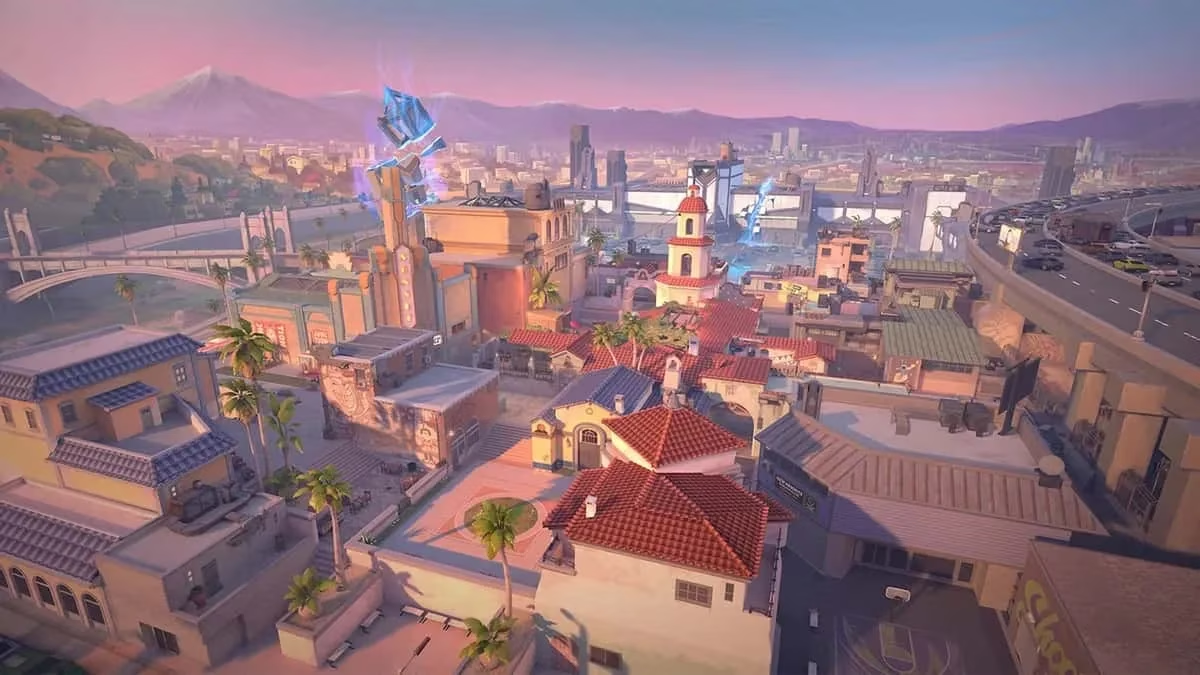
🗺️ Sunset Map Changes: Defense, Post-Plant, and Mid Control
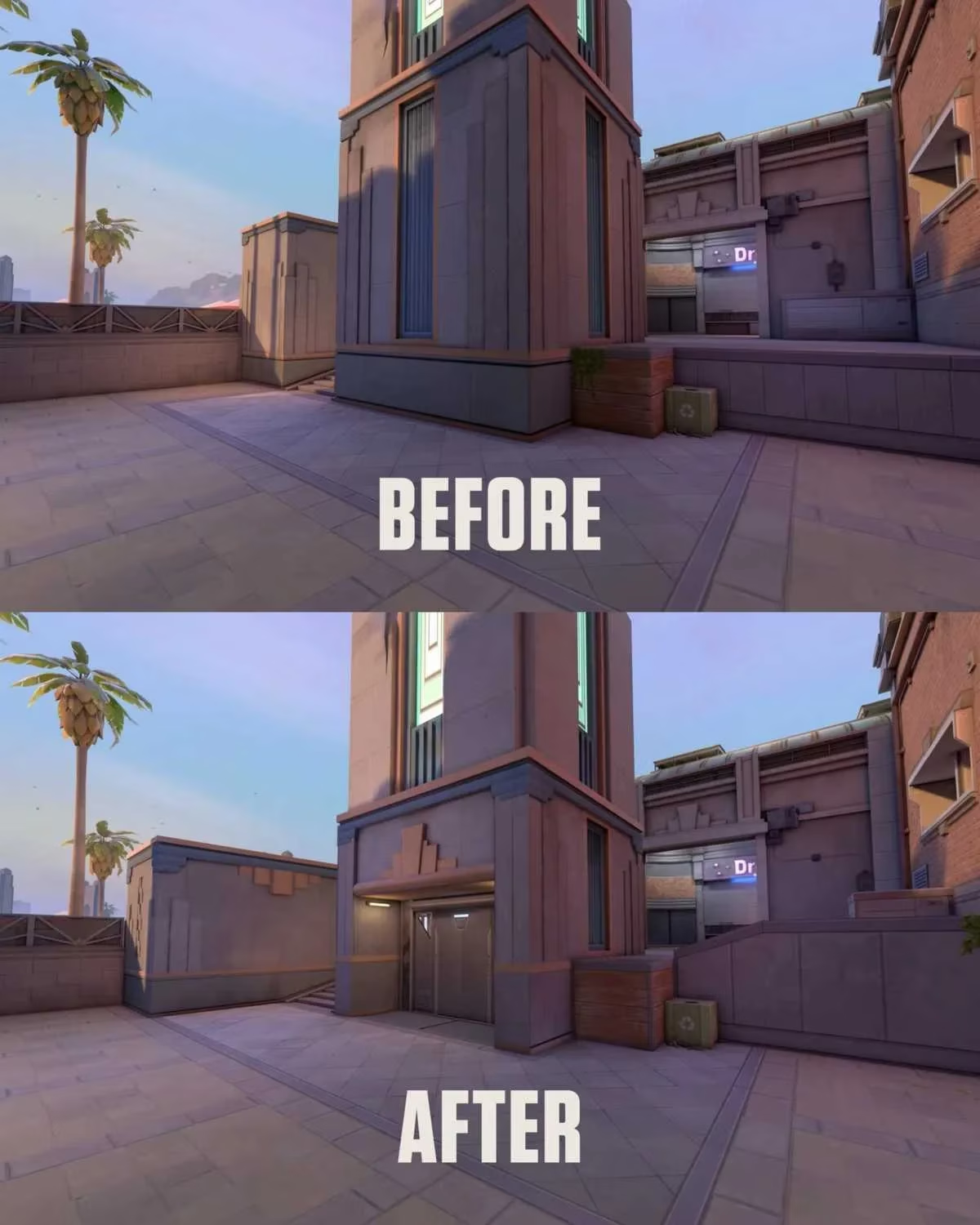
Riot's preview placed Sunset at the center of Patch 9.08. The map adjustments were designed to improve defensive readability and remove a few frustrating hiding spots. B-Site received changes that made it more defensible, and the update specifically targeted the so-called unbreakable Cypher tripwire spot. That removal mattered because it reduced a setup that could feel unfairly rigid for attackers who lacked the right utility.
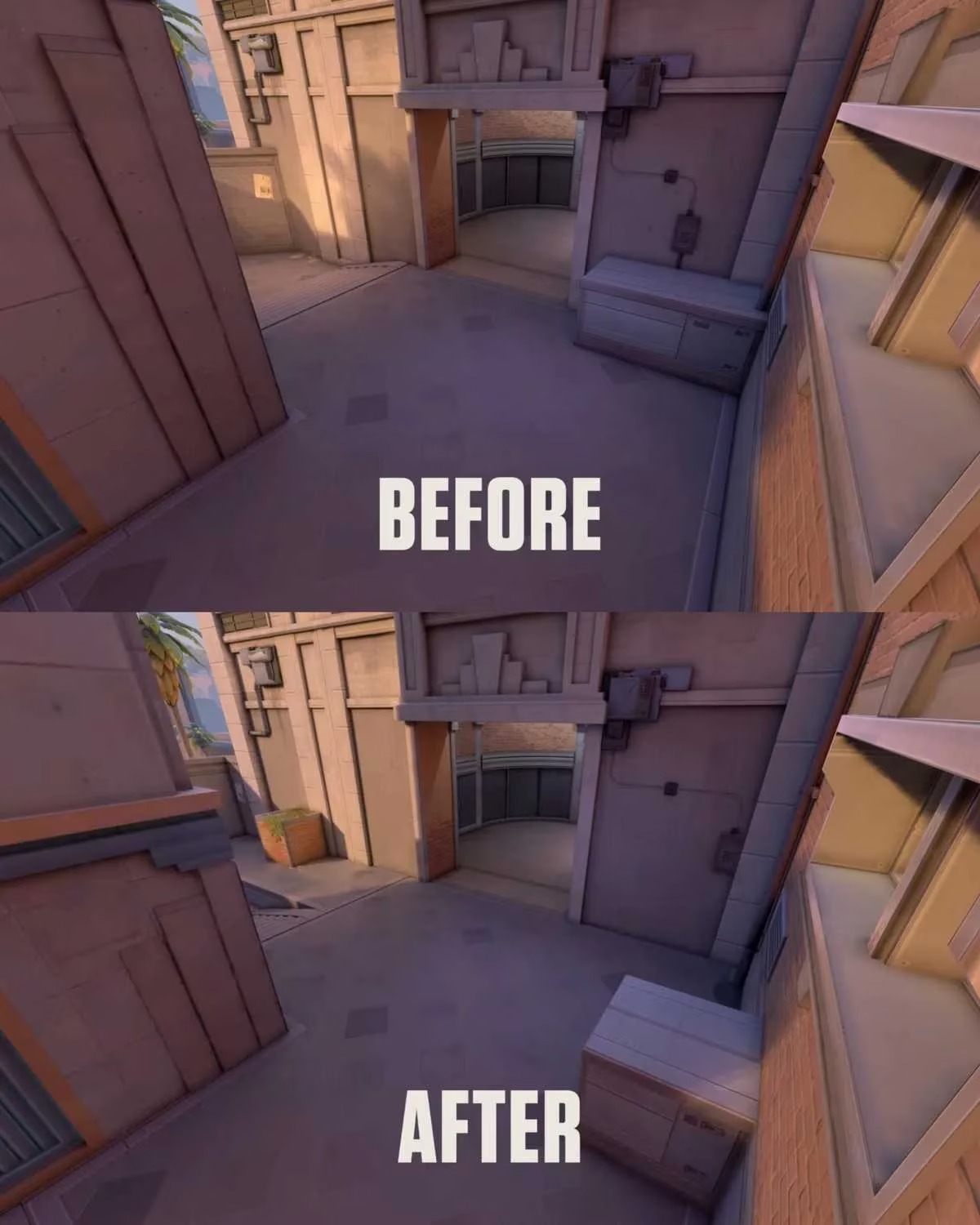
B-Main also changed in a meaningful way. The large box that attackers could use during post-plant was adjusted so that players could no longer hide behind it in the same manner. The same cover could also help attackers wait before pushing onto the site, so the change carried both defensive and offensive consequences. In practical terms, the update aimed to reduce some post-plant gameplay that felt too safe and predictable.
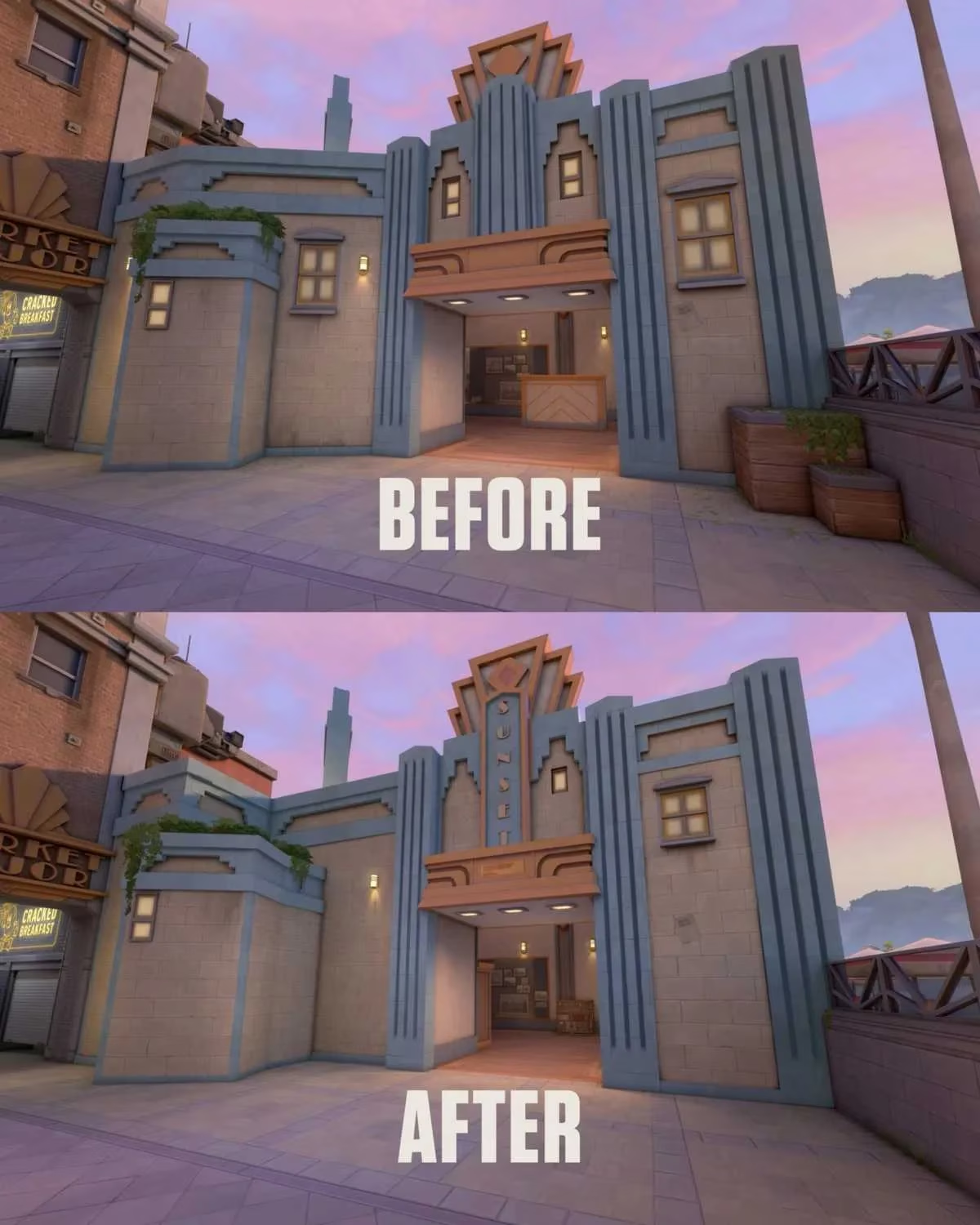
Mid received a smaller but equally deliberate alteration. Riot removed the large tree planted in the corner and replaced it with a box. The stated goal was to help the defending team, likely by simplifying sightlines and creating cover that is easier to read. A-Site was not mentioned in the same set of alterations, so the preview's map focus stayed on B-Site, B-Main, and mid.
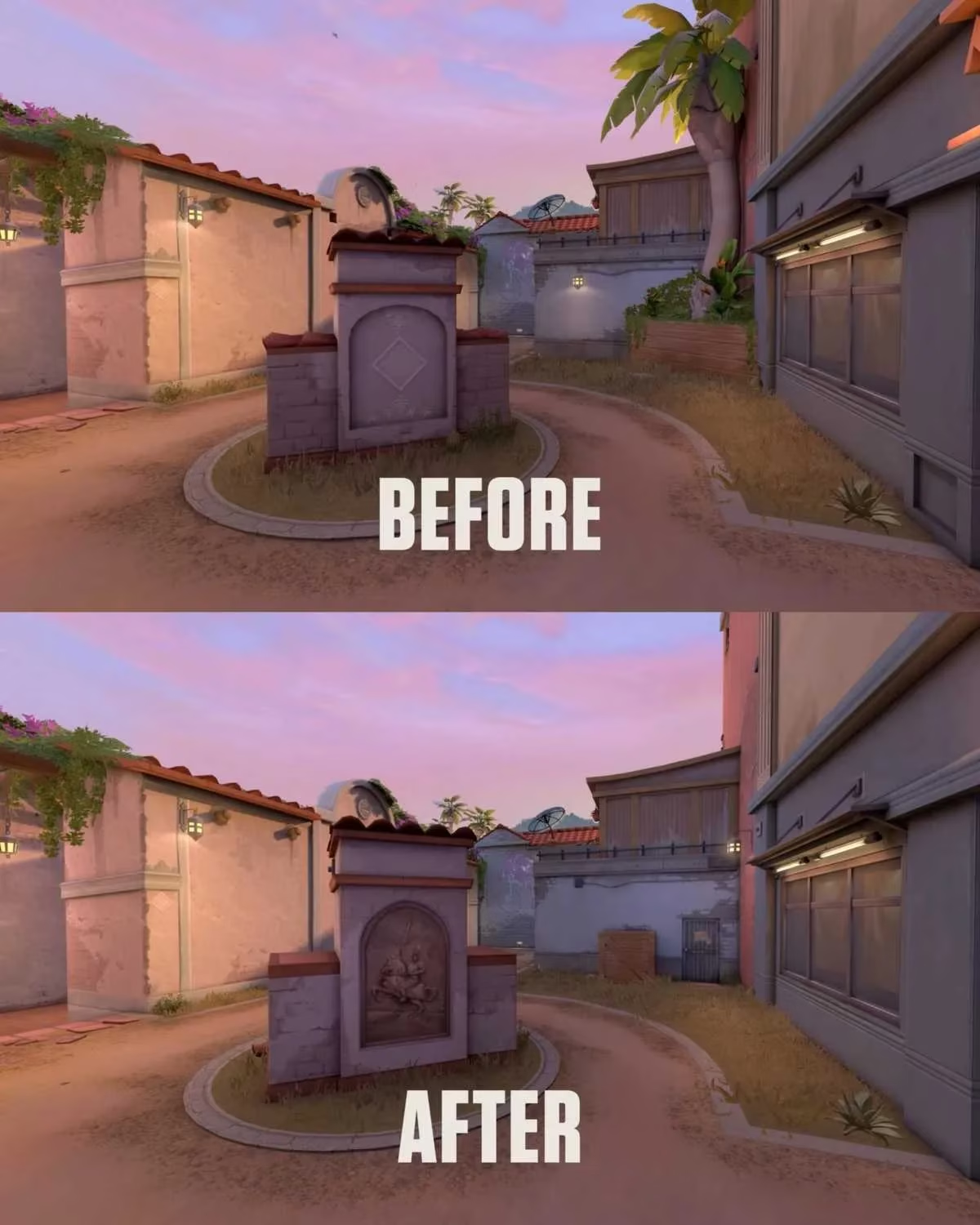
| Sunset area | Announced adjustment | Intended effect |
|---|---|---|
| B-Site ✅ | More defensible geometry; removed the unbreakable Cypher tripwire spot | Cleaner defensive setups and fewer unfair traps |
| B-Main ✅ | Large post-plant box adjusted | Less safe hiding during post-plant and before site pushes |
| Mid ✅ | Large corner tree replaced with a box | Better defensive readability and cover |
| A-Site ➖ | No alterations mentioned | Map focus stayed on B and mid |
🎯 Recoil, Fire-Rate Boosts, and the Ares
The gameplay section of the update also addressed recoil control when fire rate increases through specific abilities. Brimstone's Stim and Reyna's Ultimate were named as examples. The intent was straightforward: when those abilities push fire rate higher, players should find it easier to control recoil. That kind of change is subtle on paper but important in practice, because it affects how reliably players can convert ability tempo into accurate gunfire.
The Ares also received attention. Riot described a buff aimed at improving its viability compared with other weapons in the mid-range price point. The light machine gun has often occupied an awkward space in Valorant's economy, so the announced adjustment signaled a desire to make it a more credible option rather than a niche purchase. In 2026, the exact numbers may have shifted, but the design logic remains recognizable: Riot wanted the Ares to compete more honestly at its price.
🛡️ Patch 9.10, Agents, and Anti-Cheat
Beyond Patch 9.08, the update pointed toward Patch 9.10 and later changes. Cypher and Phoenix were singled out as notable candidates for alteration, described as Valorant's strongest Sentinel and weakest Duelist at the time. Sage and Gekko were also mentioned for updates. That combination suggested Riot was looking at both high-impact utility and underperforming duelist tempo, rather than limiting balance work to one role.
A large portion of the developer update covered anti-cheat and behavioral enforcement. Riot emphasized stronger and faster penalties for severe behavior, including hardware bans. The goal was to make it impossible for harmful players to continue playing Valorant on console or PC after serious violations. For competitive players, that policy direction is as important as any map or weapon change, because it protects the integrity of ranked play and the trust players place in matchmaking.
Overall, Patch 9.08 and Patch 9.10 represented a connected balance philosophy: tighten map geometry, make recoil behavior more predictable during fire-rate boosts, give a mid-range weapon more room to compete, and pair those gameplay changes with firmer enforcement. In 2026, that philosophy still reads clearly, even if the live game has moved on.