In 2026, Valorant is no longer a closed beta experiment on Xbox Series X|S and PlayStation 5. It has become a full console tactical shooter, and a newcomer named Riley learns that the transition from PC-style precision to controller play is not simple. The game still mixes Counter-Strike's round-based gunplay with hero-shooter abilities. For console players, that combination can feel like trying to solve a chess puzzle while riding a bicycle. Riley's first matches are rough. Yet the path forward is clear: practice, patience, and a few hard-earned habits.
🎯 Start in the Shooting Range, Not in Ranked
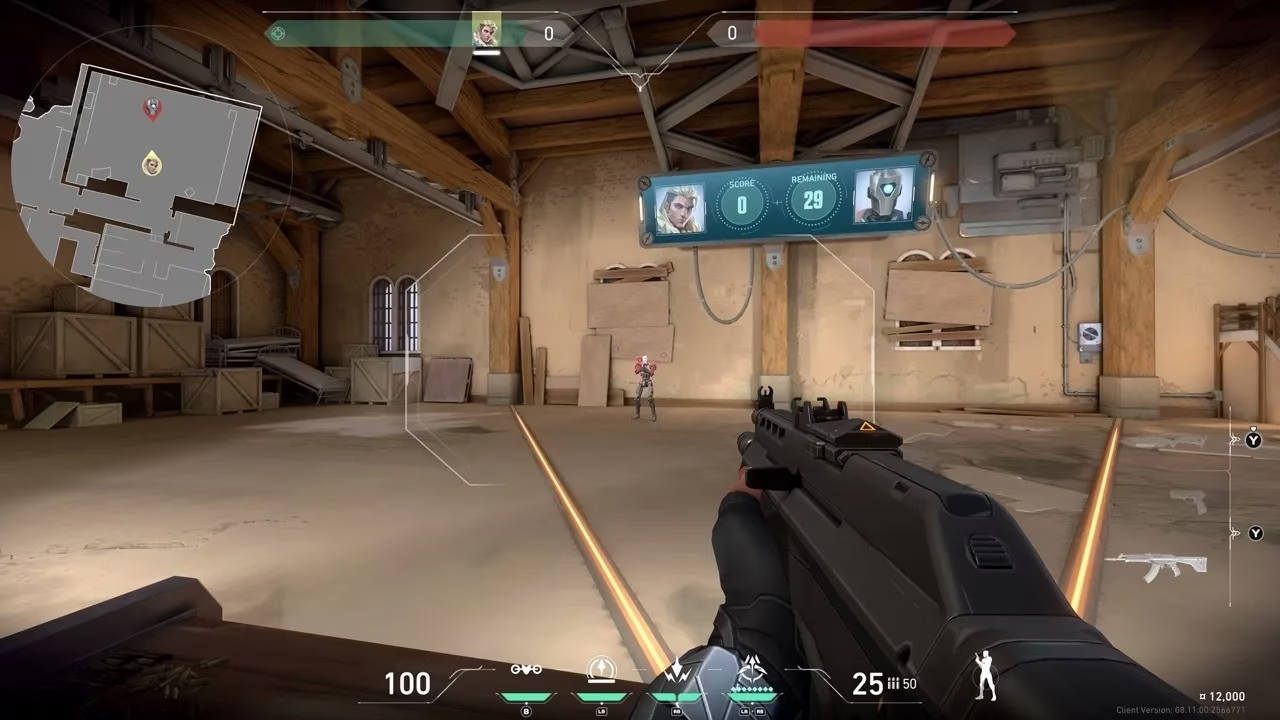
Riley's first mistake is jumping straight into a live match. The shooting range is where every console player should begin. Aiming and accuracy are incredibly important in Valorant. Unless someone has deep experience with games like Counter-Strike, the controller will feel strange at first. There are several aiming modes to tweak: regular sensitivity, focus mode, ADS, and sniper ADS. The regular aiming and focus mode are the two most important to fine-tune. Focus mode is a light aiming mode made specifically for console Valorant. It automatically slows movement and aiming down for extra precision. Riley spends twenty minutes finding a balance between speed and accuracy. She also adjusts how far forward the thumbstick must be pushed before sprinting begins.
| Setting | Why it matters |
|---|---|
| Regular sensitivity | Controls everyday camera speed and flick comfort. |
| Focus mode | Slows movement and aim for precise shots. |
| ADS sensitivity | Affects aiming down sights with rifles and SMGs. |
| Sniper ADS | Separate tuning for scoped weapons. |
| Sprint threshold | Decides when the character starts running loudly. |
🦸 Pick a Few Agents, Not the Whole Roster
As Riley learns Valorant, it is tempting to master every Agent on the roster. They all have unique abilities. But while learning maps, strategies, and aiming, trying to nail down multiple Agents can be overwhelming. Instead, focus on a handful. Options are necessary because someone else might pick the preferred Agent, or the team might need a different role.
There are four Agent roles: Controllers, Duelists, Sentinels, and Initiators. Controllers lock down areas using smokes and other abilities. Duelists excel in one-on-one combat. Sentinels are defense masters. Initiators are great for starting a push. Knowing one Agent in each role lets a player make a balanced pick regardless of the rest of the team.
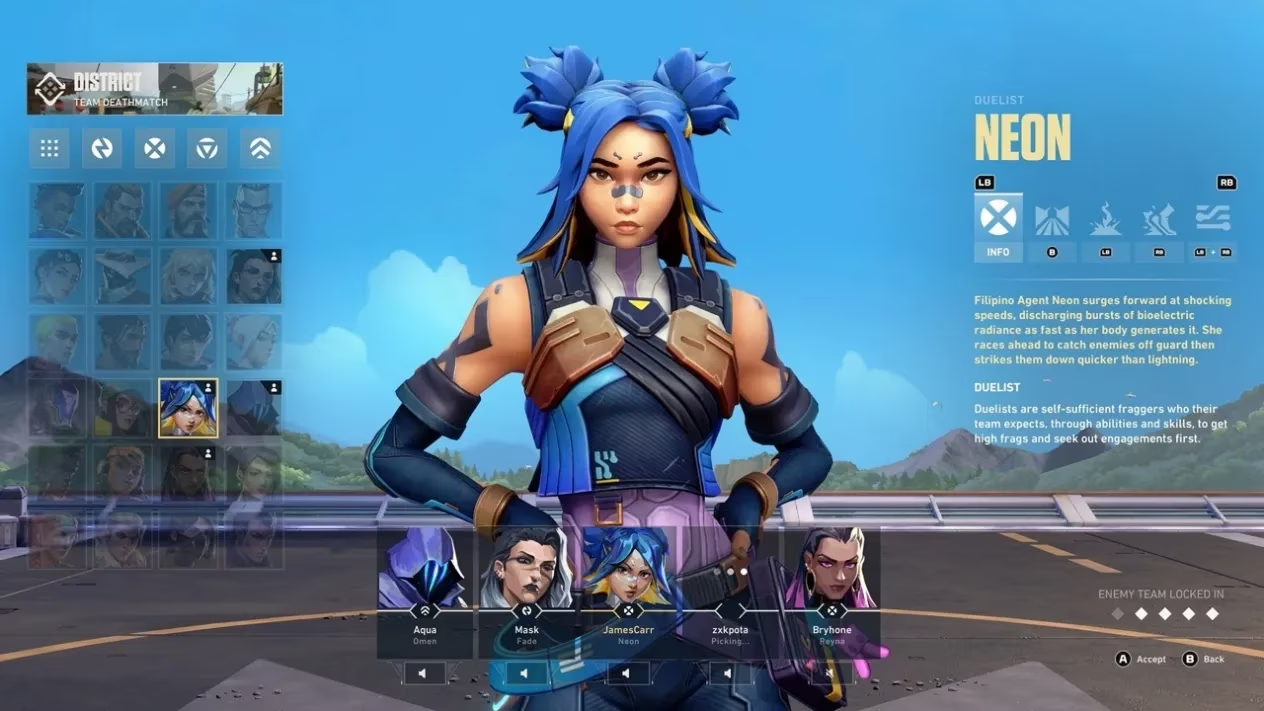
Each Agent has four abilities: three regular abilities and one ultimate. Ultimate abilities charge over multiple rounds. Kills and collecting orbs around the map charge them faster. The other three abilities can be purchased from the shop. Each Agent's signature ability always has one charge at the start of each round. These abilities can be smoke orbs or walls that block vision, traps that blind or limit vision, and even a turret that holds down a sightline. Abilities are an incredibly important part of Valorant. They play a key role in the tactics of each round. But when it comes to taking down the enemy, aim and shooting are always more important. Overwatch sits closer to a 50-50 balance between shooting and abilities. Valorant is probably closer to 70-30, leaning more on shooting.
👣 Move Slowly, Listen Carefully
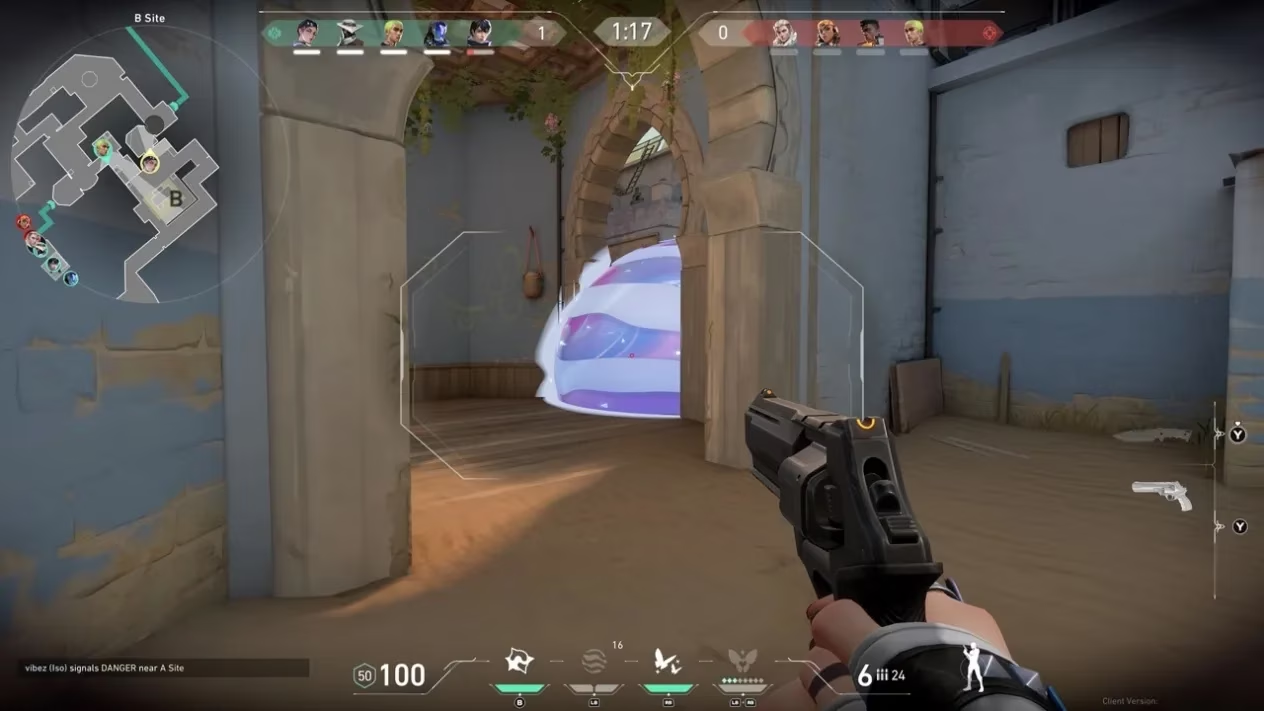
Valorant is a tactical shooter. Running and gunning will not help. Riley learns to move slowly and purposefully for two reasons. First, sound is very important. Moving fast, reloading, and using weapons all make noise. That noise can alert the enemy team to a player's location. Second, moving while shooting destroys accuracy. A player who runs and shoots will lose most gunfights. Instead, walk around corners. Move fast only when necessary. Crouching can add stability to aiming, but most headshots kill. If an enemy rounds the corner with their reticle aimed where the chest should be, it will be pointed at the head instead when crouched.
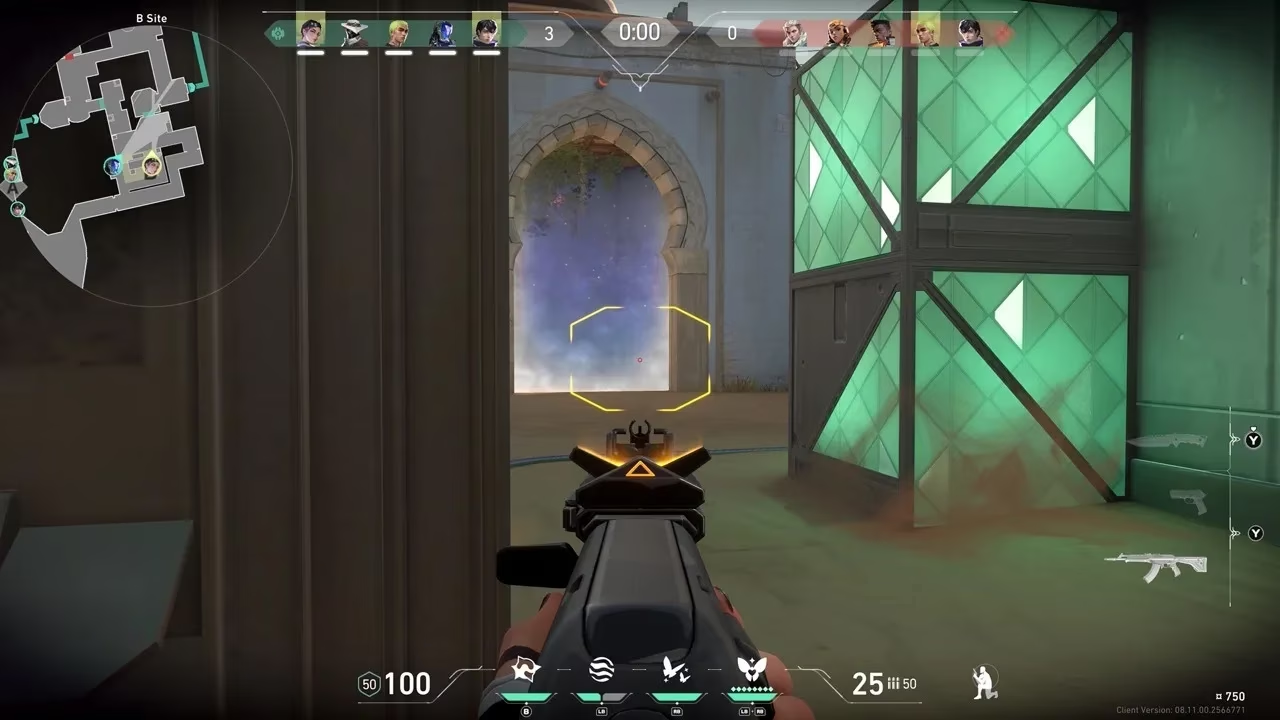
If the slower pace feels unfamiliar, it can take time to get a feel for aiming. The main round-based mode is hard for practice because there are no respawns during rounds. A player can get dropped quickly and then sit around. Luckily, Valorant has two casual modes for aiming practice without feeling punished. Team Deathmatch and Deathmatch both feature a large variety of weapons and unlimited respawns during the match. They let players practice without too much consequence.
🗺️ Learn Maps Like a Local
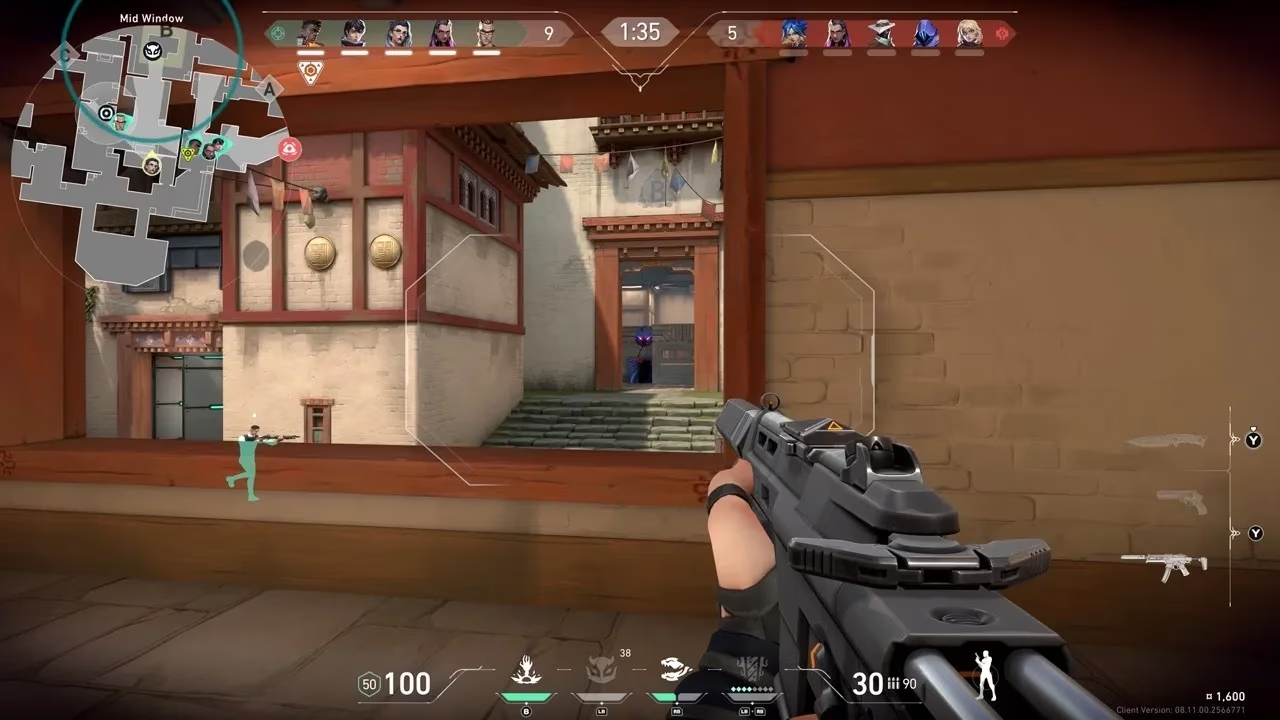
Another important focus is the maps. Not every map is structured the same. Some maps have two bomb sites, while others have three. There are maps with teleporters and interesting side pathing. All of this information matters because nobody wants the other team to get the drop on them. Every match, pay attention to the map. See where attackers typically come from, where defenders set up, and where the action typically takes place. Learn where people can set up on certain corners and hallways. That way, a player can avoid getting caught off guard or turning the wrong way when pushing.
🔫 Weapons and Economy: Buy Smart
There are 18 guns in Valorant, in addition to the starting knife. They are split across different categories: 5 sidearms, 2 SMGs, 2 shotguns, 4 rifles, 3 snipers, and 2 heavies. Each round starts with the knife and the Classic sidearm. All other weapons cost a different amount of money each round. Despite the large arsenal, many players gravitate to a limited set. The Ghost and Sheriff sidearms, Vandal rifle, Spectre SMG, and Marshal sniper are fan-favorites. Most weapons are personal preference, but the heavies are not great picks. They cost a lot and lose accuracy after the first few shots.
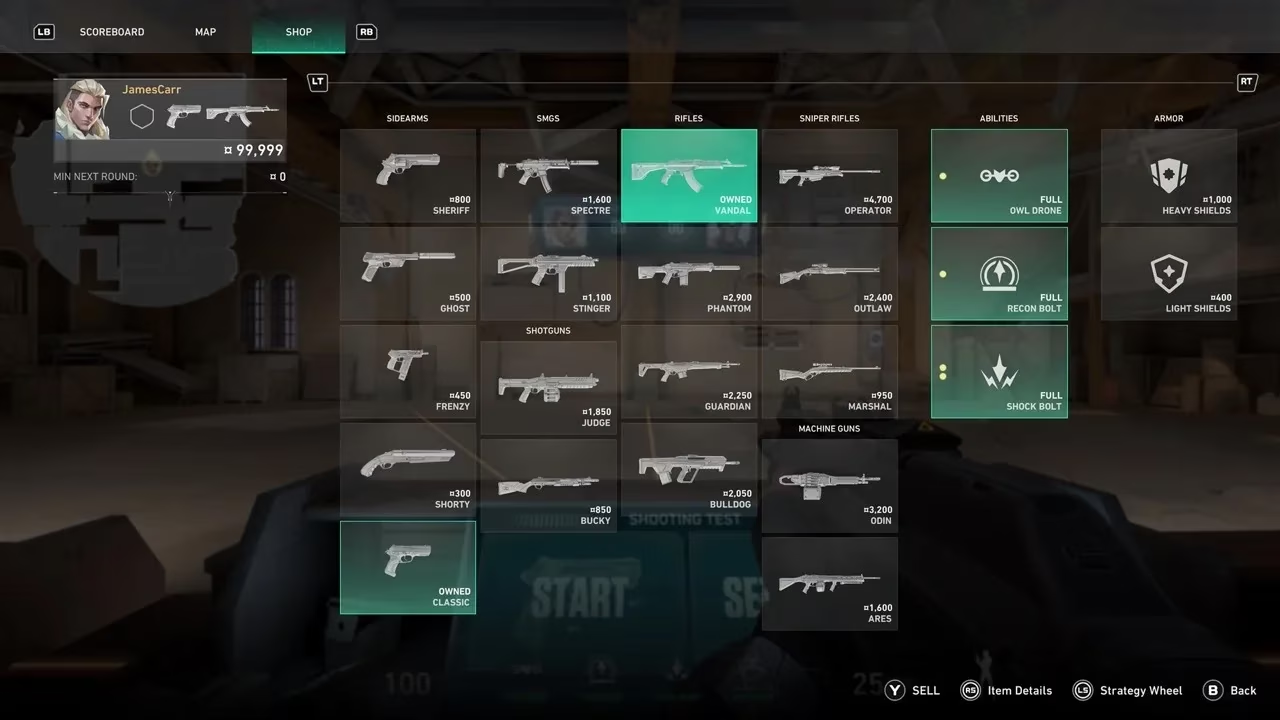
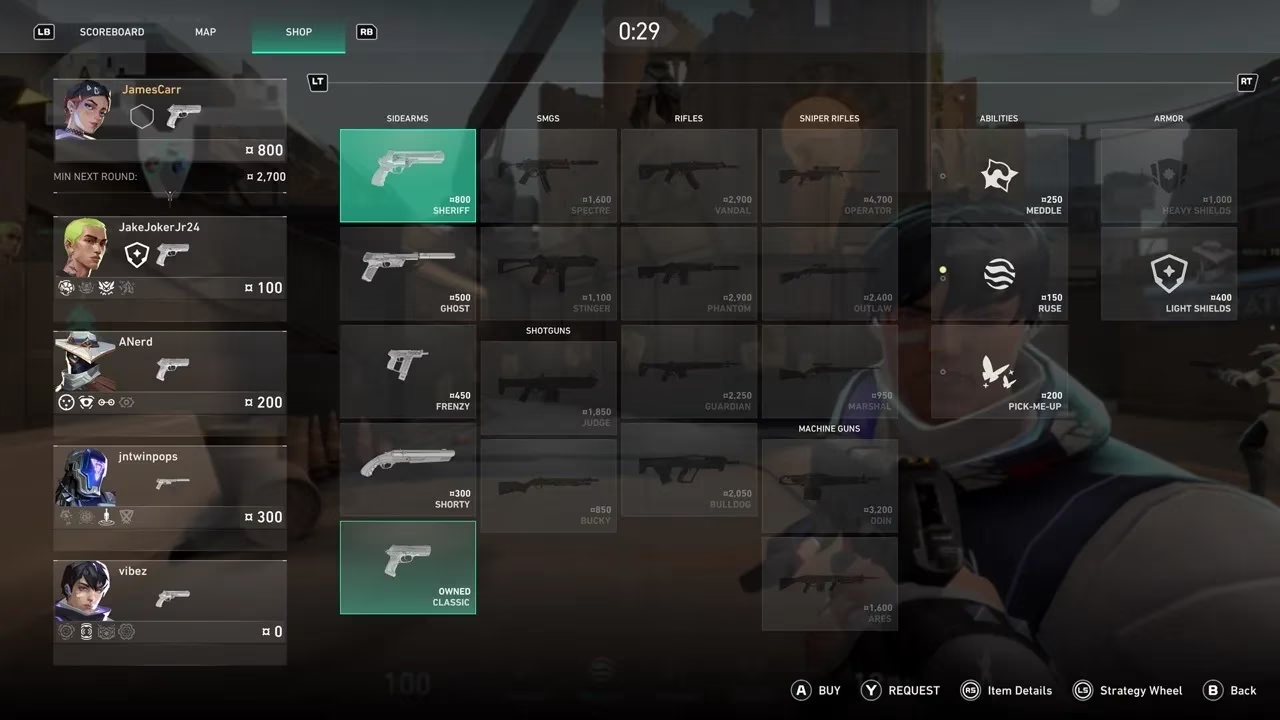
Similar to Counter-Strike, each round offers a chance to buy weapons, shields, and abilities. The amount of money depends on how well the previous round went, plus any leftover money. If a player does not die during the previous round, they keep their loadout. It can be beneficial to spend a low amount one round to save up for better weapons the following round. The economy and money reset when switching from offense to defense and vice versa. When the notification says the next round switches sides, spend whatever is available. In a full match, round 12 is the last round before the switch.
⏳ Patience and the Spike
One round in Valorant takes less than two minutes to complete. But the short time does not mean it is a fast-paced shooter. Valorant is all about patience. The game actively punishes trying to move quickly and shoot while moving. Moving fast makes a ton of noise the enemy can hear. Flying around a corner makes it easier for the enemy holding that corner to shoot first. The way to be most precise is to stop moving to shoot. Slow and steady is the way to go, especially on defense. If the round times out without a whole team dying or the Spike being planted, defense wins automatically. There is no reason to start pushing on defense.
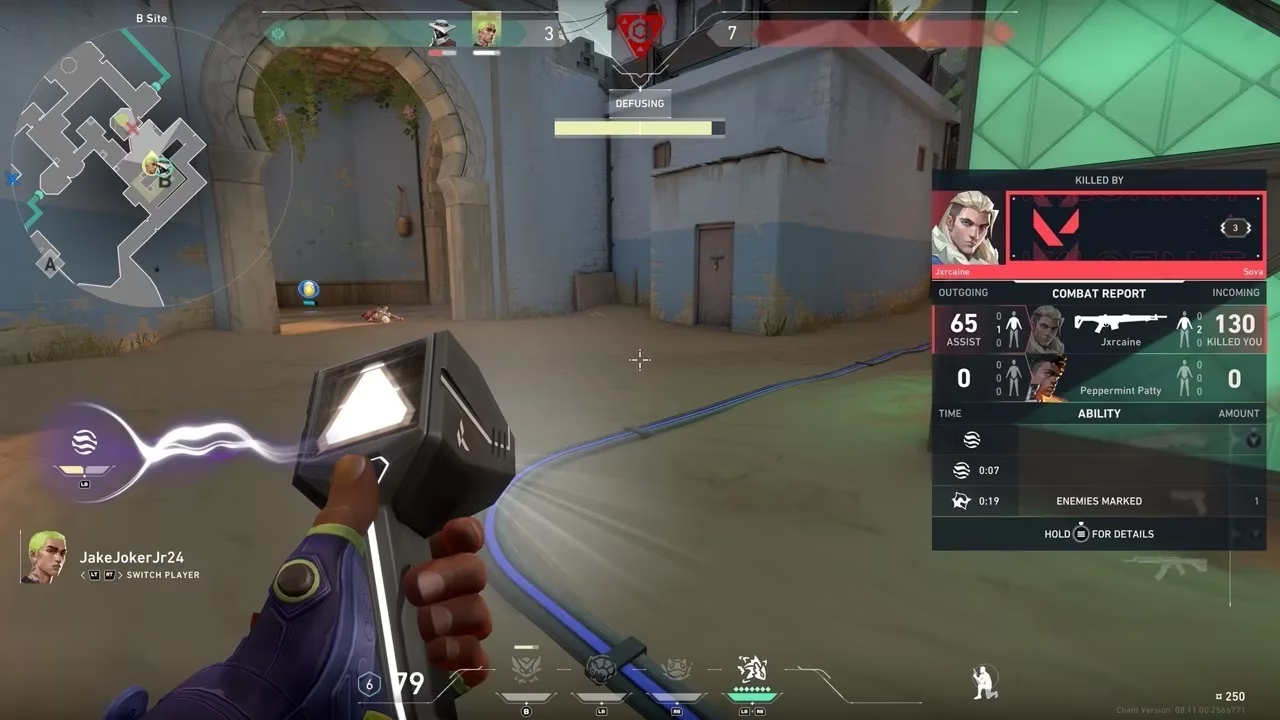
Once the offense plants the Spike, the round can only end with the Spike being defused or going off. On defense, the Spike must be defused to win once it has been planted, even if all enemy players are killed. There is no timer shown for the Spike. Instead, progress can be measured by its beeping and how it physically moves. The Spike takes 45 seconds to detonate and 7 seconds to defuse. Progress is saved at the halfway point. That means a defender effectively has 38 seconds to reach the Spike and begin defusing. Rushing in recklessly is bad, but moving with purpose is necessary for a shot at defusing.
🧱 Cover and Abilities: Use Them, Do Not Rely on Them
Cover is key to holding down certain corners, but it must be solid cover. Many parts of the environment, especially crates and walls made of wood, can be shot through. This can be used to advantage if an enemy posts up behind something that can be shot through. Take advantage whenever possible.
By 2026, Riley still misses shots. She still gets surprised by a clever teleporter play or a well-timed ultimate. But the console version of Valorant has grown into a place where patience pays off. The shooting range, a small Agent pool, slow movement, map knowledge, smart economy, and respect for the Spike all turn a chaotic first match into a tactical journey. The game rewards players who stop, listen, and aim. That lesson is as true on a controller as it is on a mouse and keyboard.