The year is 2026, and the echoes of a twenty-year legacy still resonate through the corridors of gaming history. As Call of Duty: Modern Warfare 3 carved its name into this legacy, it did so not just with familiar gunfire, but with a wholly new kind of ammunition: a meticulously crafted, emotionally resonant score. For the first time in the mainline franchise, the baton was passed to Walter Mair, a composer whose own journey mirrored that of the series—a longtime player stepping onto the other side of the screen. His mission? To bridge the gap between fanboy adoration and professional artistry, to find a melody in the chaos of war.

A Fanboy at the Helm
When Sledgehammer Games approached Mair, the proposition was simple yet monumental: score the next chapter of a saga he had lived with for two decades. "I've been a fan since the first hour," he admits, the weight of the heritage palpable in his words. The initial challenge wasn't technical; it was emotional. How does one objectively score the very thing they've geeked out over for years? The answer, it turned out, lay in embracing that duality. The game's innovative Open Combat Missions spoke directly to this, offering a canvas as dynamic as a player's mood—sometimes a stealthy whisper, other times a full-throated roar. "That speaks to all of us," Mair reflects, seeing in those missions a mirror to the composer's own need for creative flexibility.
Composing Like a Movie, Playing Like a Game
The technical heart of this audio revolution was a revamped music engine, a collaborative beast built with the Sledgehammer audio team and San Francisco's SpiderFarm Productions. This wasn't just about background tracks; it was about creating a living, breathing soundscape. Mair describes a process that turned game scoring on its head. For the first time, he could score a playthrough "like a movie," crafting a linear, dynamic narrative of sound. Then, the wizards at SpiderFarm would dissect his work—his 40 to 60 individual audio stems for a single piece—and rebuild them into reactive blocks. The result? A score that doesn't just play at you, but with you. When you retreat to plate your armor, the music pulls back with you. It's a partner in the dance of combat, and honestly? It's kind of insane how well it works. This level of detail created an immersion that felt genuine, not just a marketing buzzword.
Melody Last, Sound First: An Unconventional Overture
Given a tight, eight-month window, Mair flipped the traditional compositional script. Instead of chasing a grand theme from day one, he begged for time to "do all the nonsense, the weird stuff." He needed to find the game's sonic soul first. With the blessing of Creative Director Dave, Mair embarked on a foundational recording session at London's famed AIR Studios with the London Contemporary Orchestra. For days, they recorded hundreds of patterns, textures, and soundscapes—raw, organic materials without a melody in sight. From this unique "sound world," the iconic themes could then grow. This backward approach was the key to originality. They wanted something you could hum, a melody that would stick, and by rooting it in this bespoke audio foundation, Mair ensured it would be unforgettable.
The Orchestra as a Synthesizer
Mair's signature blend of organic and electronic found its ultimate expression here through a novel concept: using the orchestra as a synth. Imagine a string section playing a 16-bar arpeggio, but with a twist. By instructing the musicians to slowly move their bows from the bridge, he created the sonic illusion of a filter opening on a Moog synthesizer—a swelling, living texture born entirely from acoustic instruments. It was a dialogue between worlds: synth as orchestra, orchestra as synth. This philosophy extended to character themes, deliberately avoiding cliché. For Farah, a warrior of Middle Eastern descent, the team rejected the obvious duduk or viola lead. Instead, they discovered her theme almost by accident in a leftover bounce from Mair's pitch track—a gritty, determined motif that reflected her "full guns blazing" spirit far better than any traditional instrumentation.
The Themes of War
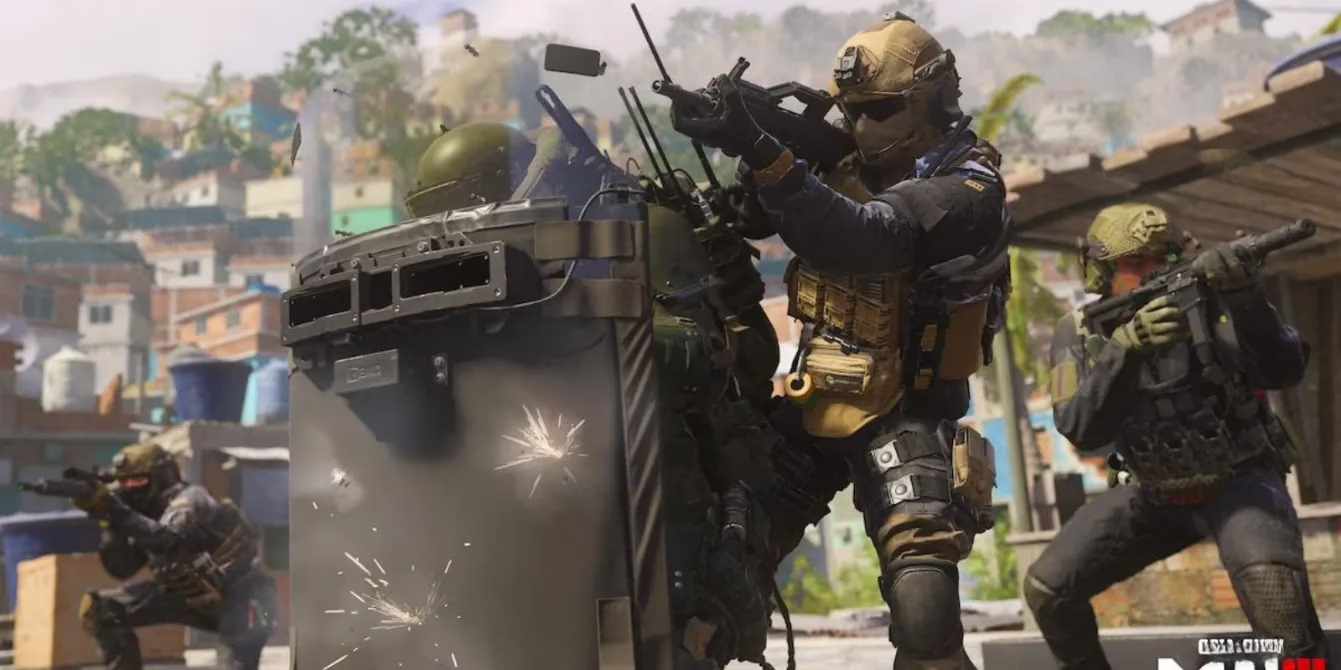
Crafting memorable melodies within Call of Duty's high-octane universe was its own battle. Each character theme needed distinction while feeling cohesive. The greatest victory, and rarest of composer feats, was with Captain Price. The main theme of the entire game—the Modern Warfare 3 anthem—was born directly from Mair's original pitch track, a piece initially titled "Stealth." "This has never happened to me before," Mair shares, a note of awe still in his voice. The Creative Director's constant referencing of that early piece cemented its destiny. It became the anchor, the musical throughline from which all other themes could differentiate and grow.
A Dream Realized in the Mix
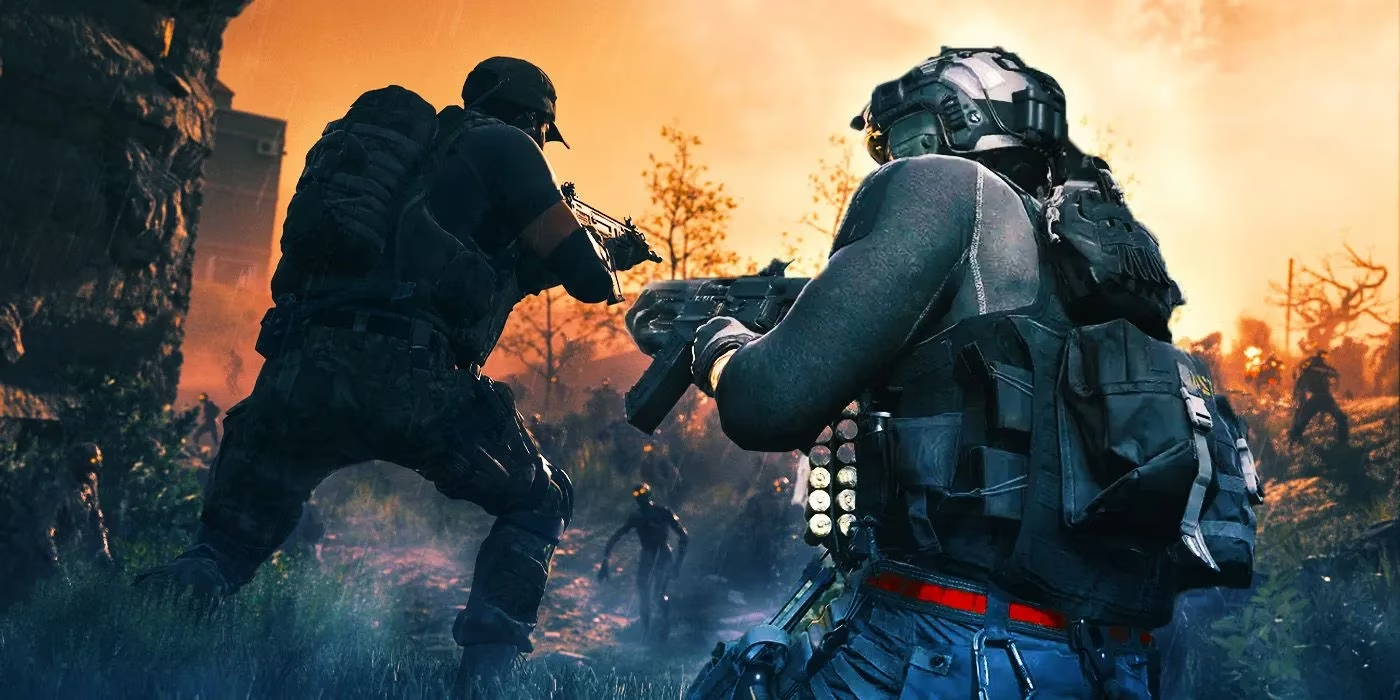
For a composer, the final test isn't the recording studio, but the living room. After a launch spent away from home, Mair finally sat down for a marathon campaign session. The moment of truth arrived not just in hearing his cues, but in feeling them. The mix, he found, was a dream. The music was allowed to breathe—to have its quiet, tense moments before roaring to the forefront in tracks like "Makarov." It was audible, present, and powerful. "That is a dream come true," he says, the relief and pride evident. His score, woven through the campaign, multiplayer, and the upcoming evolution of Warzone, had found its perfect battlefield volume. The Zombies mode, with its own distinct tonal needs, was handled by a separate team, allowing Mair's sonic identity to remain focused on the core cinematic experience.
The Legacy of a New Sound
Looking back from 2026, Walter Mair's work on Modern Warfare 3 stands as a landmark. It proved that even in the most established franchises, there is room for a poetic revolution. By honoring his fandom not through imitation but through innovation—by building melodies from a bed of strange, wonderful sounds and treating an orchestra as an instrument of infinite possibility—he gave the game a soul you could hear. He didn't just score a sequel; he composed a new chapter in the language of interactive music, where every reload, every advance, and every moment of stealth is underscored by a symphony that listens as intently as it is heard. The guns may blaze, but now, they have a melody all their own.