There's a unique comfort found in slipping into another reality, where the weight of the world fades and is replaced by the visceral thrill of combat. For decades, first-person shooters have offered that perfect escape, creating communities and delivering the fast-paced, adrenaline-fueled content players crave. From battling through war-torn landscapes to confronting supernatural horrors, these games weave stories that captivate nearly everyone. As we look at the genre in 2026, a sense of timeless familiarity remains, anchored by iconic titles that have defined what it means to look down the barrel of a digital gun. The legacy of these games isn't just in their pixels and polygons, but in how they've shaped entertainment culture and connected players across generations.
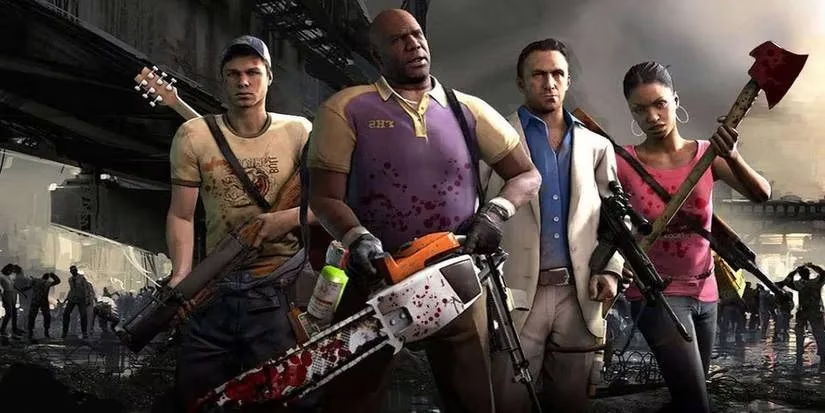
Few games capture cooperative chaos quite like Left 4 Dead 2. This intense zombie survival shooter built upon its predecessor's foundation with masterful precision, delivering epic gameplay and high-action FPS combat that still feels fresh today. The game features amazingly crafted levels that take players from decaying cities to murky swamps, each populated by a memorable cast of survivors and nightmares made flesh. What truly sets it apart is how the fast-paced action and cooperative features provide near-endless replayability. Even with controls that feel dated by modern standards, the game maintains a thriving modding community and loyal player base who continue to find new ways to experience its zombie-killing mayhem. The atmosphere, directly inspired by classics like Night of the Living Dead, creates a perfect backdrop for the non-stop action that leaves players perpetually on edge.
Interestingly, the catalyst for console FPS popularity wasn't a war game but a cinematic adaptation. GoldenEye 007 stormed onto the Nintendo 64 and showed the world that first-person shooters could thrive outside of high-end PCs. Putting players in the shoes of James Bond, the game mixed story and action seamlessly to create a timeless masterpiece. Its campaign was engaging and compelling, filled with cinematic moments that made players feel like secret agents. However, its most enduring legacy might be introducing a generation to split-screen local multiplayer, serving as the direct predecessor for many multiplayer FPS games that followed. This simple innovation created countless living room rivalries and demonstrated the social potential of the genre.
Supernatural horror and precision gunplay create a chilling alchemy in F.E.A.R., a psychological thriller shooter that was far ahead of its time. Inspired by Japanese horror, the game mastered the art of telling a twisted, action-packed story while simultaneously freezing players' blood. The atmosphere is its greatest weapon—figures vanish into shadows, whispers echo from unseen sources, and every corner hides potential terror. Beyond the scares, F.E.A.R. offered groundbreaking features like bullet time and complex AI behavior that promoted strategic play. Enemies would flank, take cover, and communicate with each other in ways that felt revolutionary. This combination of terrifying atmosphere and intelligent gameplay mechanics ensures F.E.A.R.'s place as one of the genre's all-time greats.
After Doom reshaped gaming, another dark force emerged from the shadows. Quake arrived as a designated successor but quickly established its own identity as a ground-breaking FPS with fantasy-driven elements. It was one of the first games to introduce a true 3D environment, allowing for verticality and spatial complexity previously unseen. The game offered a Lovecraftian narrative that pulled players into its labyrinthine depths, but the real magic was in its iconic gameplay. The simple "shoot and run" philosophy created a pure, undiluted experience that still holds up today. The expert design of the game's levels created a blueprint for environmental storytelling and combat pacing that would influence countless developers. For those seeking a retro experience, Quake remains the gold standard.
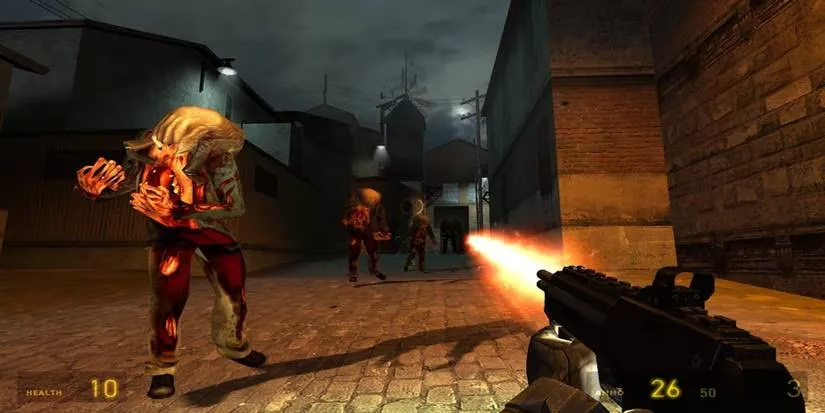
Valve's masterpiece, Half-Life 2, represents a quantum leap in interactive storytelling. The game didn't just continue Gordon Freeman's story—it redefined how players interacted with virtual worlds through its revolutionary approach to technology and in-game physics. The Gravity Gun alone transformed environments into playgrounds of creative destruction, giving the world a sense of unpredictability that felt genuinely new. The sequel took the foundation of the original and added layers of realism and responsiveness that made every action feel consequential. With great action, superb gunplay, and an in-depth story, Half-Life 2 created an immersive experience that few games have matched since. Its blockbuster action sequences were balanced with quiet moments of environmental storytelling, creating a narrative rhythm that kept players engaged from start to finish.
Titanfall 2 delivers two distinct yet equally spectacular experiences wrapped in one package. The single-player campaign is a charming and thrilling adventure that forges an emotional bond between player and mechanical companion. Meanwhile, the multiplayer mode offers some of the most captivating combat seen in multiplayer games, period. The game excels at providing an adrenaline-filled experience through its fluid and advanced movement system—Pilots zip across battlefields with acrobatic grace, while Titans deliver earth-shaking power. This duality creates a perfect gameplay loop where moments of intimate precision shooting alternate with bouts of colossal mechanized warfare. The balance between Pilot agility and Titan raw power remains unmatched, making Titanfall 2 essential playing for any FPS enthusiast.
BioShock stands as a monument to narrative ambition in the shooter genre. This dystopian sci-fi horror game proves that first-person perspectives can deliver profound philosophical questions alongside thrilling combat. As a story-driven FPS through and through, BioShock draws from literary giants like Lovecraft and Orwell to craft a world that's as intellectually engaging as it is visually stunning. The underwater city of Rapture serves as both setting and character, its art deco halls telling stories of hubris and collapse. The variety of weapons—often crafted from mundane objects—reinforces the game's unique setting, while plasmid abilities create a gameplay loop beyond expectations. Players don't just shoot; they strategize with fire, ice, electricity, and telekinesis, making every encounter a puzzle of creative violence.
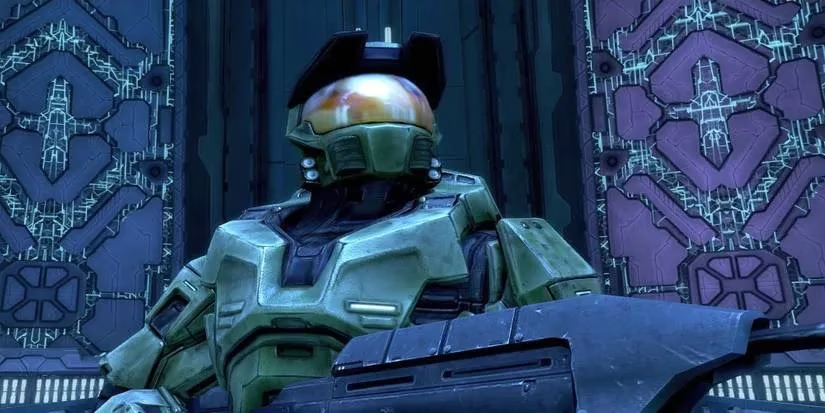
Bungie's Halo: Combat Evolved didn't just launch a franchise—it revolutionized console shooters. The game introduced an industry-standard control scheme that made dual-analog sticks the default for a generation of games. But beyond controls, Halo offered something many military shooters lacked: a compelling sci-fi narrative with genuine mystery and scale. Centered on Master Chief's battle against the Covenant, the game featured a smart enemy AI system that forced players to think tactically about each encounter. Grunts, Jackals, Elites, and Hunters each required different approaches, creating dynamic combat that rarely felt repetitive. The game's innovative and enthralling design extended to its vehicle sections, soundtrack, and environmental storytelling, creating a complete package that defined Xbox gaming for years.
Asking what modern FPS would look like without Doom is like asking what rock music would sound like without electric guitars. Released in 1993, the original Doom set the groundwork for every major first-person-shooter franchise that followed. It was one of the first games to implement a convincing 3D player perspective, creating immersion through clever technical tricks rather than raw processing power. The game's expertly crafted levels guided players through hellish landscapes with intuitive design, while its weapon variety and enemy roster created satisfying combat loops. But perhaps Doom's greatest contribution was tonal—it embraced metal aesthetics, gory violence, and a sense of humor that showed shooters could be more than serious military simulations. It was brutally fun, and that simple truth propelled the genre forward.
Far Cry 3 represents the pinnacle of open-world shooter design, perfectly blending FPS action, exploration, and narrative into a cohesive experience. Released in 2012, the game was praised for its open-world exploration that felt genuinely dangerous and rewarding. The tropical setting wasn't just pretty scenery—it was a ecosystem where predators hunted, weather changed, and resources could be gathered for crafting. The game's memorable characters, particularly the terrifying antagonist Vaas Montenegro, elevated the story beyond simple rescue mission tropes. Jason Brody's transformation from frightened tourist to skilled warrior felt earned through gameplay systems that implemented features defining the series today: skill trees, stealth mechanics, and mission approach freedom. Whether silently taking out outposts or causing explosive chaos, players felt in control of their experience, making Far Cry 3 a benchmark for player agency in shooters.
As we reflect on these titles in 2026, their influence remains visible across the gaming landscape. The FPS genre continues to evolve with new technologies—virtual reality, advanced physics, artificial intelligence—but the core appeal remains unchanged. Players still seek those moments of perfect escape, whether through cooperative survival against impossible odds, competitive mastery of movement mechanics, or immersion in richly told stories. These games represent more than entertainment; they're cultural touchstones that have shaped how we play, connect, and imagine ourselves as heroes in digital worlds. Their legacy isn't measured in sales figures alone, but in the memories created during late-night gaming sessions, the friendships forged in multiplayer matches, and the inspiration they've provided to new generations of developers. The first-person perspective, once a novel technical trick, has become a window into countless worlds, and these games ensured that window would remain open for decades to come.