The year is 2026, and for millions of mobile gamers, the line between console-grade immersion and handheld play has all but dissolved. When the sun sets over the sprawling deserts of Miramar or the first raindrops spatter across the vivid greens of Erangel, players no longer squint at jagged shadows and muddy textures. Instead, they are greeted by a breathtaking panorama of shimmering heat haze, individual grains of sand catching the light, and the crisp reflection of a sniper scope glinting from a distant ridge. This transformation did not happen overnight. It began as a promise, whispered in beta forums and leaked patch notes, and finally materialized through a cascade of updates that reshaped Battlegrounds Mobile India (BGMI) and PUBG Mobile into genuine PC-level experiences.

Back in the mid-2020s, the developers behind Game for Peace—the Chinese localized sibling of PUBG Mobile—took a bold step. They unlocked a feature that had been dormant since the game's inception: the Extreme HDR graphics setting. For years, the toggle sat grayed out on even the most powerful devices, a tantalizing hint of the engine's raw capability. Then, beta testers flooded social channels with jaw-dropping clips. Shadows became deep and soft-edged; water reflections turned mirror-like; explosions bloomed with volumetric fire and smoke that actually bent around cover. The visual fidelity jumped so dramatically that commentators called it “a desktop GPU in your pocket.” Soon after, the global versions received the same treatment, and by 2026, Extreme HDR is the new competitive standard. Players speak of being able to spot an enemy’s foot protruding from a bush by the subtle difference in subsurface scattering on boot leather versus foliage—details that previously existed only in triple-A PC titles.
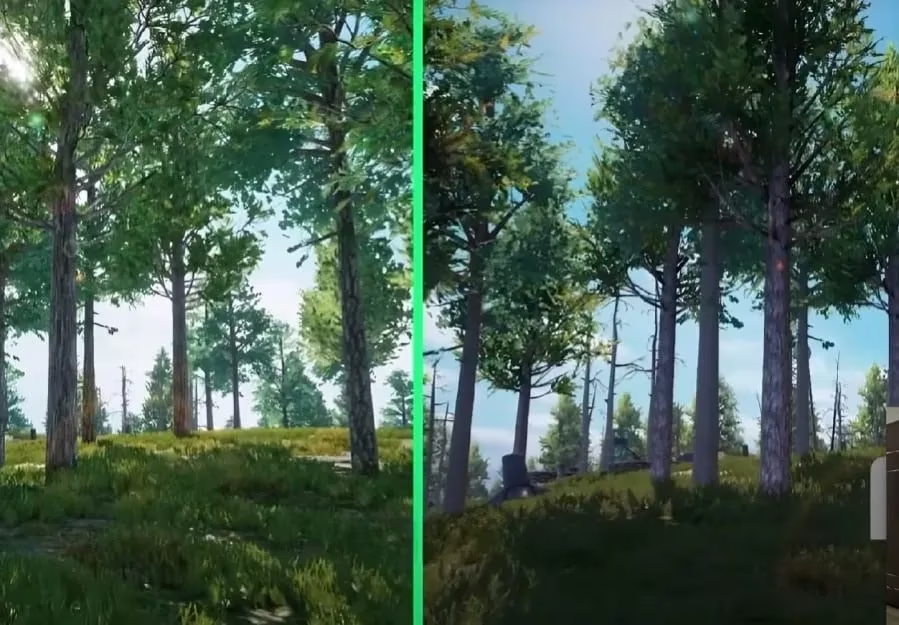
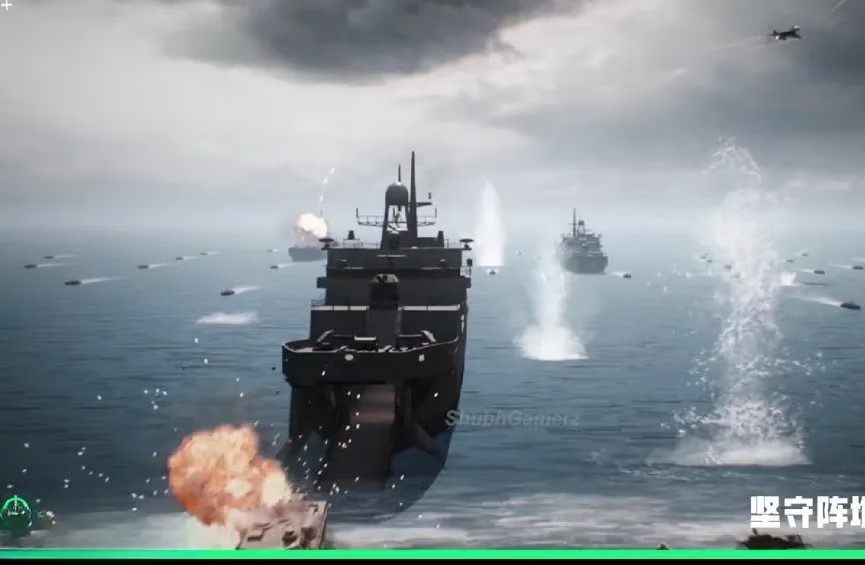
But sharper graphics were only half the revolution. To truly honor the spirit of battle royale, the game needed scale. The answer came in the form of a Battlefield-like mode, introduced initially as a limited-time event and later cemented as a permanent pillar of the map rotation. Imagine dropping from a cargo plane not onto a shrinking island, but into a sprawling combined-arms theater where infantry squads coordinate with roaring main battle tanks, attack jets scream overhead, and gunboats duel across wide river deltas. The mode draws clear inspiration from classic large-scale warfare simulators but retains the accessible control scheme that made PUBG Mobile a household name.
In this mode, a squad can pile into an armored personnel carrier, punch through a defensive line under covering fire from an A-10-like jet’s strafing run, and then dismount to capture a strategic radar installation. Tanks aren't just set dressing; they require a dedicated driver and gunner, with weak spots on the rear armor that encourage flanking. Jets handle with a simplified yet satisfying flight model, letting even casual pilots pull off ground attacks with rockets and cannons. Naval engagements add yet another layer: patrol boats equipped with heavy machine guns can lock down waterways, forcing squads to decide between a quiet swim or a noisy amphibious assault. The result is a constant cinematic chaos that has drawn both hardcore tacticians and action-hungry streamers back day after day.
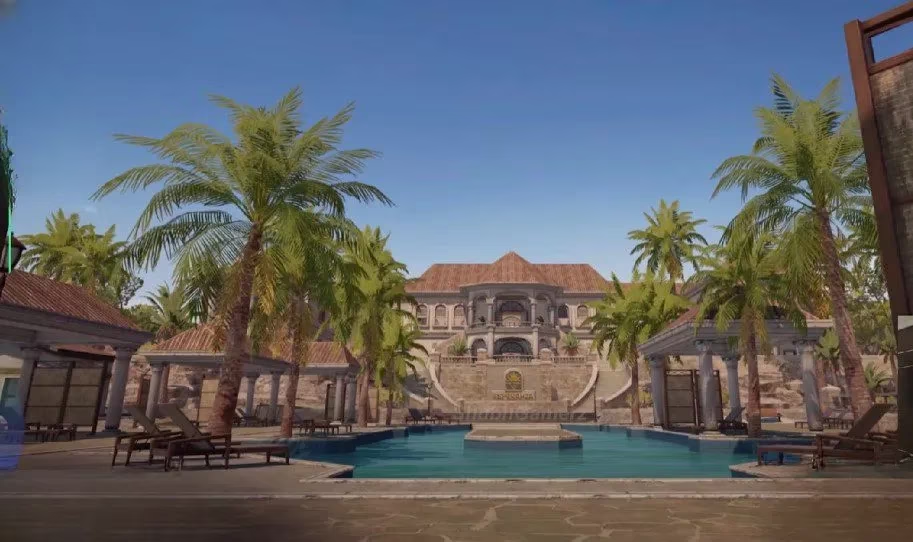
Completing the trifecta of transformation is Miramar 3.0, the most ambitious map overhaul in the franchise’s history. The beloved desert battleground was once a stark expanse of mesas and dusty towns. Today, it tells a story of environmental diversity. Players drop into a zone that has been fractured by a narrative event—a massive seismic tremor that unearthed lush underground aquifers and ancient ruins. The northern quadrant now boasts a verdant oasis network with waterfalls cascading down rust-red cliffs. The central city has expanded with a gleaming financial district of glass towers that offer vertical firefights, while the southern coast features a new port complex bustling with shipping containers and cranes that can be used as dynamic cover.
Each corner of the revamped Miramar demands a different loadout and mindset. Snipers still reign on the open ridges, but SMG-wielders now thrive in the tight corridors of the newly discovered underground bunker system that links several compounds. The map’s verticality has increased tenfold, with ziplines and hidden stairwells rewarding map knowledge. Players spend hours in custom lobbies just to memorize the sightlines and figure out how to pivot from long-range duels into close-quarters ambushes without crossing open killing fields. This constant strategic recalibration has rejuvenated the meta, keeping even veteran players on their toes.
What makes these updates resonate so deeply in 2026 is not just the technology, but the community’s renewed sense of discovery. Esports tournaments now feature Extreme HDR showcases, where commentators break down pixel-perfect headshots in slow motion, marveling at the rendering of individual muzzle flashes. Content creators build entire series around the Battlefield-like mode, staging 100-player cinematic wars complete with voice-acted squadron chatter. The Miramar 3.0 leaderboards are dominated by squads who have mastered combined arms tactics, switching seamlessly from tank warfare to foot infiltration.
The developers have also leaned heavily into optimization. Where early adopters worried that Extreme HDR would melt their phone batteries, advancements in mobile chipsets and intelligent dynamic resolution scaling now let devices maintain a steady 90 frames per second even during the most chaotic firefights. Battery saver profiles and customizable graphics sliders give users fine control, ensuring that a player on a two-year-old handset can still compete without feeling left behind.
Looking forward, the roadmap promises seasonal map evolutions that continue the geological storyline of Miramar, as well as a naval-focused Battlefield mode map set in an arctic archipelago. Leaks hint at destructible environments that respond to tank shells and airstrikes—collapsing bridges, crumbling facades, and terrain deformation that could redefine flanking routes mid-match.
For the ordinary player booting up in 2026, however, the magic lies in the unscripted moments. A quiet sunrise over Miramar’s new waterfalls, the silhouette of a jet peeling away after a perfect bombing run, the glint of a scope that reveals an enemy you would have missed on older graphics—these are not just upgrades. They are the building blocks of stories that players will retell in Discord servers and WhatsApp groups for years, proof that mobile gaming no longer chases PC and console experiences, but stands shoulder-to-shoulder with them.