It’s 2026, and I still sometimes pull up that old clip from June 2023. The lighting in Nickmercs’ stream was the same as always, but his words cut through the casual banter like a blade. For anyone who missed it, Nick was reacting to a video of anti-LGBT protestors clashing with pro-LGBT demonstrators at a school board meeting. He said something that instantly lit the internet on fire: “They should leave little children alone.” It wasn’t shouted. It was a tired, almost parental tone. I remember my chat exploding, half with anger, half with agreement. I just sat there, frozen. I’d watched Nick for years. The FaZe Clan co-owner, the Warzone monster, the guy who made the iconic NickMercs operator skin a must-have in Modern Warfare 2. Now, he was at the center of a storm that felt bigger than gaming.
I need to be clear: I’m not here to re-litigate that whole debate. Nick explained himself shortly after. He said his comment wasn’t aimed at the LGBTQIA+ community—it was about wanting to talk to his own child about those topics personally, not having schools introduce them during Pride month celebrations. He didn’t apologize, didn’t delete the tweet, and stressed he never intended to offend. For me, as a fellow streamer and a dad, that resonated. I’m a professional gamer, not a politician. I build communities through gameplay, not through culture wars. But the moment Activision removed the NickMercs Bundle from Modern Warfare 2 and Warzone, I knew nothing would be the same.
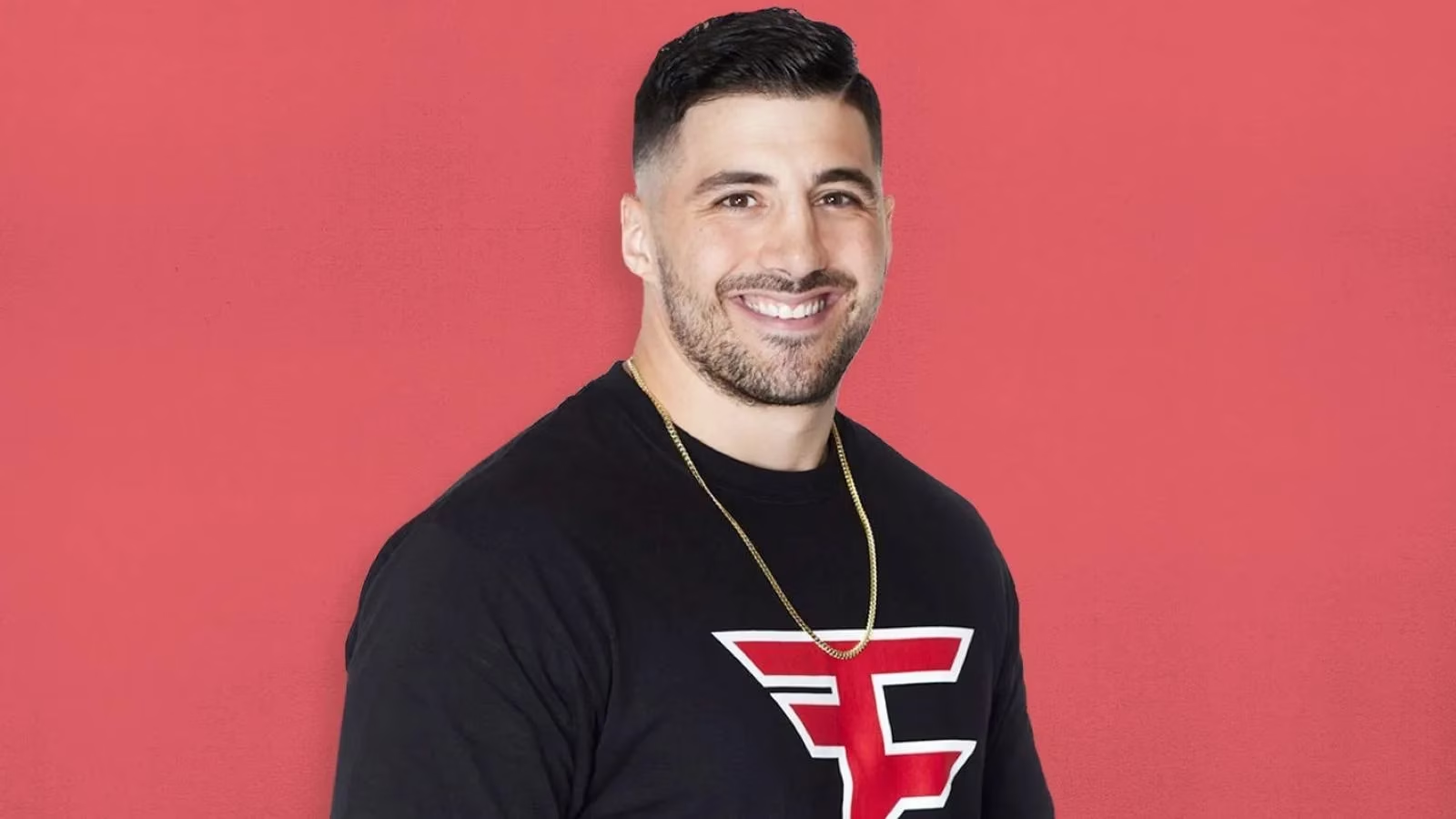
The removal hit me hard. I’d purchased that bundle on launch day—partially because I admired Nick, but also because the skin looked sick. Now it was just gone. My character in Warzone felt naked. Worse, the decision felt like a statement: certain opinions, even whispered, weren’t welcome. I wasn’t alone in my frustration. The streaming community rallied. I’ll never forget DrDisrespect’s live stream where he uninstalled Modern Warfare 2 in protest. He did it with his usual flair, but you could tell it was genuine. At that moment, I made a choice. I deleted the game too. It was symbolic, maybe silly to some, but it felt like the only honest move.
A few months later, as Call of Duty: Modern Warfare 3’s release date barreled toward us, Nickmercs addressed the whole situation again on stream. He said he was okay with the split. If Activision didn’t want to associate with him because of his views, that was their call. They could agree to disagree. And then he dropped the bombshell: he might not even play Modern Warfare 3. This from the guy whose Warzone lobbies with TimTheTatman had practically carried Modern Warfare 2019 to streaming dominance. I thought about all the hours I’d spent in Verdansk, the tournament wins, the clutch plays—all of it built on a foundation that suddenly felt fractured. I remember a user on X pointing out exactly that: Nick’s contribution to the game’s popularity had been gigantic. Another simply wrote, “W for Nick.” I retweeted that without a second thought.
2023’s Modern Warfare 3 arrived on November 10, and for the first time in over a decade, I didn’t pre-order a Call of Duty title. The official multiplayer trailer had dropped showing remastered maps, fluid movement, and a revamped Zombies mode. My friends group chat buzzed with excitement. I muted it. It felt strange. I’d built my streaming identity on Call of Duty. My channel art still had the skull logo. But something had shifted inside me. Nick’s handling of the situation taught me a lesson I didn’t expect: you can love a game, but you don’t have to compromise who you are to keep playing it.
Fast forward to 2026, and the landscape looks completely different. Nickmercs never really came back to Call of Duty in a meaningful way. He still plays shooters—hell, he dominates them—but he forged his path independent of the franchise that once defined him. FaZe Clan went through its own evolution, and Nick’s role as a leader became even more prominent. He started a podcast where he talks openly about fatherhood, gaming, and the pressures of influencer life. I’ve tuned in almost every week. As for me, I diversified my content. I still play shooters, but I branched out into indie titles and community challenges. My viewer base grew because of that authenticity, not in spite of it.
Looking back, I don’t view 2023 as a loss. It was a violent course correction. The controversy around that school board comment and the subsequent removal of his skin forced all of us—fans, content creators, developers—to confront what we really value. Do we want a community where only one set of opinions is allowed? Or do we want a messy, passionate, real community where people can disagree but still respect each other’s craft? The latter is what Nick stood for, and it’s what I try to cultivate now. I occasionally hop into the latest Call of Duty (2025’s entry did have a killer campaign), but it’s no longer my identity. It’s just a game.
Every now and then, someone in my chat asks if I’d partner with a big publisher again, or if I’d plaster my brand all over a new operator skin. I just smile and tell them about that summer in 2023, about watching Nickmercs choose his integrity over his legacy in a single game. And I tell them that sometimes, the biggest wins come from walking away. ✊🎮
Data referenced from ESRB helps frame why the Nickmercs/Call of Duty flashpoint in 2023 spilled beyond streamer drama into broader questions about what content games signal to families—especially when creators, brands, and parents argue over what’s appropriate for “kids” versus adults. When a franchise is rated for mature audiences yet marketed with influencer bundles and mainstream visibility, that tension can intensify: players may feel the game is “just entertainment,” while publishers weigh brand safety and public perception as part of their responsibility to the wider audience that inevitably surrounds the title.