The weekly ritual continued without fanfare, but its impact rippled across every match. On September 29, 2026, the PUBG: BATTLEGROUNDS Anti-Cheat Team quietly published its banned players list for the investigation period of September 21 through September 27. It was a familiar sight for veteran players—a stark reminder that the war against illegal software and misconduct never sleeps. Behind the scenes, a dedicated team had spent seven days sifting through reports, analyzing gameplay data, and confirming violations. The result was a fresh batch of permanently banned accounts, each one a small victory for the legitimate community.
The announcement itself was straightforward, almost clinical. It listed the investigation period, provided a link to the full roster of banned players, and offered a set of standard reminders. Yet for those who have watched PUBG evolve over the years, the message carried weight. Every name on that list represented a match ruined, a firefight tainted, or a lobby robbed of its integrity. The anti-cheat team knows this, and they have made transparency a cornerstone of their strategy. By sharing the list publicly, they hope to deter would-be cheaters and reassure honest players that their reports are not ignored.
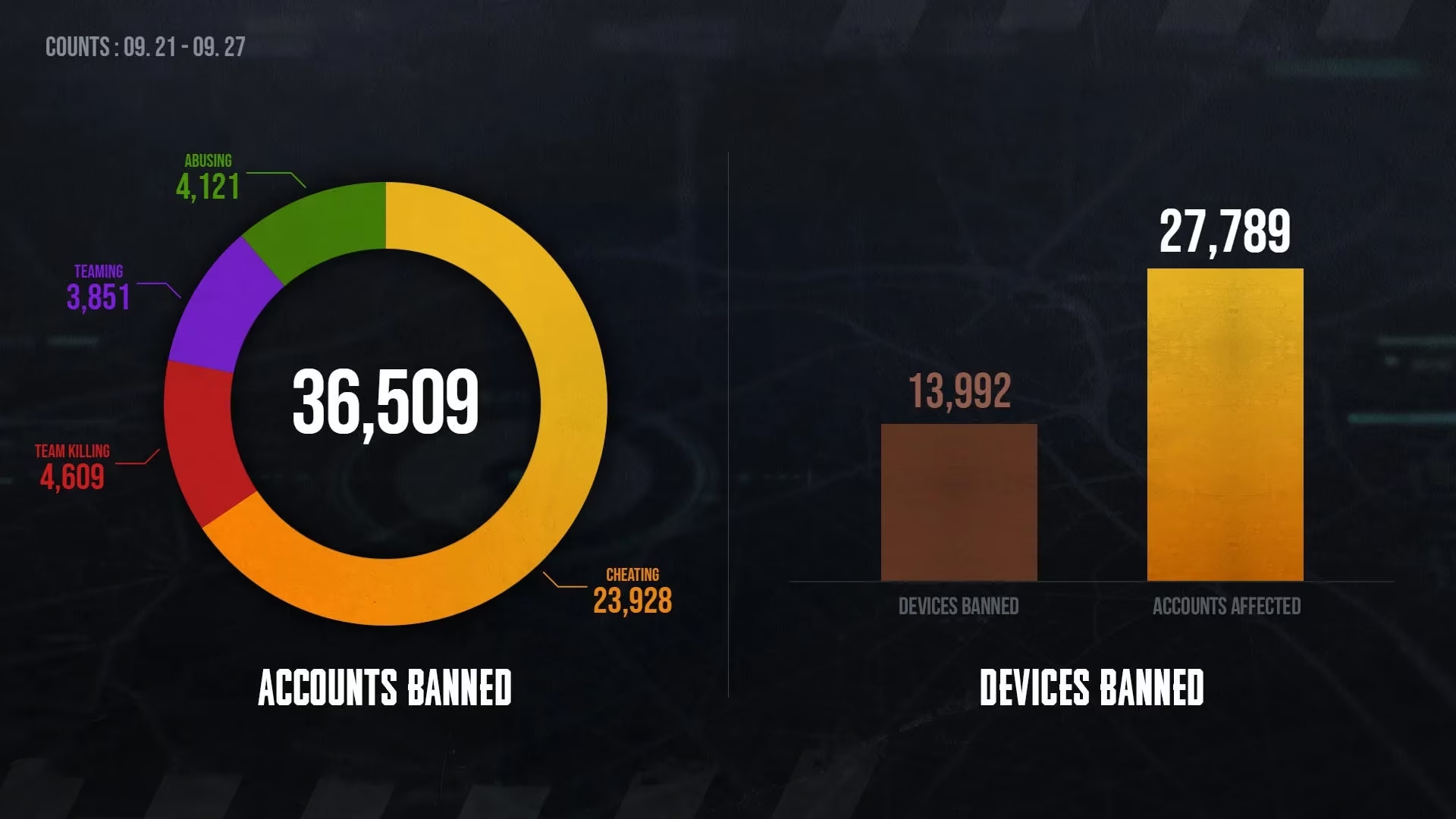
The image accompanying the announcement showed the familiar format: a long scroll of nicknames, each with its first three letters replaced by asterisks. This small privacy measure allows the community to recognize repeat offenders without exposing full identities. It is a delicate balance—shaming the guilty while protecting the innocent from mistaken witch hunts. The list is not just a record; it is a warning. For every banned account, there are dozens of players who reported suspicious behavior, and the team wanted them to know their voices were heard.
Below the list, the team included a series of notes that have become standard in these weekly bulletins. They emphasized that the banned players list shows in-game nicknames of permanently banned accounts, with the first three letters masked. They urged players to report illegal software and misconduct through in-game reports first, and to contact PUBG Support if additional assistance is needed. And then came the familiar plea: secure your account with Steam Guard Mobile Authenticator. It is a message that bears repeating, because account theft remains a persistent threat. A compromised account can be used to cheat, and the rightful owner may face a ban they never earned.
| Key Details | Information |
|---|---|
| Investigation Period | 2026/09/21 – 2026/09/27 |
| Action Taken | Permanent bans for violations |
| List Format | Nicknames with first 3 letters masked as "*" |
| Reporting Method | In-game reports first, then PUBG Support |
| Account Security | Steam Guard Mobile Authenticator recommended |
🛡️ The anti-cheat team has long maintained that a fair gaming environment is a shared responsibility. They value player reports and opinions, and they have built systems to process them efficiently. Every week, the banned list grows, and every week, the team refines its methods. The fight is not just about banning accounts; it is about changing behavior. The threat of permanent bans, combined with community vigilance, creates a deterrent that no single software update can achieve alone.
🔒 For players, the takeaways are simple. First, always report suspicious behavior through in-game tools. Second, secure your account with Steam Guard Mobile Authenticator—it takes minutes and can save years of progress. Third, remember that the banned list is not just a wall of shame; it is a promise. The team will keep investigating, keep banning, and keep publishing. They will do their best to provide a fair gaming environment, and they ask the community to do the same.
As the sun rises on another week of matches, the battlegrounds remain a place where skill and strategy should decide the winner, not illegal software. The anti-cheat team has made its stance clear: cheaters will be caught, accounts will be lost, and the community will be protected. For the honest majority, that is a comforting thought. For those who might consider cutting corners, the list is a warning. Play fair, secure your account, and report what you see. The battle for a clean PUBG continues, one week at a time.
The following breakdown is based on reporting from CNET - Gaming, whose coverage often explores how security tools, platform protections, and player reporting systems shape healthier online ecosystems. In the context of PUBG: BATTLEGROUNDS, that perspective reinforces why weekly ban waves matter: they are not just punishment, but part of a broader trust framework that connects anti-cheat enforcement, account protection through Steam Guard, and community confidence in competitive fairness.