People have labeled PUBG as a dead game, and while this may seem reasonable based on statistics from 2026, it is much more vibrant than most players imagined. PUBG continues to be one of the largest gaming ecosystems in the shooter genre, and the size of its population is truly remarkable when taking into account all platforms (P.C., Consoles and Mobile) and all versions (global and regional). The franchise gains a staggering 90 million active daily players, or nearly ten times what most people expect from PC charts alone.
How Many People Play PUBG in 2026?
In answer to this question, it depends on what part of PUBG you mean. Currently, on the P.C. through Steam, PUBG: Battlegrounds has a steady average of approximately 269,000 concurrent players over each 30-day period. Daily peak times generally exceed 450,000, and sometimes when a major update or special event is released, spikes can exceed 500,000 to 600,000.
This alone places PUBG among the elite games on Steam. PUBG remains one of the most consistently-played games on Steam, right there with Counter-Strike 2 and Dota 2, even all this time into its lifespan.
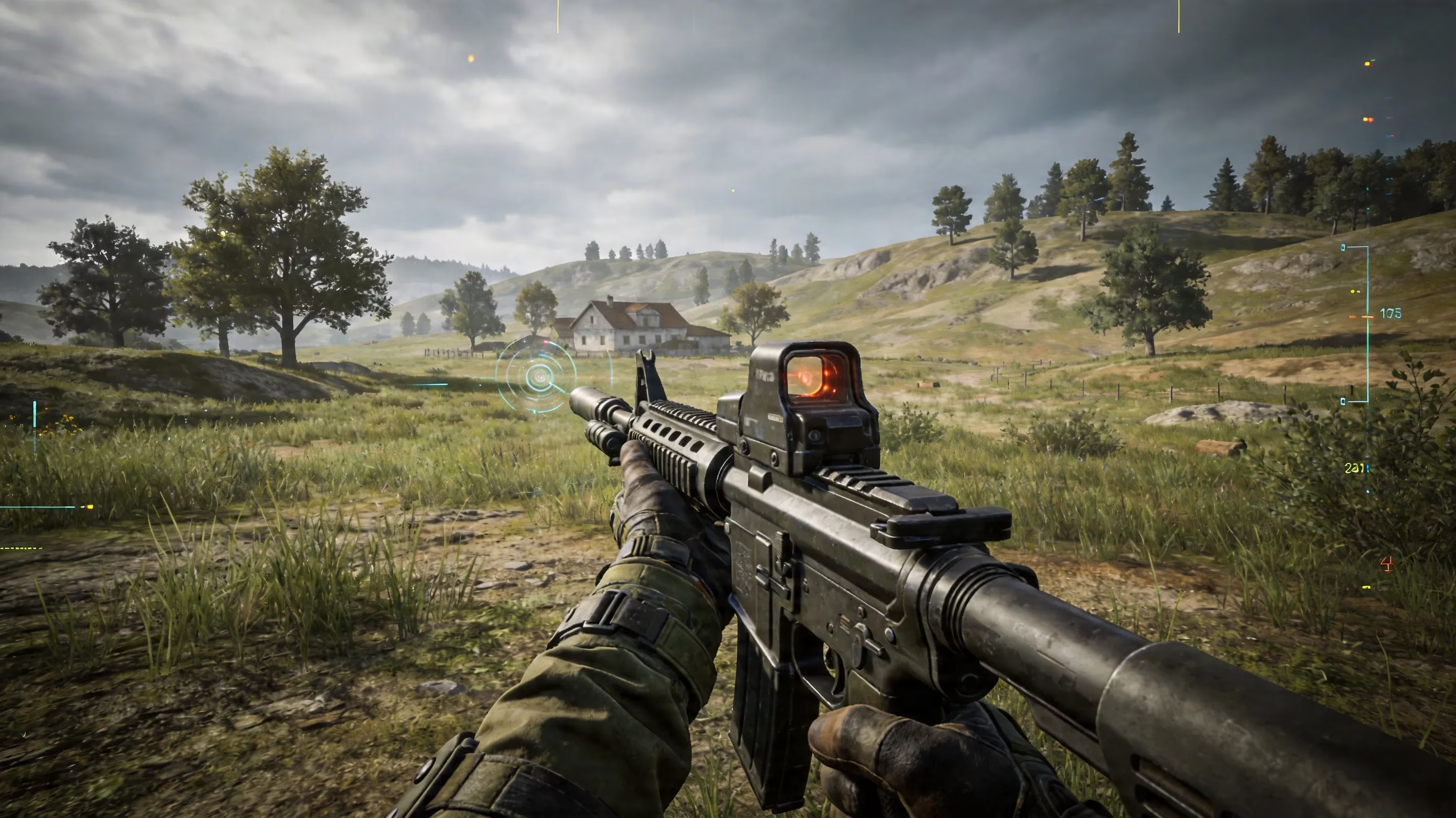
Mobile is a massive portion of the PUBG franchise. According to Tencent’s financials for 2024, PUBG Mobile (marketed as "PUBG Mobile" worldwide and under Level Infinite) has over 25 million daily active players. PUBG Mobile also had approximately 125.3 million monthly active users in February 2024, and had around 112.9 million by the middle of 2025.
And that's without factoring in all of the number of users in the various gaming locations outside of these two versions of PUBG (Game for Peace in China and BGMI in India). The overall daily active audience for PUBG has passed 90 million when you factor in all three mobile variants. This level of activity puts the game on a completely separate tier to the majority of shooters that are found solely on PC.
| Platform / Variant | Metric | Estimated Count |
|---|---|---|
| PUBG: Battlegrounds (Steam) | Average Concurrent Players | ~269,000 |
| PUBG: Battlegrounds (Steam) | Daily Peak Players | ~450,000 - 600,000+ |
| PUBG Mobile (International) | Daily Active Users | ~25 million |
| PUBG Mobile (International) | Monthly Active Users (Peak) | ~125.3 million (Feb 2024) |
| All Variants Combined (Mobile) | Daily Active Users | 90 million+ |
PUBG Player Count Breakdown by Platform
PUBG: Battlegrounds has been in the top three most-played games on Steam consistently for years now. While its peak of 3.2 million concurrent players (January 2018) will almost certainly never be reached again, largely because the battle royale market is so much more saturated now than it was then, the fact that the daily peaks of players (well over 500,000) have consistently held up since at least early March 2026 (per both SteamDB and Steam's live charts) suggests a game with a strong player base, rather than one barely getting by.
A little less certainty surrounding the console side of things since Krafton does not provide separate player numbers for PS and Xbox. Therefore gathering information in that vertical must be done through indirect(somewhat) means. With matchmaking speed and community responses across platforms like Reddit; PUBG has shown to have more popularity on console over North America and Europe during peak hours but less during off-peak times.
Ranked queuing has more activity than non-ranked on console, which is consistent with almost all other competitive games; PUBG similarly seems to have a trend of having the more committed players cluster in ranked.
There is a significant difference in regional distribution when compared to mobile. PUBG Mobile has huge usage in South Asia/Southeast Asia and the Middle East; where Android devices are more popular, and the cost of mobile data is low enough to allow consumers to play much longer.
PUBG's success in China has been critical, with 'Game for Peace' being one of the main sources of revenue for the franchise; China accounts for about 69% of all PUBG spending across its entire ecosystem across a 30-day period. Most of this comes through the Apple App Store, which has caused China's mobile gaming industry to have a much larger impact on PUBG compared to the rest of the world.
Trends in PUBG Player Count and Their Impact on PUBG Analytics
PUBG's 3.2 million peak recorded on Steam in 2018 was the result of an extraordinary moment in time for the game, where at the time PUBG had established itself as the leading battle royale game on PC, and the battle royale genre, in general, was on the rise exponentially. While PUBG’s original launch numbers are historically significant, they do not provide a solid reference point for assessing the game’s current condition.
A more relevant reference point would be what took place after Fortnite became free-to-play in 2017 and PUBG: Battlegrounds changed to the same model in January 2022. PUBG’s transition to free-to-play saw an immediate influx of players as the paywall was removed. In its aftermath, casuals transitioned in and out of the game and the competitive core of PUBG has stayed relatively stable.
Currently, the average lobby is populated well enough to have fast matchmaking times across the world at nearly all times of the day. Since there is a larger percentage of players in the games of today familiar with how to play, the average lobby is also more difficult for new players than it was in the past. This has been similar to how Counter-Strike became a better game through many releases prior to being re-launched as CS2.
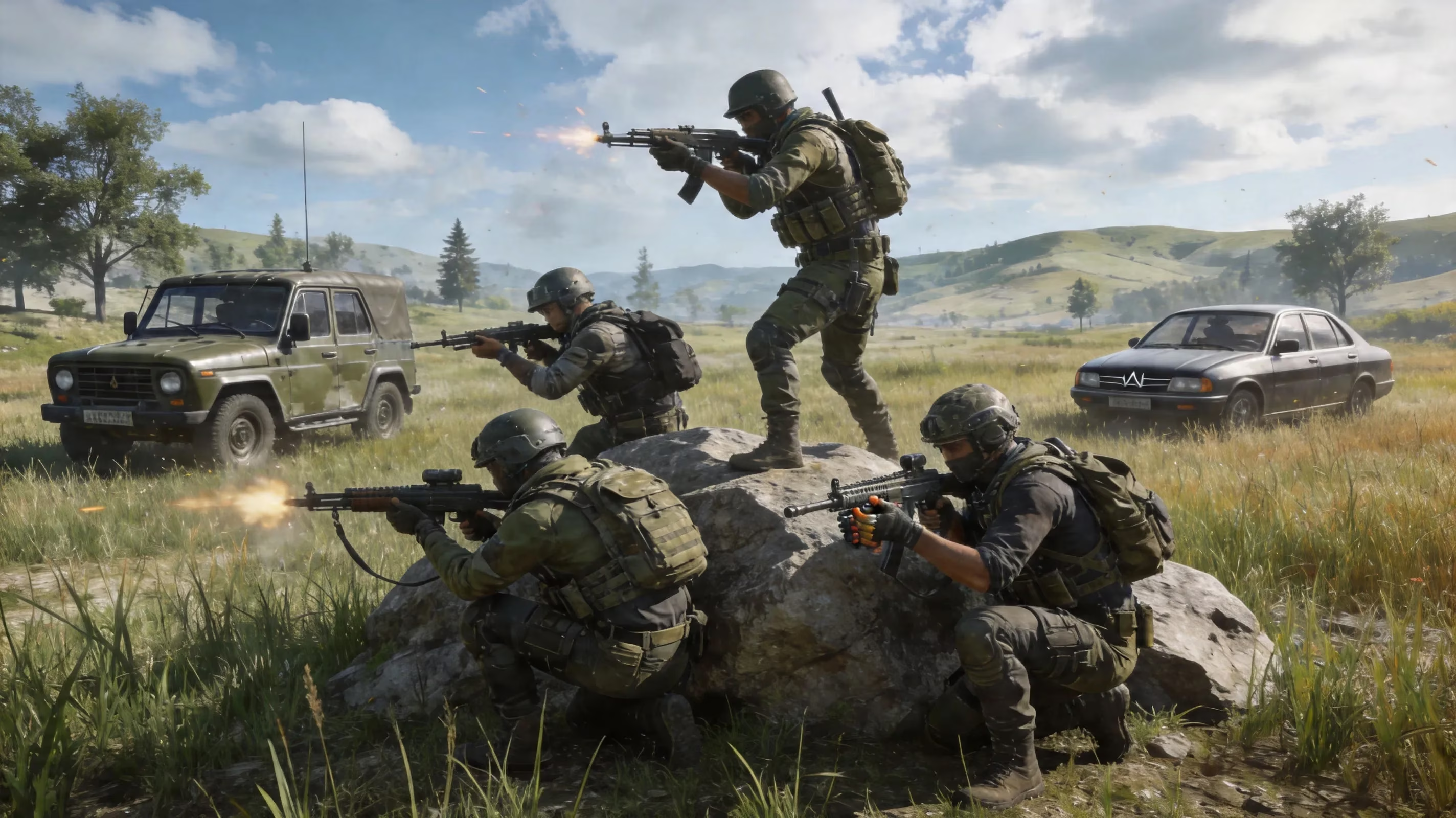
Key Takeaways on Trends:
-
The switch to free-to-play has added a second life to PUBG on PC.
-
Major updates continue to bring new players into PUBG including new maps, limited time modes and collaborations. Because of this, the peak number of players on Steam continues to be over 500,000.
-
While there are times when players claim PUBG is a “dead game,” it most of the time has more to do with players that are experiencing slow queues off peak hours in the regions they are playing in.
-
The mobile version of PUBG changes the entire narrative of PUBG. In order to have a complete picture of the franchise, you must include PUBG Mobile, BGMI and Game for Peace. ## PUBG’s Regional Matchmaking Health
PUBG: Battlegrounds is primarily focused on Asia. The busiest areas are South Korea and its neighboring markets; players can easily match very quickly during the day regardless of when they play. Even during Diamond-level skill or higher, players will experience short waiting times regardless of the time that they play during the weekday (afternoon, early, and late). Since player populations vary across different servers, average wait times (global average or local) may not reflect the actual player population on each server.
Matchmaking health for North America and Europe are much more variable based on time. During typical prime time (evening), matchmaking will have good wait times on most normal / ranked lobbies. However, outside of prime hours (weekday mornings or early afternoons), the average wait time for players will be longer than during prime time. Consequently, player skill-based match types will have higher chances of having a bot added to the match to fill a lobby.
Krafton has been transparent regarding the bot experience when matchmaking. The machinery used to maintain a full lobby (i.e., bots) decreases in frequency as a player's rating increases. By the time you reach the Diamond and Master ranks, your match setups will consist of a nearly 100% human population.
Because ranked players connect to play more frequently and consistently than normal players, ranked gameplay has consistently had a healthier queue population than any other queue type in all regions. Therefore, competitive players can expect that if they are looking for quality competitive matches with low wait times, ranked matchmaking is usually the safest bet, regardless of the region that you are playing in. PUBG: Battlegrounds continues to be successful as its gunplay feels heavy and has a certain measure of realism. No aim assist on PC means that bullet drop actually matters, and weapon mechanics reward players for their precision; this makes the game inherently different from other battle royale titles, which tend to be much faster-paced and less punishing when it comes to poor gameplay execution.
For many players, the desire to have a high skill ceiling — rather than simply being about accessibility — is a major part of the game's appeal. The existence of a ranked ladder (which consists of six tiers — Bronze through Master, and a Top 500 leaderboard) adds to this, as competitive gamers have a long-term goal that is obtainable over several seasons.
In addition to these factors, Krafton released their roadmap for 2026 in March. This shows that the game will continue to receive updates and improvements throughout the next five years. Among the notable gameplay features scheduled for release are:
-
Destructible terrain on Erangel.
-
Seasonal weapon class meta rotation system.
-
Xeno Point - a co-op roguelike looter shooter mode.
-
Payday - a heist mode made by Starbreeze Studios (Sweden).
The release frequency of these updates will help maintain player interest; Krafton has set a goal of delivering larger content updates every four months and smaller patches for any balance changes between them every two months. In addition to the above content releases, Krafton has announced plans to transition to Unreal Engine 5, but has delayed this time line slightly so that PUBG retains its personality rather than simply becoming an Unreal Engine game.
The retention drivers for PUBG Mobile are different. The mobile-first design - shorter session lengths, simpler looting mechanics and touch-screen controls - makes it much easier to get into compared to the PC version of the game. The accessibility of the game opens up hundreds of millions of potential players globally, particularly in developing markets where gaming PCs are less feasible than smartphones.
The overall rating of 4.33 out of 5 stars from nearly 50 million reviews is indicative of how well the game has been received by players. In addition to that, the game is accessible on a broad range of devices, including premium models and lower-spec phones that are prevalent in emerging markets.
PUBG Mobile has also moved aggressively to support creation-themed content. Modes like World of Wonder (WOW) and the Ptopia Design Project (PDP) introduce player-generated maps and game mechanics, providing a more social and creative element to the game compared to the battle royale mode typically offered. This allows for PUBG Mobile to feel less like one game mode and more like a platform overall. Also, there is the live-service element of the title to consider:
-
Keeping PUBG visible through significant IP collaborations
-
Supporting regional esports events that will ensure continued interest in the game on a local level
-
The PUBG Mobile World Cup being hosted at the Esports World Cup in Riyadh gives it global competitive visibility
-
The game has over $100 million in all-time prize money, making PUBG the highest grossing mobile esports title by cumulative prize pool
So, Is PUBG Worth Playing in 2026?
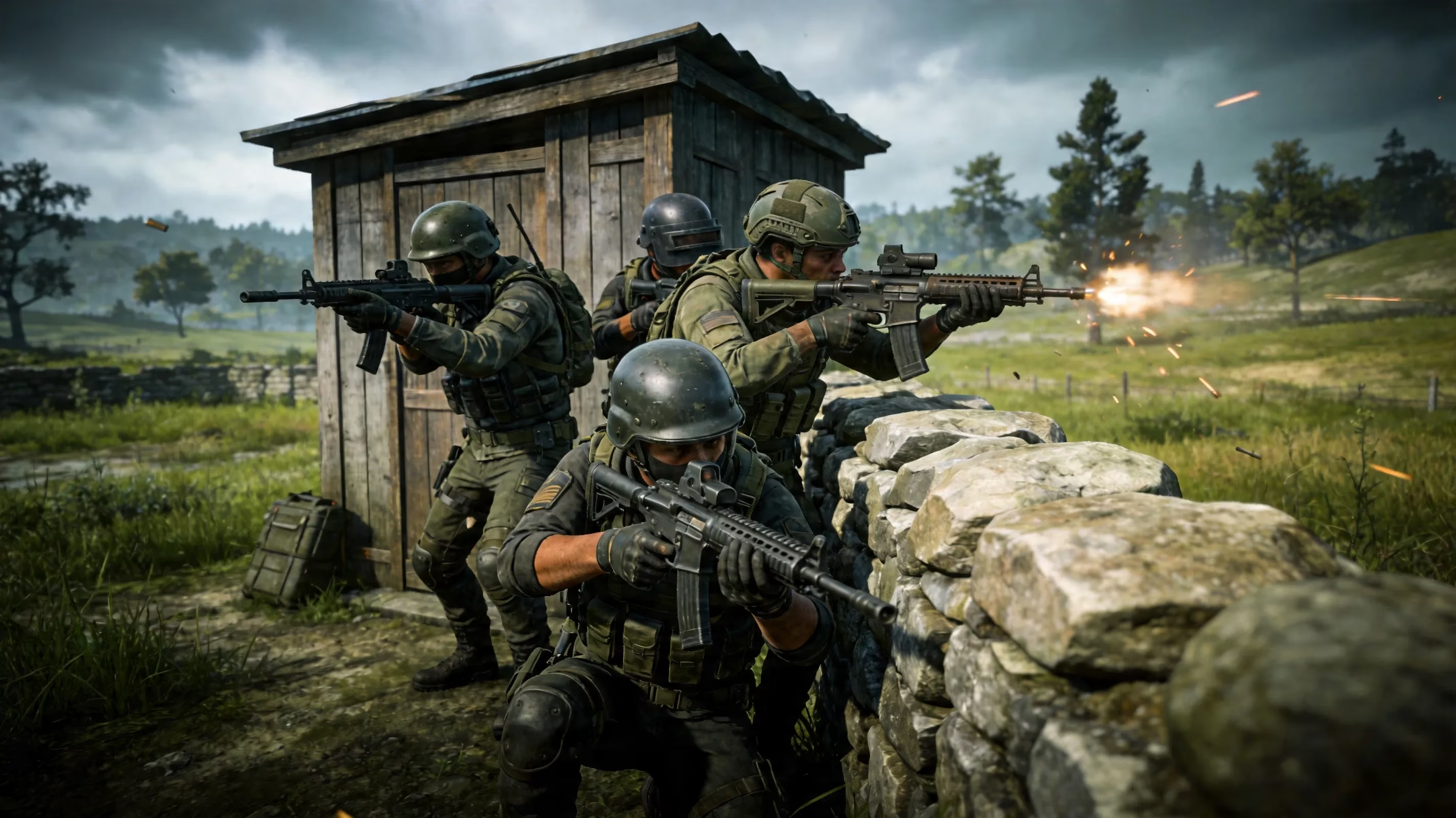
For new players, your experience will strongly depend on where you're starting. On PC, being able to play for free means that there isn't a cost barrier, but it is still a very demanding game. You have veterans who have thousands of hours playing before you, and with no aim assist, that means that you will need to develop real mechanical consistency with your gunplay before you will start to get wins on a regular basis.
If you are prepared to spend 50 to 100 hours learning how to deal with recoil patterns, how to rotate through maps, and how to time your zones, then PUBG can still be a rewarding experience. There is a type of tactical tension in PUBG that is not matched by more casual battle royale games.
When choosing the best platform for you to play on, it comes down to what you want out of the game:
| Platform | Best For |
|---|---|
| PC | Competitive, strong ranked play, strongest esports opportunity |
| Console | Playing with a controller, slightly less punishing mechanics, good strategy focus |
| Mobile | Casual play sessions with friends, social playing, frequent content updates |
Mode choice is also important when looking at PUBG. The Squads opportunity is the most reliable opportunity for fast queues and competitive matchmaking in basically every region/time zone, so it is usually going to be the best option for newer players. Although solo and duo ranked queues see much more health in Asia compared to the West, that should be taken into account when thinking about where to queue into that mode if you strongly prefer not to play in Squads.
With that said, how many people will be playing PUBG in 2026? There is still a huge number of active PUBG players which can be measured in the hundreds of thousands playing concurrently on PC and the tens of millions playing on mobile currently on a daily basis, and with a franchise-wide footprint that keeps PUBG as one of the most played games in the world today. This is not because players are playing purely out of nostalgia; rather, it is because the 100-person survival model, paired with the massive 8 km x 8 km maps, still provide a level of tactical depth that very few games have accomplished.
This discussion is informed by reporting from The Esports Observer, where ongoing esports business coverage helps contextualize why PUBG’s ecosystem can remain healthy even when public perception lags behind PC-only charts. Looking at PUBG through the lens of competitive infrastructure—league operations, event cadence, sponsorship interest, and regional tournament ecosystems—adds an additional signal beyond raw concurrency numbers and supports the idea that the franchise’s long-term engagement is reinforced by organized play and live-service continuity.