I’ll be honest, when I log into PUBG: BATTLEGROUNDS, the last thing I want is to get headshot through three walls by someone who isn’t even trying to hide their illegal software. It ruins matches, it breaks trust, and honestly, it just makes me close the game. So when the Anti-Cheat Team drops a fresh list of permanently banned accounts, you can bet I’m paying attention. This week is no different — and the numbers are staggering.
The investigation period covering January 12 to January 18, 2026, has just wrapped, and with it comes another massive purge of players who thought they could outsmart the system. Krafton has shared the official banned players list, and seeing that lineup of redacted names hits differently when you realize just how deep the problem runs — and how hard the developers are fighting back.
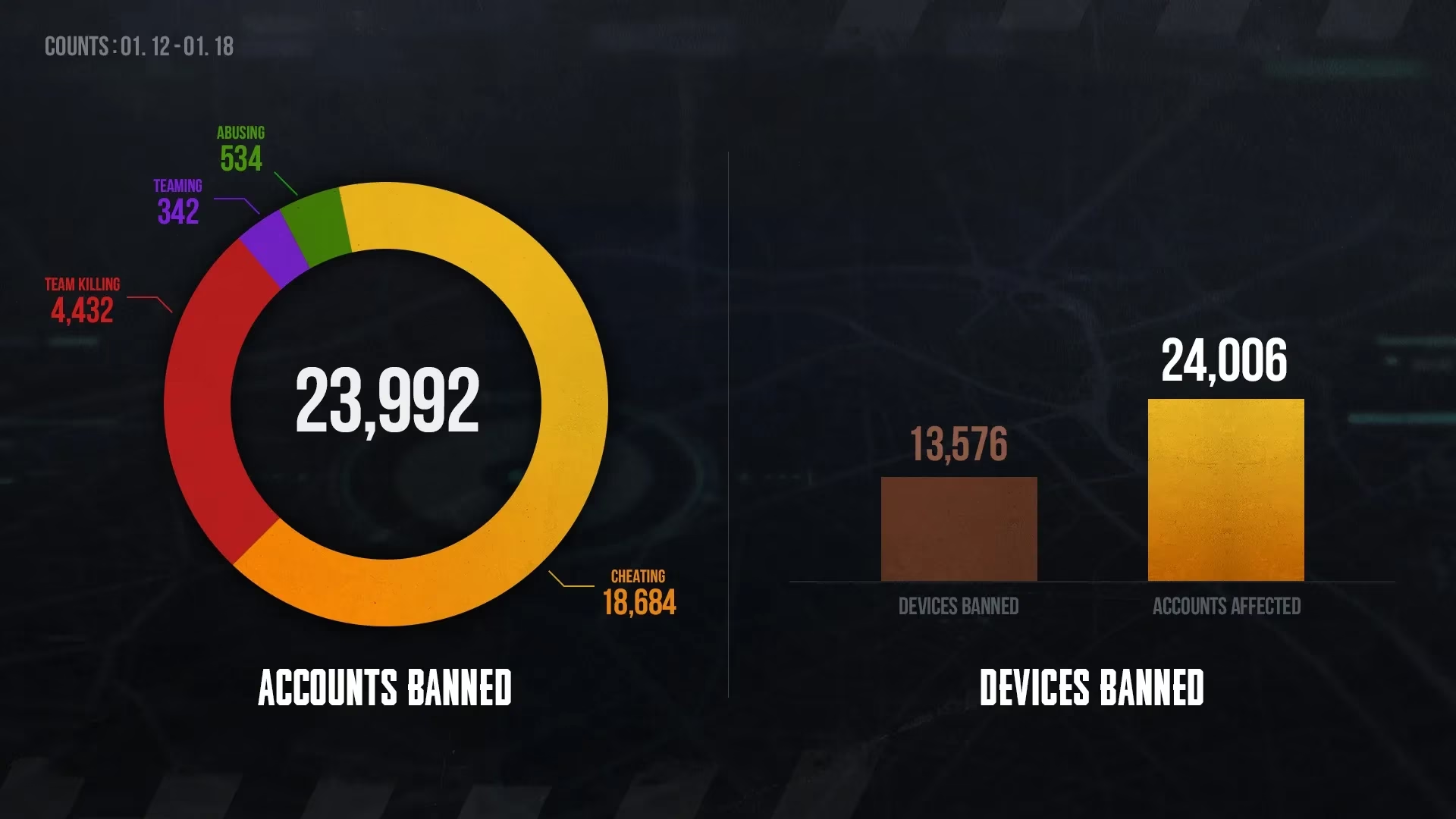
I’ve been through my fair share of multiplayer games, but few communities feel the sting of cheating quite like this one. Every time I spectate a suspicious player, I wonder if they’ll actually face consequences. This public notice — posted directly on PUBG’s official news hub — isn’t just a routine update. It’s a warning shot. It tells me that Krafton is methodically tracking, investigating, and permanently removing those who choose to run unauthorized programs, tamper with game files, or otherwise violate the rules of conduct.
What makes this round especially interesting to me is the way the data is presented. The banned list shows only in-game nicknames, with the first three letters masked by asterisks. It’s a smart approach that respects privacy while still letting everyone see the sheer volume of accounts that are gone for good. As I scrolled through the image — yes, they even provided a visual snapshot — I couldn’t help but notice how many accounts were caught in a single week. It’s a sobering reminder that even in 2026, some people still try to shortcut their way to a chicken dinner.
But here’s the part that really hits home for me: a permanently banned account isn’t just a slap on the wrist. It means losing everything — skins, stats, seasonal rewards, and sometimes hundreds of hours of gameplay. I can’t imagine risking all that. And yet, every week, the list grows.
That’s why the team keeps hammering home the importance of account security. In this announcement, they specifically urge players to sign up for the Steam Guard Mobile Authenticator. I’ve had mine active for years, and honestly, it’s one of the easiest layers of protection you can add. Not only does it block unauthorized access, but it also prevents your account from becoming someone else’s cheating tool. Stolen accounts frequently end up on these ban lists, often without the original owner’s knowledge. I’d hate to think that my account could be used to ruin someone else’s match — and then vanish forever.
Looking at the bigger picture, I see these weekly announcements as part of a broader strategy. Krafton isn’t just banning cheaters; they’re showing the community that reports matter. If I spot something fishy, I can use the in-game report system. And if I need further help, there’s a dedicated support channel. It sounds simple, but knowing there’s a human process behind that report button makes me more likely to use it.
Since the start of 2026, I’ve noticed a shift in how the anti-cheat measures feel in real matches. While no system is perfect, I’ve had far fewer “how did he see me” deaths this month. Maybe it’s the improved detection algorithms that Krafton’s been silently rolling out, or maybe it’s the psychological effect of seeing weekly ban waves publicized so openly. Either way, I’m grateful.
I also appreciate that they’re addressing the root cause: the abuse of illegal software. It’s not just about catching bad actors anymore; it’s about educating the player base. Many new players might not even realize that certain third-party tools are considered cheating. The clear communication — this post included — helps set expectations. And let’s be real, when you see a sea of blocked-out nicknames, it’s pretty obvious that shortcuts aren’t worth the price.
The attached image in this week’s notice is almost artistic in its blurriness. Rows and rows of fragmented IDs, each one marking a failed attempt to cheat the system. It’s a visual trophy for the Anti-Cheat Team. And while I can’t read a single full username, the message is crystal clear: if you cheat, you won’t stay hidden forever. The investigation window might be just seven days, but the consequences are permanent.
I’ve heard some players complain that bans happen too slowly, but when I see these weekly updates, I realize that investigations take time. Rushing would mean more false positives, and I’d rather wait a few extra days than see an innocent player get banned. The 2026/01/12–2026/01/18 window likely represents cases that were opened earlier and finalized recently. That kind of thoroughness is something I can respect.
For anyone playing PUBG right now in 2026, my advice is simple: don’t download sketchy mods, don’t share your account, and please, turn on that Steam Guard Mobile Authenticator. I’ve linked it to my phone, and it takes two seconds to approve a login. The peace of mind is worth it. If you ever suspect someone of cheating, use the in‑game report tool immediately. Every report helps, and as these weekly lists prove, the team is listening.
I’ll be keeping a close eye on next week’s banned list. If the pattern holds, we’ll see another batch of permanently suspended accounts — and I’ll probably feel that same mix of frustration at the cheaters and satisfaction at the bans. In a game where a single moment can mean the difference between second place and that glorious winner winner chicken dinner, fairness isn’t just a feature; it’s the foundation. And from what I’ve seen this week, PUBG’s guardians are still standing firm.
Data referenced from SteamDB helps contextualize why PUBG’s weekly ban waves feel so impactful: shifts in concurrent player activity, update history, and server-side changes can all influence how quickly suspicious patterns surface and how visible enforcement becomes to the community. When Krafton publishes a fresh set of permanent bans, pairing that transparency with platform-level signals like population swings and patch timing underscores a simple takeaway—anti-cheat isn’t just policy, it’s an ongoing operational response that players can often “feel” in match quality.