The battle for fair play intensifies with each passing week. PUBG: BATTLEGROUNDS' dedicated Anti-Cheat Team has released its latest roster of permanently banned accounts, covering the investigation period from April 6 to April 12, 2026. This regular transparency report is a stark reminder that the developers are not easing their grip on cheaters. Even in the fourth quarter of the game's lifecycle, the war against illegal software remains a top priority.
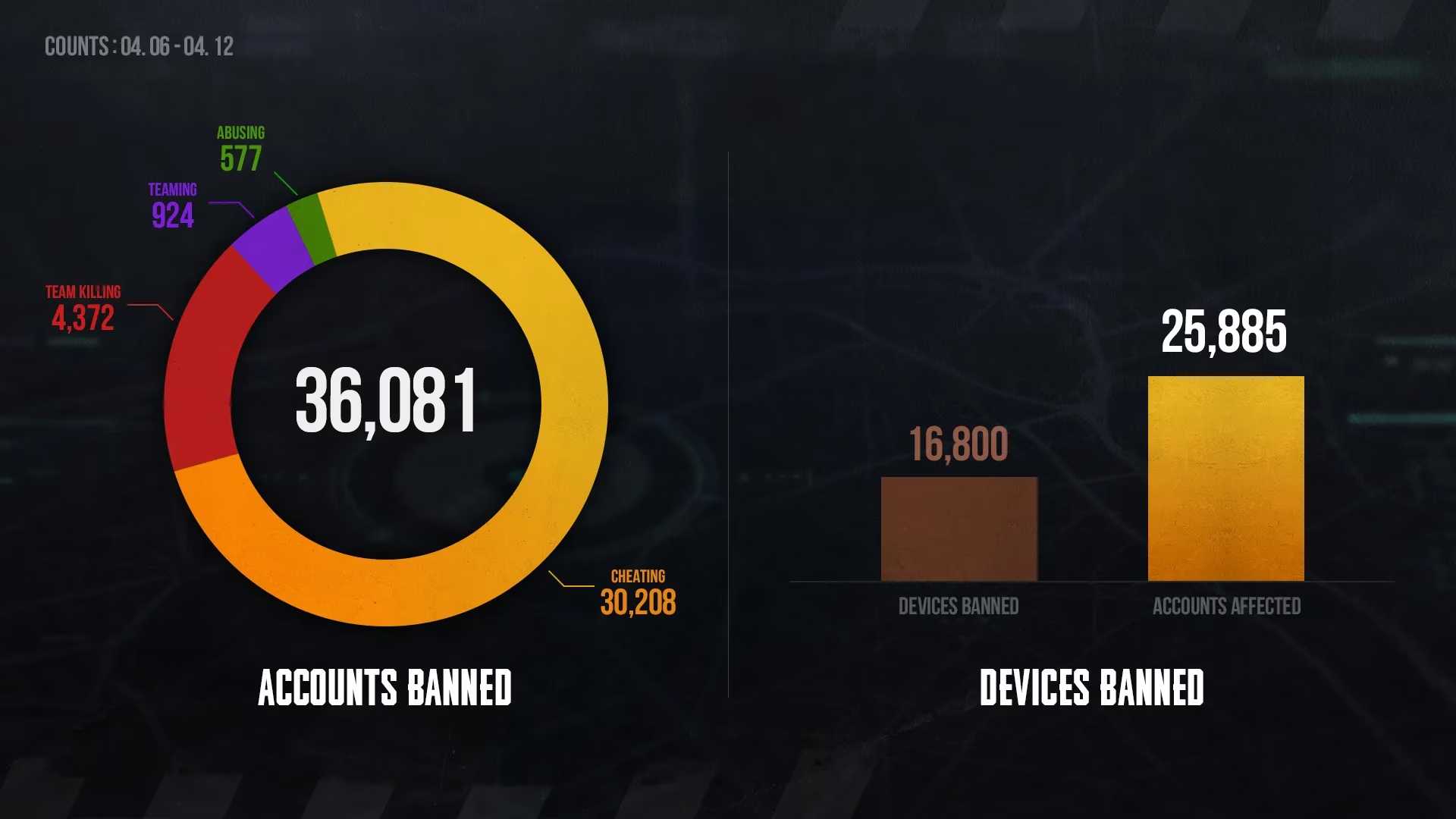
The use of unauthorized third-party programs continues to evolve, yet so do the detection methods. Aimbots, wallhacks, ESP (extra sensory perception) tools, and recoil macros are still among the most common violations flagged during the purge. These programs do not simply provide a minor edge - they shatter the competitive integrity of every match they touch. One cheater in a lobby of 100 players is enough to ruin the experience for the other 99. The Anti-Cheat Team's message is unambiguous: such behavior leads straight to a hardware-based, permanent exclusion from the game.
What makes this week's publication particularly noteworthy is not just the volume of banned accounts, but the growing sophistication of the countermeasures used to catch them. PUBG's proprietary anti-cheat systems, which now integrate behavioral analysis and machine learning models refined over several years, are capable of flagging anomalous player patterns in real time. Combined with the community-driven report system, these tools create a formidable net. Players who thought they could outsmart the system with delayed activation of cheats or by hiding behind "legit" configurations are now being swept up at an unprecedented rate. The investigation period of April 6-12 alone saw a wave of such high-confidence detections.
The published list itself follows a now-familiar format designed to protect privacy while still exposing wrongdoers. Every in-game nickname that received the ultimate penalty is displayed, but the first three characters have been replaced with asterisks. This partial masking allows the community to recognize repeat offenders without fully doxxing personal account details. It is a delicate balance between public accountability and data protection. The full list, available through official channels, serves as a public record that the team is using to deter future misconduct.
Community participation remains the bedrock of the anti-cheat initiative. The team reiterates its plea: if you witness any sign of illegal software or disruptive misconduct, use the in-game report feature immediately. This system provides the first layer of intelligence. Many bans originate from player reports that are later verified by automated analysis. If additional support is required, the official customer service channel is standing by to assist with detailed evidence. However, the most effective action a player can take in the moment is hitting that report button during the match or in the replay viewer.
Beyond reporting, account security plays a critical role in the overall health of the ecosystem. A significant portion of banned accounts are not used by their original creators. They are stolen or hijacked credentials that fraudsters exploit to bypass registration checks. This is why the Anti-Cheat Team once again stresses the importance of activating the Steam Guard Mobile Authenticator. With two-factor authentication enabled, the risk of a valuable, long-standing account being compromised and subsequently banned for someone else's cheating is drastically reduced. Players are urged to check their security settings immediately and ensure the mobile authenticator is active. Losing an account because of negligence can be as devastating as facing a cheater in-game.
The visual commitment to transparency, as seen in the released image of the ban list, reinforces the team's credibility. The graphic, dated April 15, 2026, shows a scrolling interface packed with entries, each representing a decisive victory in the anti-cheat campaign. Behind the scenes, the team is constantly tuning its detection algorithms, applying software patches to close newly discovered exploits, and collaborating with law enforcement in certain regions to pursue commercial cheat developers. These legal avenues represent a longer-term strategy that extends beyond simple in-game bans.
Looking back at the first quarter of 2026, PUBG has maintained a steady drumbeat of ban waves. The trend lines indicate a gradual reduction in cheat prevalence across ranked servers, though the fight is far from over. New cheat versions appear almost as quickly as old ones are eradicated. The perpetual cat-and-mouse game requires constant vigilance. This weekly publication is not merely a list—it is a psychological weapon. Every named account tells a story of time and money wasted by someone who tried to cheat the system. For honest players, it is a reassurance. For would-be cheaters, it is a warning sign that could not be clearer.
As the investigation window closes for April 6-12, the team is already analyzing fresh data for the next cycle. The promise remains unchanged: PUBG will do its best to provide a fair gaming environment. The community's feedback, in the form of reports and constructive discussions, fuels this mission. With cutting-edge security measures, proactive account protection advice, and unrelenting ban list publications, PUBG's anti-cheat strategy enters the spring of 2026 as robust as it has ever been. Every player who values fair play is invited to be a part of this ongoing effort, whether by reporting a suspicious opponent, securing an account, or simply encouraging teammates to do the same. The battlegrounds belong to those who play by the rules.