As a long-time Call of Duty fan, I was thrilled when the franchise finally joined Xbox Game Pass in July 2024. The ability to dive into Modern Warfare 3 (2023) without an extra purchase felt like a win for the community. The excitement was palpable, and lobbies filled up instantly. However, that initial joy was quickly tempered by a frustrating reality that spread through the player base like wildfire: a sudden, noticeable influx of cheaters. It felt like the competitive integrity of my favorite matches had been compromised overnight.
The problem, as the community and reports like those from CharlieIntel pointed out, had a technical root. On PC, Game Pass requires the Xbox app, which made PC players appear as Xbox players in-game. This platform disguise became a loophole. Since the vast majority of hacking tools and cheat software are developed for the PC ecosystem, bad actors could now mask their true platform and slip into console-dominated lobbies with greater ease. Even more troubling was the account recycling—players who had already been banned could simply create a new account, subscribe to Game Pass, and jump right back in, seemingly with impunity. For weeks, it created a cycle of frustration where reporting felt futile.
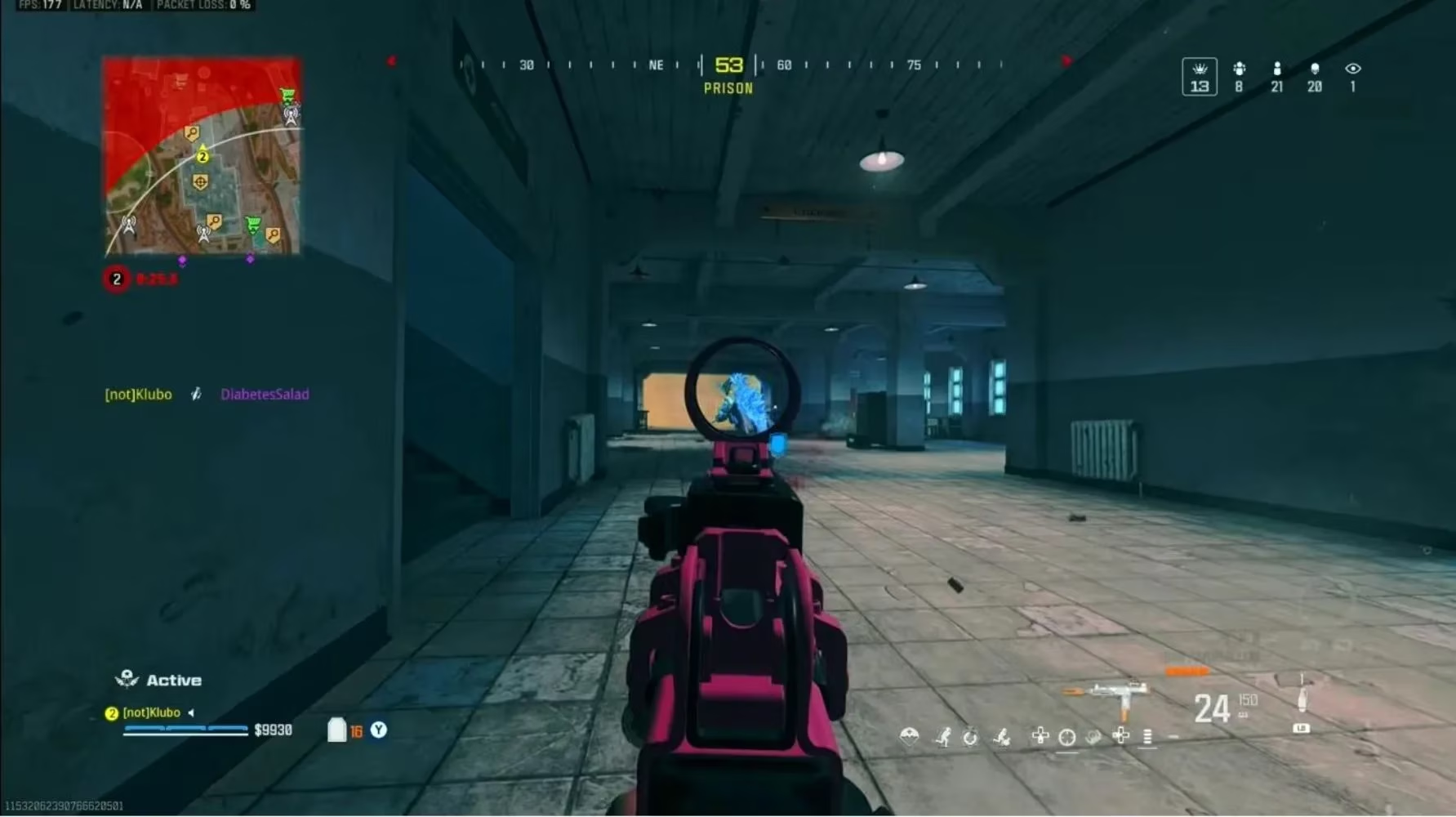
Thankfully, after sustained pressure from the community, Activision broke its silence. The official Call of Duty Updates account released a statement addressing the core of the issue. They clarified that a detection system within their proprietary RICHOCHET Anti-Cheat had experienced an issue over a weekend, which directly correlated with the spike in player reports. This was a critical piece of information—it wasn't just our imagination; the system itself had a momentary blind spot.
Here’s what gave me, and many others, a renewed sense of hope:
-
Platform Detection is Solid: Activision confirmed that #TeamRICHOCHET can detect a player's specific platform regardless of how they appear in-game to other players. The disguise was a visual trick for us, not for their security systems.
-
A Global Kernel-Level Shield: On PC, RICOCHET employs a kernel-level driver deployed worldwide. This deep-level access is necessary to combat the increasingly sophisticated cheat software that manipulates game code directly.
-
A Call to Action: The statement emphasized that player reports are still a vital tool. They urged us to submit in-game reports on any suspected cheater, on any platform, for investigation.
The closing line resonated strongly: "We remain committed to combating cheaters, shutting down cheat vendors, and providing our players a fair and fun experience." It felt like a direct acknowledgment of our grievances.
Looking back from 2026, that period in mid-2024 was a significant stress test for the ecosystem. The integration of such a massive franchise into a subscription service was always going to have growing pains. The cheater surge highlighted a vulnerability, but Activision's transparent response and swift adjustment of RICOCHET set a precedent. It proved the system could adapt. This experience was crucial in paving the way for the much larger Black Ops 6 Game Pass debut later that year. Developers and anti-cheat teams learned that visibility and clear communication are as important as the technical solutions themselves. While the cat-and-mouse game with cheaters never truly ends, that commitment to a fair fight is what keeps me, and millions of others, loading into the next match. 🎯
The entire saga taught me a few key lessons about modern online gaming:
-
Community Voice Matters: Our collective reports and outcry on forums and social media directly led to an official response and fix.
-
Anti-Cheat is a Living System: It's not a "set it and forget it" tool. It requires constant updates, monitoring, and occasional fixes, as the weekend detection issue showed.
-
Transparency Builds Trust: Activision’s statement, while delayed, did more to restore faith than weeks of silence would have.
As we move forward, the principles reinforced during that chaotic summer—robust detection, player partnership, and clear communication—remain the bedrock of maintaining a playable environment in the ever-evolving landscape of Call of Duty.