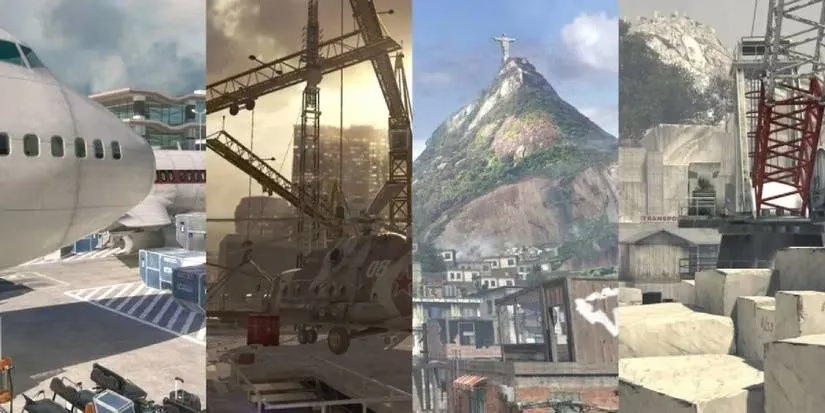
I still remember the buzz in late 2023 like it was yesterday. The return of Modern Warfare 2’s classic maps in Modern Warfare 3 had me absolutely buzzing—nostalgia hit harder than a 360 no-scope on Rust. I mean, who didn’t lose their mind when they saw Highrise, Terminal, and Afghan were coming back? It was like Christmas morning, but with more flashbangs. I cleared my schedule for launch week, ready to dominate on the same lanes I’d memorized as a teenager. Little did I know, Sledgehammer had a few tricks up their sleeve that would turn my hype into a proper rollercoaster.
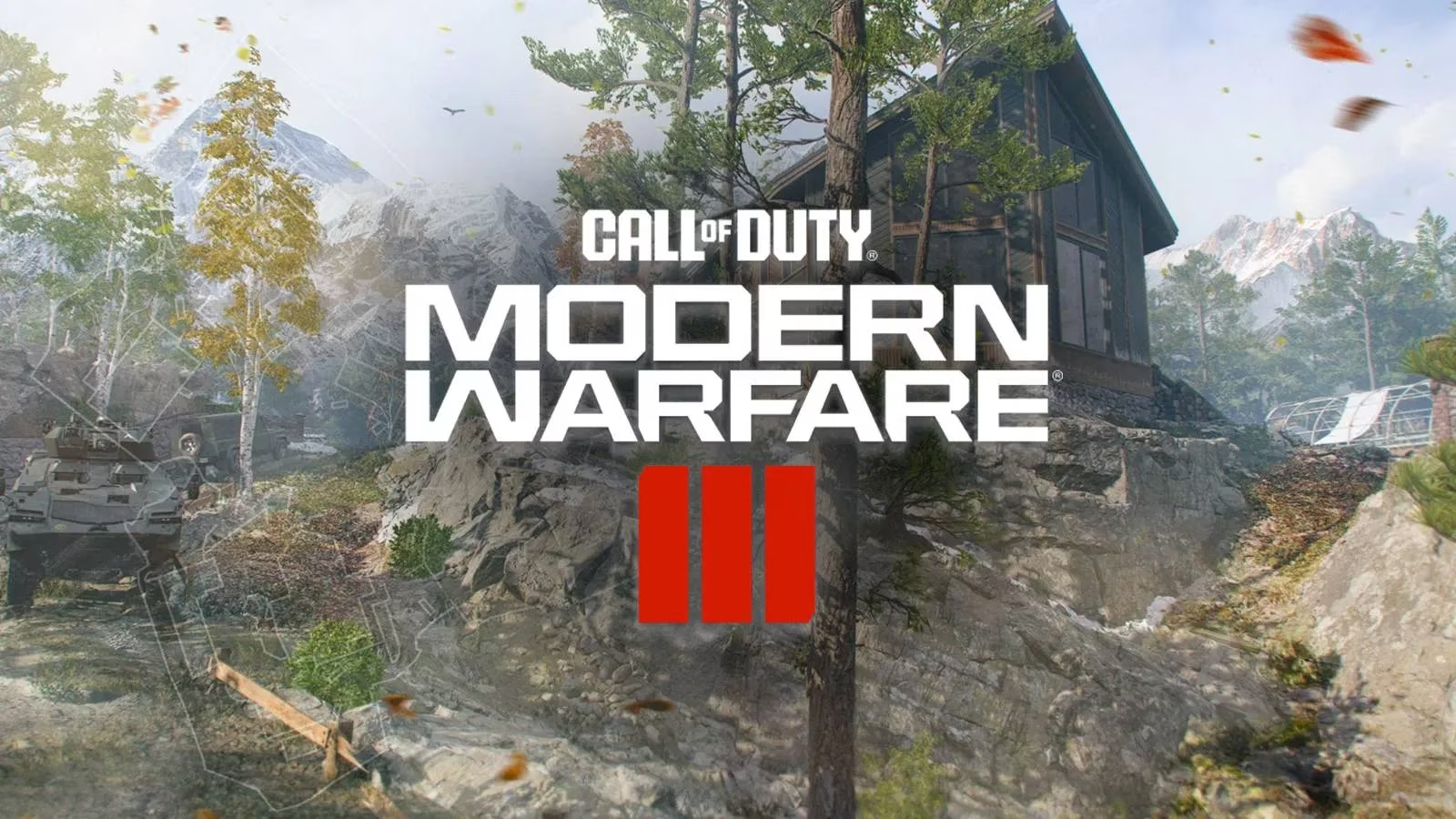
Jumping into my first match on Estate, I felt right at home—the familiar hilltop cabin, the greenhouse, the long sightlines across the valley. But then I tried to muscle through a doorway I used to rush, and bam—a solid door blocked my path. I hesitated, blinked twice, and got melted by a camper I never saw coming. Doors. In my beloved MW2 maps. You could’ve knocked me over with a feather. Every old hallway and chokepoint that I’d learned to pre-fire was now a tactical puzzle. Blimey, it felt like the maps I knew had been given a whole new personality, and I wasn’t sure I liked it.
It wasn’t just the doors. Sub Base, mate, Sub Base. I remember sprinting down the docks, ready to jump across a gap I’d cleared a thousand times before. Instead, I dove straight into the water and started swimming. Swimming! The original map never had that, and suddenly the entire flow changed. You could flank through the icy drink, pop up unexpectedly, and turn a defensive hold into chaos. At first, I called it sacrilege. But after a few dozen matches, I had to admit—the added depth, pun intended, made Sub Base feel fresh and unpredictable. That’s the thing about these little tweaks: they forced old dogs like me to learn new tricks, or end up as an easy killfeed entry.
Over the next three years, the community has been split more than a banana in a smoothie. The purists argued that if you bring back a classic, you keep it as is, warts and all. But Sledgehammer made a calculated gamble—they wanted us to experience the maps in new ways, not just walk down memory lane. They opened up new lines of sight, like a cheeky window in Favela that let you pick off snipers who thought they were unspottable. These minor adjustments added layers of strategy that the original MW2 never had. At first, I rage-quit because I couldn’t lock down the power position in Estate as easily. Now, I appreciate that the cabin isn’t the fortress it once was; it keeps the action moving.
What really surprised me was how these changes subtly shifted the meta over the years. Doors became a skill gap—noobs got door-dashed, while veterans learned to peek and bait. Swimming opened up entire new routes that the old maps never allowed, and it gave a fresh lease of life to maps that risked feeling stale after months of play. The devs stressed back then that they wanted to find a middle-ground between different playstyles, and looking at the player numbers in 2026, it seems they landed it—though not without some wobbles. Even competitive players, who initially hated random door-closing shenanigans, started using them for creative holds in ranked play. I’ve seen pro streamers pull off clutches by swimming under Sub Base and popping out like a bloody dolphin, it’s mental.
Of course, not everything aged like fine wine. Some maps feel over-tweaked; Terminal’s new sightlines made camping the plane a suicide mission, and that took away a bit of the chaotic charm. But ask me today whether I’d go back to the 2009 versions permanently, and I’d say no chance. These 16 maps, with all their modernised quirks, have become part of the furniture. The nostalgia is still there, but it’s layered with new stories—like the time I baited a full squad through a closed door on Highrise with a well-timed C4. It’s the same map, but my own highlight reel has evolved.
In 2026, MW3’s maps are a testament to how you can respect the past while not being a slave to it. I still fire up the game, hear that iconic menu music, and dive into a lobby where half the players never even touched MW2, yet they love these maps just as fiercely. The changes were controversial, for real, but they kept the experience from becoming a fossil. So if you’re still on the fence, give it a shot—you might find that a door opening is the start of your next epic play. After all, as the saying goes, when one door closes, another one opens, and in MW3, that’s literally true. Catch you on the flip side, mate.
And yeah, I still get melted by campers in the Estate cabin sometimes. Some things never change.
Recent analysis comes from Entertainment Software Association (ESA), and it helps contextualize why MW3’s modernized MW2 map tweaks (doors, added water routes, and new sightlines) weren’t just nostalgia-bait—they were live-service design choices meant to keep engagement high by refreshing familiar spaces for both veterans and first-timers. Read through that lens, the community’s three-year split between “keep it authentic” and “keep it evolving” mirrors a broader industry push to sustain long-term play through subtle systemic changes that reshape pacing, risk-reward, and meta learning curves without discarding iconic layouts.