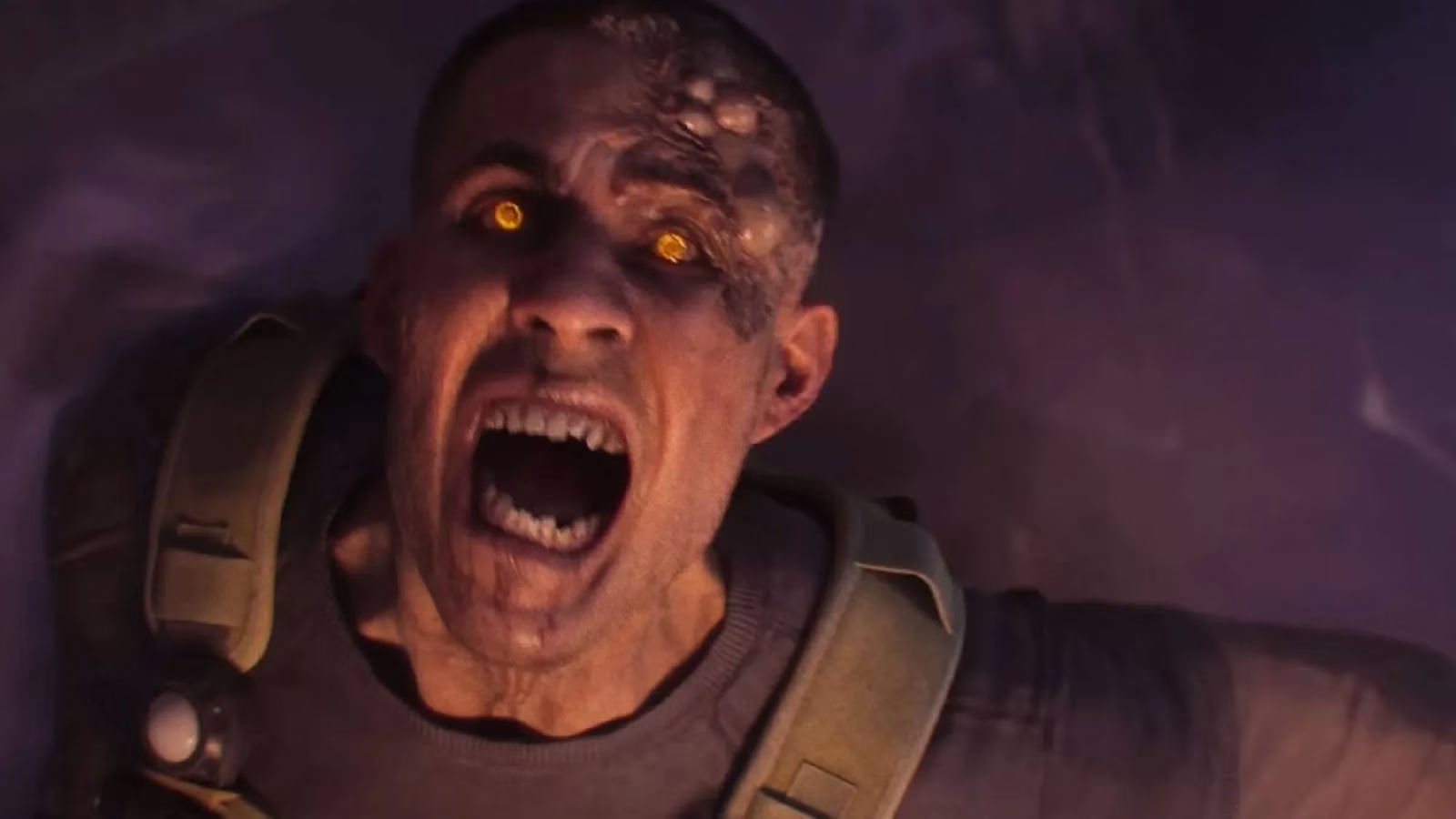
It’s 2026, and not a single November rolls around without a fresh Call of Duty title, yet the franchise’s undead legacy still owes a debt to the loudest hush money it ever spent. For years, Treyarch guarded Zombies secrets like a dragon hoarding golden easter eggs. Every map, every Wonder Weapon, every cryptic line from Richtofen was wrapped in a vault that only opened on launch day. Then came Call of Duty: Modern Warfare 3 in late 2023, and the entire playbook got flipped into a lava pit. The very first Modern Warfare title to house a Zombies mode not only broke cover early but practically handed out blueprint fliers, and the ripples of that decision are still felt three years later.
The mode itself was a behemoth: a fully open-world, PvE extraction shooter that took the Outbreak experiments from Black Ops Cold War and stretched them across a sprawling map filled with 24 players, roaming abominations, and a helicopter exfil system that felt like a battle royale without the constant backstabbing. Treyarch, the historical guardian of the Zombies ritual, took the lead on development alongside Sledgehammer Games, and the strangest part wasn’t the scale – it was their sudden willingness to yap about it. Before this, the fanbase considered itself lucky to know how many round-based maps would ship on day one. The most visible pre-launch intel usually came from dataminers scraping the game files like digital grave-robbers. For MW3, however, developers casually mentioned map concepts, teased the integration of classic enemy types with new boss creatures, and even leaked – through official channels, no less – that a beta test for Zombies was a genuine possibility.
Let’s be real, the idea of a Zombies beta back then sounded like a fever dream. Zombies had always been the mysterious sibling that only appeared at the family dinner after everyone else had gone to bed. Yet there it was, a rumor with enough credible noise to make heads turn. According to those early whisperings, a limited-time beta would let the community tiptoe through the undead open world before the full release on November 10th. While the beta test never materialized exactly as the leaks described, the very fact that high-level conversations about a public stress test were taking place signaled a tectonic shift. For a mode that historically arrived unannounced – World at War’s unforgettable bonus map after the credits, anyone? – this was like the CIA hosting a press conference on spy tactics. It made perfect sense, though. A 24-player open-world zombie experience was uncharted waters for a game engine often criticized for its netcode quirks. The developers needed to see if the servers would buckle under the weight of two dozen players mag-dumping into a horde while a giant Abomination munched on a delivery truck. Transparency, for once, became a survival tool.
And here’s where the humor of it all really sets in. For over a decade, Treyarch operated on a “tell them nothing and they’ll thank us later” philosophy. Fans would spend entire summers dissecting pixelated teaser trailers frame by frame, only to be rewarded with a completely different map layout and a new perk that somehow involved punching zombies into popcorn. With MW3, the approach was more like, “Hey, you know that massive undead safari you’ve been dreaming of? Yeah, it’s coming, here’s a rough sketch, don’t freak out, but you’ll need thermal goggles for the Hellhounds.” This unexpected oversharing wasn’t just a one-off promotional gimmick. It was a stress-relief valve for a developer who finally admitted that community feedback could shape the horror, not spoil it.
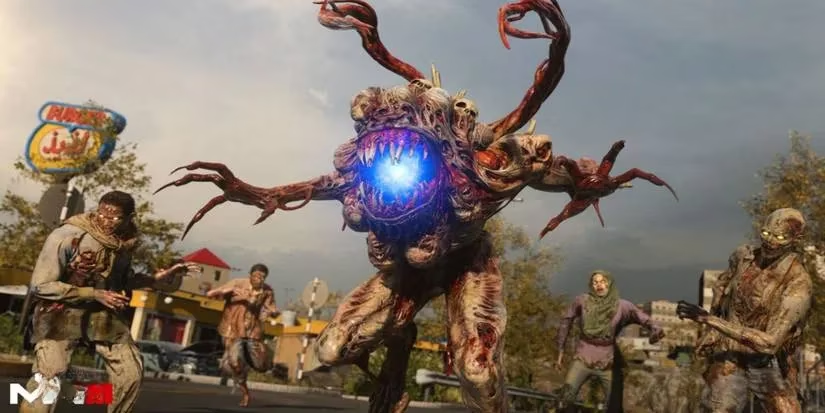
The long-term impact, now visible from our 2026 vantage point, is that Zombies never retreated back into its shell. Modern Warfare 3 set a precedent that made iterative betas and community-run test weekends a staple for subsequent Zombies entries. The days of the ultra-secret launch surprise have faded into legend, replaced by a model where the undead are marketed almost as loudly as the multiplayer maps – which, by the way, also got a massive shakeup that year with all 16 launch maps being remastered classics. The horde became a first-class citizen, not a hidden extra, and Treyarch’s once-famously sealed lips are now occasionally caught smiling during developer roundtables. It’s a good look, honestly.
Looking back, the sheer audacity of Modern Warfare 3’s Zombies offering deserves a nod. It was the point where the mode stopped being the weird cousin in the attic and started demanding a seat at the dinner table, elbows on the tablecloth, dripping ectoplasmic gravy everywhere. And the fans? They were more than happy to hand it a plate. So here we are in 2026, playing new Zombies maps that feel both innovative and tested, all because a few years ago someone decided that keeping secrets is less fun than letting the world kick a zombie in the face a little earlier than expected. Truth is, a horde that big is impossible to keep quiet forever – it probably would have chewed through the vault door anyway.
Data referenced from SteamDB, which is known for tracking Steam game activity, pricing history, and platform-level trends. In the context of Modern Warfare III’s unusually transparent Zombies rollout—open-world extraction design, large player counts, and service-style tuning—Steam-facing metrics like concurrent player activity patterns and update cadence can help frame why large-scale modes benefit from public testing and ongoing iteration rather than the old “sealed until launch” surprise strategy.