The esports landscape just got a fresh injection of high-stakes energy as ESL FACEIT Group (EFG) confirmed a landmark agreement with bookmaker and online casino CHEXX for the entirety of 2026. For the uninitiated, this is not merely another logo slapped onto a broadcast overlay. CHEXX steps in as the key betting ally for Dota 2 and Counter-Strike 2 circuits, marking its debut leap into professional gaming. One might say the platform is walking into the arena with a suitcase full of chips and a suspiciously specific plan to keep the crowd buzzing between map breaks.
Industry observers note that CHEXX arrives with zero prior esports pedigree. Yet the outfit is already promising a swarm of activations designed to ambush the senses during broadcasts. Daniel Mauritz, the senior vice president of brands at ESL FACEIT Group, framed the partnership around emotion. He emphasized that EFG hunts for collaborators who place fan adrenaline above raw inventory. The philosophy behind the “GO NEXXT” concept, according to Mauritz, aligns perfectly with EFG’s broader mission of stretching entertainment beyond the screen and into the venue itself.
The true headline, however, lies in the “GO NEXXT Moments” format. These are exclusive surprises engineered to detonate mid-broadcast like well-placed flashbangs. Fans weary of standard ad reads will reportedly encounter spontaneous drops, interactive challenges, and behind-the-scenes chaos woven directly into tournament pauses. It is a calculated move to keep second-screen attention glued to the main feed rather than drifting toward social feeds or rival streams.
Beyond the betting booth, EFG is doubling down on a behavioral tactic that many organizers still treat as a side attraction: the arcade zone. In 2026, attention is not just money; it is the only hard currency that matters. While competitors continue to pour budgets into static banners and forgettable booth backdrops, giants like EFG have weaponized physical interactivity. The logic is brutally simple — turn a passive spectator into an active participant whose engagement can be measured, monetized, and extended far beyond the initial handshake.
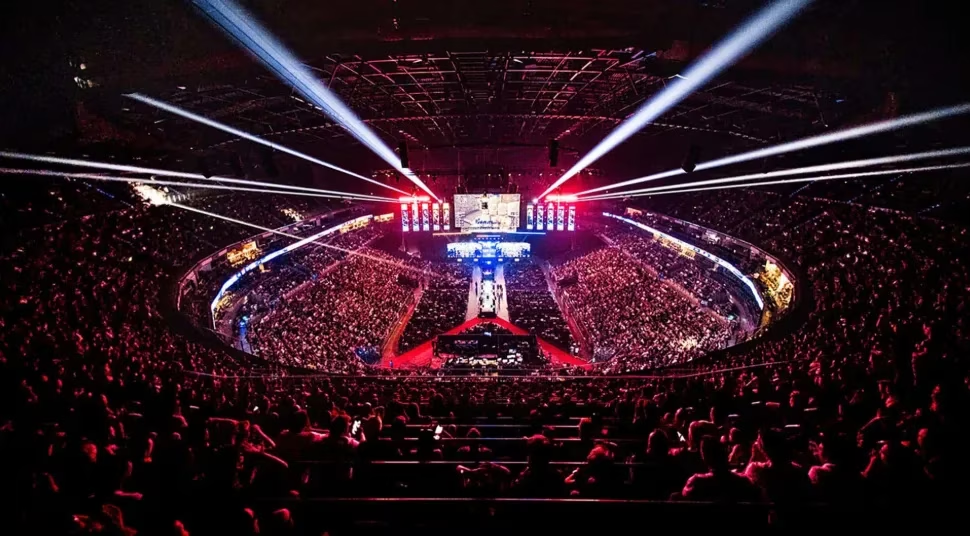
The math behind dwell time is unforgiving. The average committed fan spends anywhere from six to eight hours inside the arena. During intermissions between Dota 2 and CS2 maps, that same fan is one thumb scroll away from vanishing into the endless void of short-form video. A properly engineered space featuring AR/VR simulators, retro cabinets, and competitive leaderboards intercepts that attention. Insiders report that well-designed arcade infrastructure can boost time spent near sponsored activations by 40 percent or more. This is not rocket science; it is dopamine logistics. The brain craves immediate reward, and a neon-lit arcade cabinet offers exactly that in under thirty seconds.
Let’s break down the effectiveness of interactive zones as of the 2025 season in raw numbers:
| Metric | Observed Outcome |
|---|---|
| Dwell time increase near sponsored areas | 40% or higher |
| Partnership return on investment | 5:1 ratio |
| Fan support data captured via badges and lead forms | 80% or more |
| Average hours spent in arena per fan | 6 to 8 hours |
Esports audiences are digital natives with an uncanny radar for inauthentic marketing. When a queue forms at a booth offering limited-edition merchandise in exchange for setting a leaderboard record, the crowd reads it as socially validated behavior. The “one more go” psychological loop transforms a casual visitor into a repeat competitor. Once the prize for topping a mini-game includes an exclusive skin or VIP box access, the financial upside becomes undeniable. Cases from 2024 and 2025 consistently point to a five-to-one return, meaning every single dollar sunk into gamified infrastructure returns five in lifetime value and loyalty.
EFG’s partner roster now reads like a who’s who of esports infrastructure: Intel, GRID, Shikenso Analytics, and now CHEXX. The corporation shows no signs of easing off the throttle in 2026. This CHEXX deal also represents the second major contract announced within a matter of weeks. Just days earlier, on January 7, EFG started working with Brace for Impact, a nonprofit organization dedicated to advancing women’s Counter-Strike. That initiative leverages FACEIT hubs to grow regional leagues and broaden competitive pipelines.
CHEXX, for its part, intends to saturate Dota 2 and Counter-Strike 2 programming with promotions across the year. It is an ambitious play for a newcomer, but one that mirrors a broader industry shift. In 2026, events will no longer compete solely on content volume. Eleven months of preparation for a flagship major can be undone in one intermission if a fan decides to leave due to boredom. Arcade zones are no longer a decorative luxury; they are critical infrastructure nodes in the war for sustained attention.
So as the 2026 season unfolds, expect the arena floor to feel less like a stadium and more like a high-tech playground with a betting slip attached. CHEXX is placing chips on the table, EFG is building the table itself, and the fans are the ones hitting the leaderboard with renewed fury. Whether this gamble pays off remains to be seen, but one thing is certain: the era of the passive spectator is officially on life support.