The Counter-Strike world rarely waits for anyone. In February 2024, Astralis discovered that truth in the harshest way possible. The Danish giants had just missed the PGL Copenhagen Major—the first-ever Counter-Strike 2 Major—and the failure sent shockwaves through a fanbase that had grown up on Astralis trophies. Within days, the organization made two decisive moves: Benjamin “blameF” Bremer was benched from the active roster, and Casper “ruggah” Due was named head coach. It was a clear signal. The old formula was not working anymore.
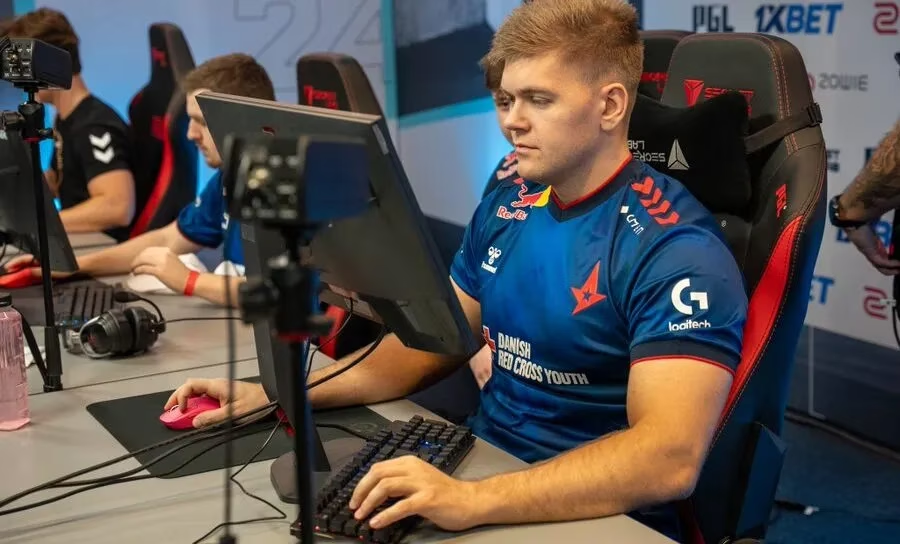
The RMR Debacle That Broke the Camel’s Back
Astralis’ road to Copenhagen ended in the EU RMR Decider against 9Pandas. A 0-2 loss. No miracle run. No storybook ending. For a team that once defined Counter-Strike: Global Offensive, missing the first CS2 Major felt less like a stumble and more like a fall. The Major dream did not quietly fade—it packed its bags and left the building.
BlameF had been both a rifler and, for a stretch, the in-game leader. When gla1ve parted ways with the organization, blameF stepped into the captain’s chair. The team found flashes of success, but the roster carousel kept spinning. Players came, players went, and stability remained elusive. The Copenhagen failure was the final straw.
BlameF’s own message was short, honest, and forward-looking. He thanked Astralis and wished his teammates luck. He also made his next move clear: he wanted to keep playing as soon as possible, but as a rifler—not as an IGL. Any organization interested would need to discuss a contract buyout, since his deal ran through the end of 2025. In 2026, that contract has long since reached its endpoint, making the bench move look even more like a clean break between two eras.
A New Voice in the Coach’s Chair
Ruggah’s arrival brought a different kind of energy. The Danish coach called signing with Astralis “one of the greatest achievements imaginable.” He praised the organization’s refusal to back down, even when headwinds hit. He admitted the team side had been unfulfilled in recent years, but he saw huge potential in the group. That mix of respect and realism was exactly what Astralis needed. No sugarcoating it: the project required patience, structure, and a coach who could turn five talented individuals into a unit.
The Roster at a Glance
| Role | Player |
|---|---|
| Rifler | Nicolai “device” Reedtz |
| Rifler | Martin “stavn” Lund |
| Benched | Benjamin “blameF” Bremer |
| Rifler | Jakob “jabbi” Nygaard |
| Rifler | Victor “Staehr” Staehr |
| Head Coach | Casper “ruggah” Due |
On paper, the names still sparkle. Device is one of the most decorated AWPers in Counter-Strike history. Stavn and jabbi arrived with high expectations. Staehr represented the next generation. Yet paper does not win Majors. Chemistry does. Trust does. And Astralis had been running low on both.
Why the Move Mattered
For Astralis, benching blameF was not just a roster tweak. It was an admission. The team had tried to rebuild around a hybrid star and IGL, and the experiment had not produced the required results. In CS2, the game moved faster: MR12, economic pressure, utility-heavy executes, and split-second mid-round calls. A team without a settled identity could be punished in an instant. The RMR loss to 9Pandas was that punishment.
Fast forward to 2026, and the decision looks like a pivot point. Astralis’ legacy still casts a long shadow. Fans still expect excellence. But the organization has had to accept that past glory does not buy present victories. Ruggah’s job was never just to call timeouts. It was to rebuild belief. BlameF’s job, meanwhile, became finding a new home where he could focus on rifling and let someone else carry the IGL burden.
Could it have worked out differently? Maybe. If Astralis had qualified for Copenhagen, the story might have been about redemption. Instead, it became a story about consequence. The bench, the coaching change, the buyout chatter—all of it flowed from one brutal series. That one stung, and everyone in the server knew it.
What Came Next
BlameF made it clear he was not retiring. He wanted to compete, and he wanted to do it with a rifle in hand. Organizations in need of a proven fragger were put on notice. Astralis, for its part, handed the keys to ruggah and asked him to steady a ship that had been rocking for years. The roster still had device, stavn, jabbi, and Staehr. The potential was there. The question was whether the new voice could unlock it.
By 2026, the Counter-Strike landscape has shifted again. New Major winners have been crowned. New rivalries have formed. Yet the Astralis-blameF split remains a useful lesson: even legendary organizations must sometimes make painful cuts. Benching a star is never easy. Signing a coach is never a cure-all. But doing nothing after a Major miss? That is how eras end quietly.
Let’s be real: Astralis did not bench blameF because they stopped believing in his aim. They did it because the puzzle no longer fit. Ruggah did not sign on because the job was easy. He signed because the challenge was enormous. And blameF did not ask for a new start because he lacked confidence. He asked because he still had something to prove.
For now, the story is one of transition. Astralis moved on. BlameF moved forward. Ruggah stepped into one of the most pressure-filled jobs in Danish esports. The Major dream for Copenhagen was gone, but the fight for the future was just beginning. And in Counter-Strike, the future always arrives faster than anyone expects. 🎯