As a lifelong gamer who's seen trends come and go like fleeting ghosts in a digital machine, I find myself reflecting on Activision's journey with a mix of nostalgia and reverence. It's genuinely amusing to remember that this now-colossal entity began as a rebellious underdog, challenging Atari's first-party monopoly by pioneering third-party development. Before their 2008 merger with Vivendi Games reshaped their identity, Activision cultivated a garden of pure, unadulterated classics that felt less like corporate products and more like passionate labors of love. These titles weren't just games; they were foundational experiences, each one a unique cog in the complex clockwork of my gaming memories. Join me as I revisit ten of these pre-merger masterpieces that, even in 2026, continue to cast long shadows over the industry, their legacies preserved like insects in amber.
10 Kaboom! (1981)
Many will champion Pitfall! as Activision's Atari 2600 crown jewel, but time has been less kind to its blocky jumps than to the timeless, frantic joy of Kaboom!. This game was a revelation in tactile feedback. Using the paddle controller to maneuver your bucket and catch falling bombs felt as smooth as spreading warm butter on fresh toast, a perfect harmony between input and on-screen action. The early stages lull you into a rhythm before the speed escalates into pure, pixelated chaos. True mastery at the highest speeds felt less like gaming and more like conducting a symphony of falling pixels, each catch a note in a perfect score. The experience is fundamentally tied to that specific hardware; playing it on anything other than a paddle controller is like trying to appreciate a fine wine through a stuffy nose—you get the idea, but none of the magic.
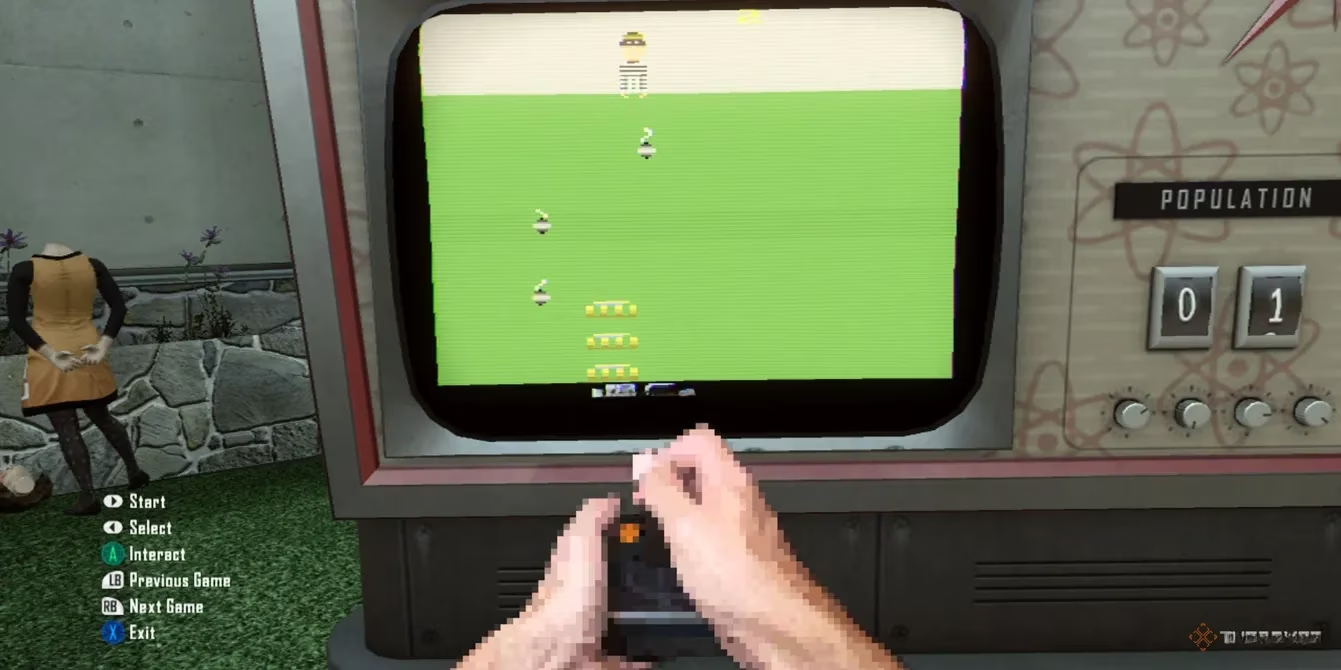
Platforms: Atari 2600, Atari 5200, GBA, PlayStation, PlayStation 2, iOS, Android
9 Die Hard (1991)
The NES library is a graveyard of dreadful licensed games, but Die Hard stands apart like a diamond in a coal mine. This title was shockingly ambitious for its era. The freedom it offered was staggering: roam the Nakatomi Plaza, take out 40 terrorists, and complete objectives in any order you saw fit. It featured multiple story paths, hidden optional scenes, and even a brilliantly programmed game-over scenario if you and Hans Gruber fatally shot each other simultaneously—a narrative depth unheard of on the platform. Playing it felt like being given the keys to a meticulously crafted dollhouse of chaos, where every room held a new surprise. It remains a wildly unique hidden gem, a testament to design bravery on constrained hardware.
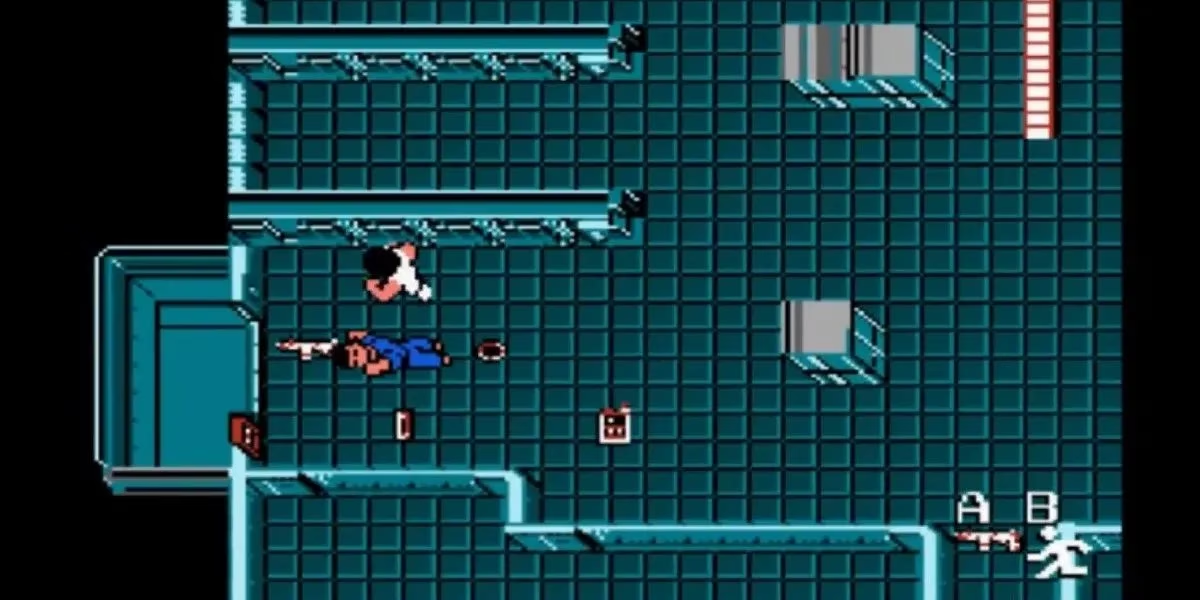
Platform: NES
8 MechWarrior 2: 31st Century Combat (1995)
When the conversation turns to mech combat simulators, MechWarrior 2: 31st Century Combat is the titan that stomps into the room. Published by Activision, this sequel didn't just improve upon its predecessor; it rendered it obsolete. The leap in graphics, sound design, and the sheer sense of piloting a multi-ton war machine was monumental. The cockpit view, the shudder of your 'Mech's frame under fire, the strategic heat management—it all coalesced into an immersive experience that felt less like playing a game and more like surviving a metal ballet of destruction. Its influence rippled through the genre for years, setting a benchmark that few contemporaries could reach. Revisiting it today is like opening a time capsule to the golden age of PC gaming, where ambition often outpaced technology in the most glorious ways.
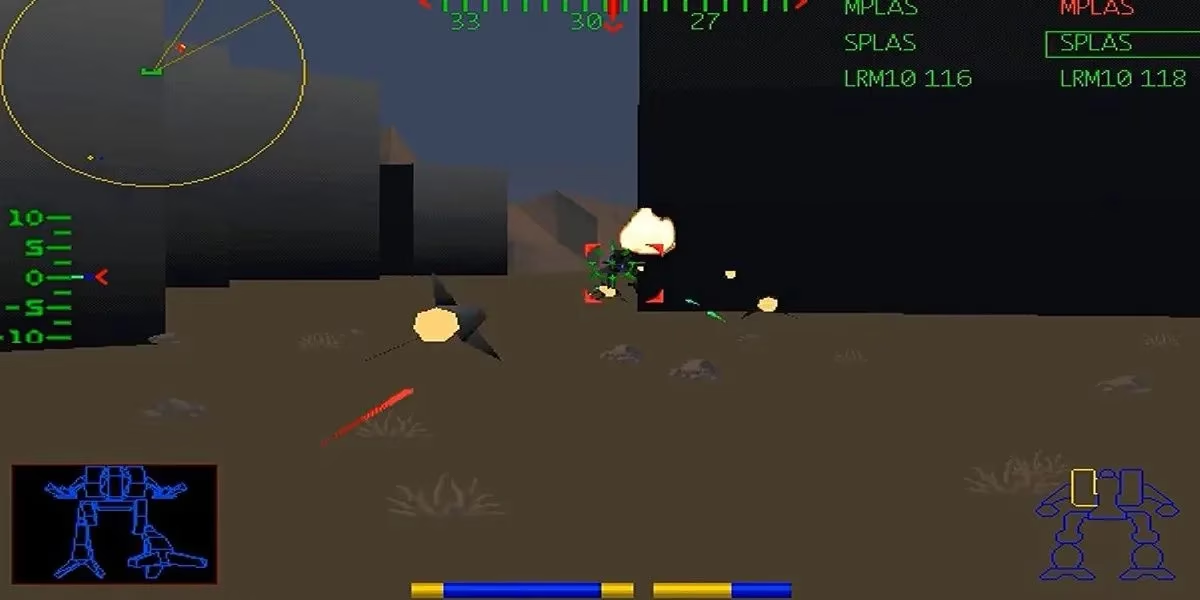
Platforms: PC, Mac, PlayStation, Saturn
7 SiN (1998)
In the crowded arena of late-90s FPS titles, SiN carved out its own niche with a blade of sharp level design and unapologetic attitude. While Duke Nukem 3D often gets the praise for its spatial genius, SiN carried that torch forward. The levels, crafted by veterans like Richard Gray, were playgrounds of verticality and secret pathways. The shooting mechanics were satisfyingly chunky, but the true charm lay in its gloriously over-the-top, 90s-tastic story and characters. It was a world of cyberpunk tropes and cheesy one-liners delivered with absolute sincerity, making it a joy to play even today. Its planned remaster, SiN: Reloaded, seems lost to the digital ether, which only makes the original's gritty, charismatic appeal more precious.
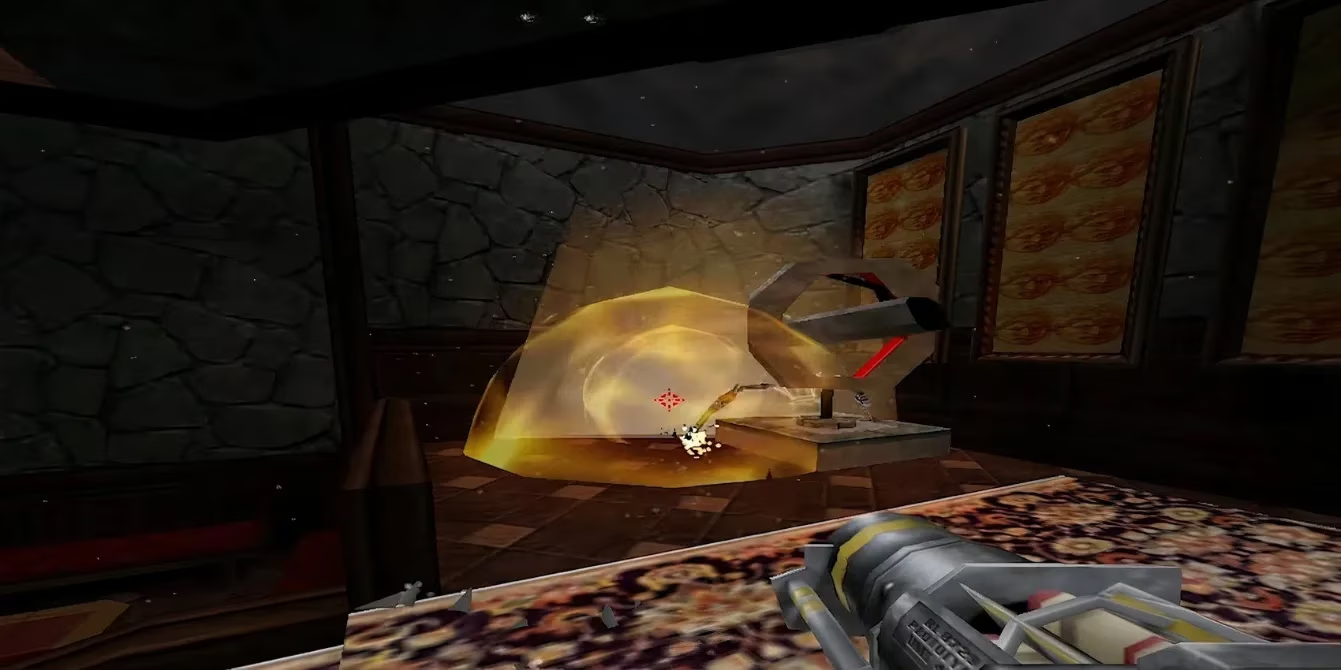
Platform: PC
6 Tony Hawk's Pro Skater 2x (2001)
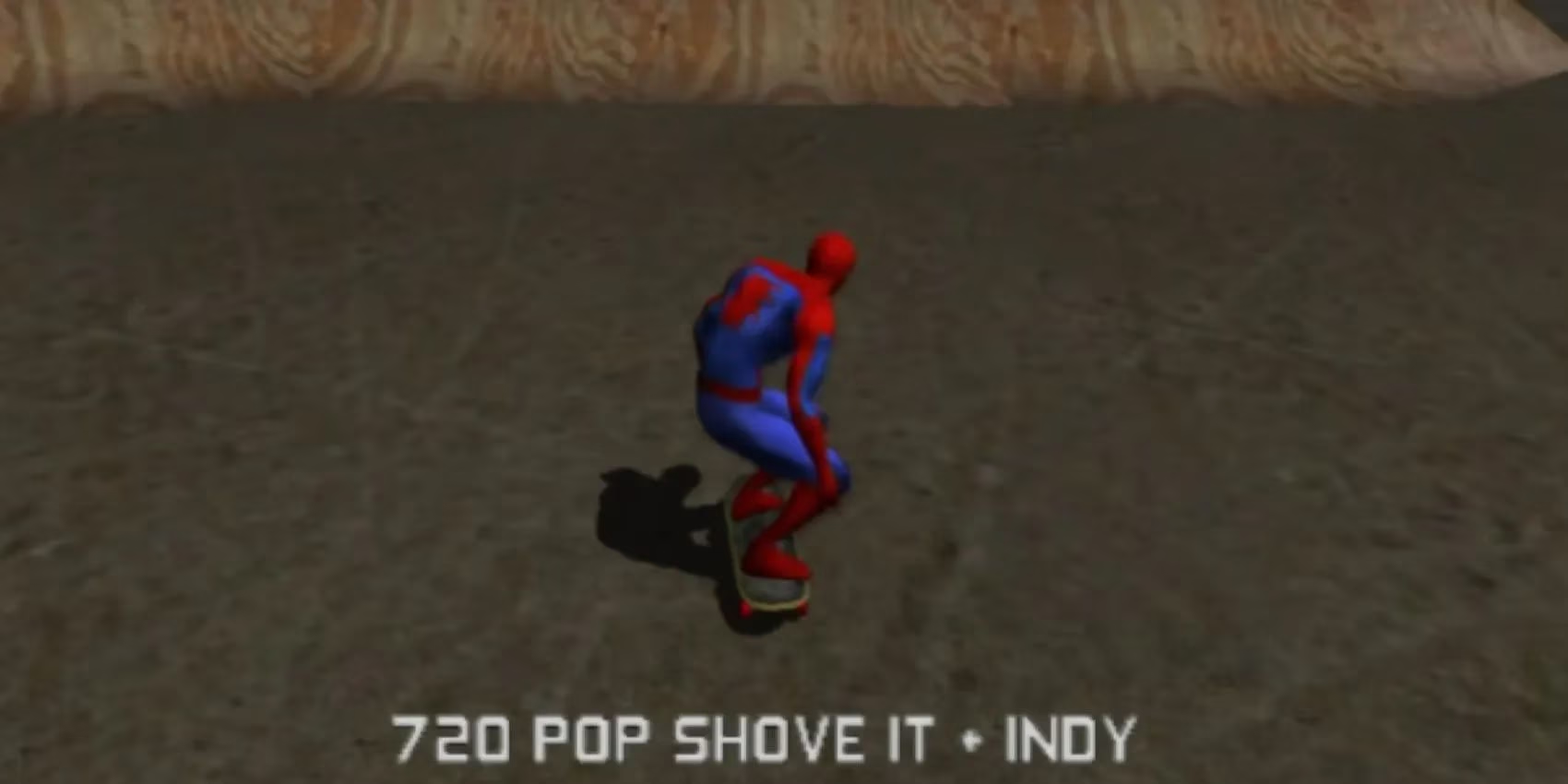
For purists seeking the original Tony Hawk's Pro Skater experience, the definitive version isn't the modern remake—it's Tony Hawk's Pro Skater 2x on the original Xbox. This package was the ultimate love letter to fans. It bundled the first two legendary games, presenting them with the best graphics the hardware could muster, and included every skater, even the beloved Spider-Man guest character. The addition of exclusive bonus levels was the icing on a perfectly baked cake. The controls, the soundtrack, the sheer joy of landing a million-point combo—it's all preserved here in its most polished, complete form. For Xbox collectors, it's an essential artifact, a perfect snapshot of skateboarding gaming's peak.
Platform: Xbox
5 Tony Hawk's Underground (2003)
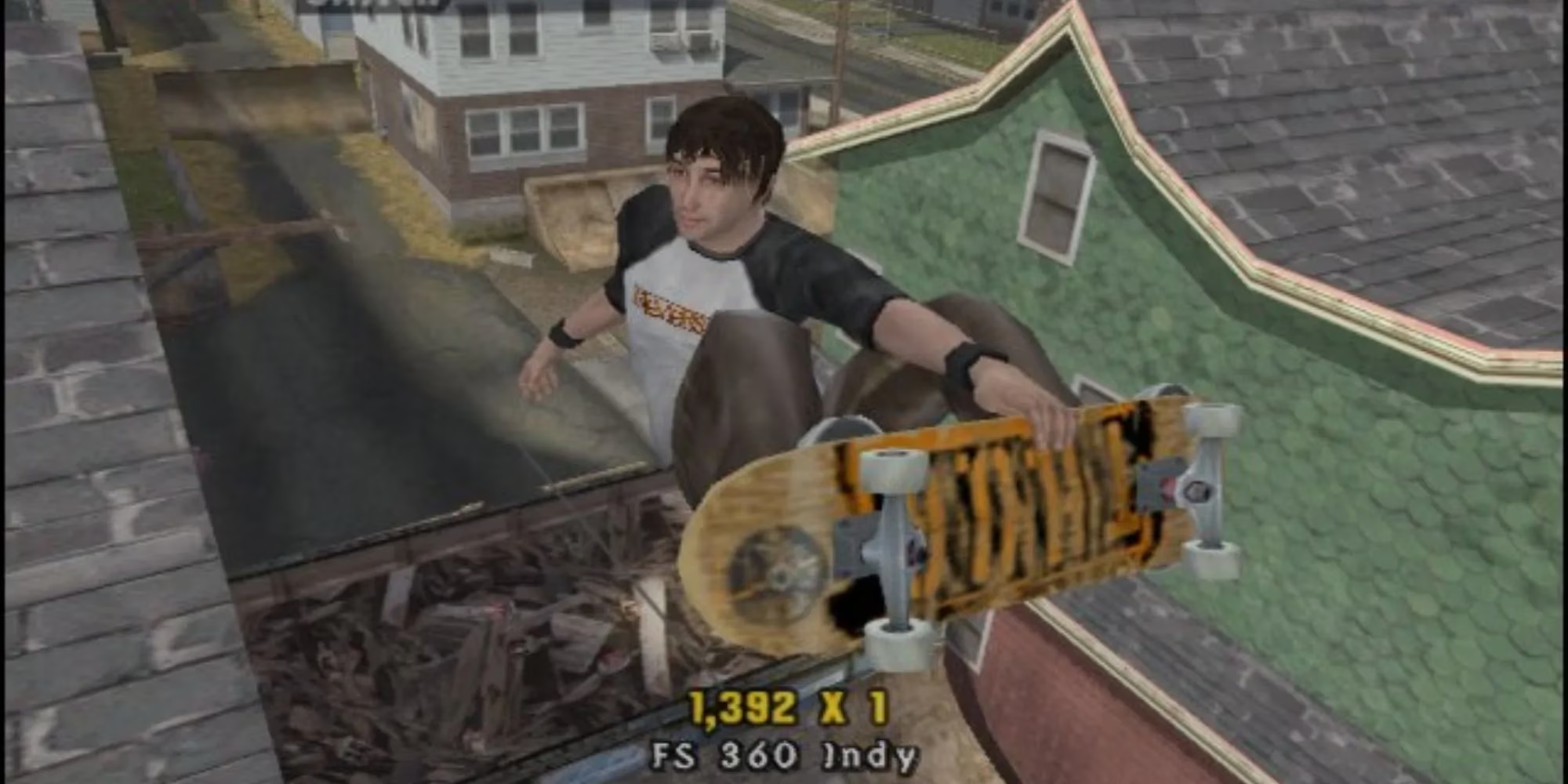
Tony Hawk's Underground is where the series truly grew up, weaving an actual, compelling narrative into the high-flying skate action. The story of rising from a local skater to a pro was surprisingly engaging, a coming-of-age tale told through kickflips and grinds. The levels were expansive and imaginative, encouraging exploration in ways previous games didn't, especially with the new ability to get off your board. The muscle memory this game builds is incredible; even after years away, your fingers remember the lines and combos as instinctively as a bird remembers its migration path. It represents the pinnacle of the classic Tony Hawk formula—ambitious, feature-rich, and endlessly replayable. The current industry climate makes new remasters unlikely, which only elevates this title's status as a preserved masterpiece.
Platforms: PlayStation 2, Xbox, GameCube, PC
4 True Crime: Streets of LA (2003)
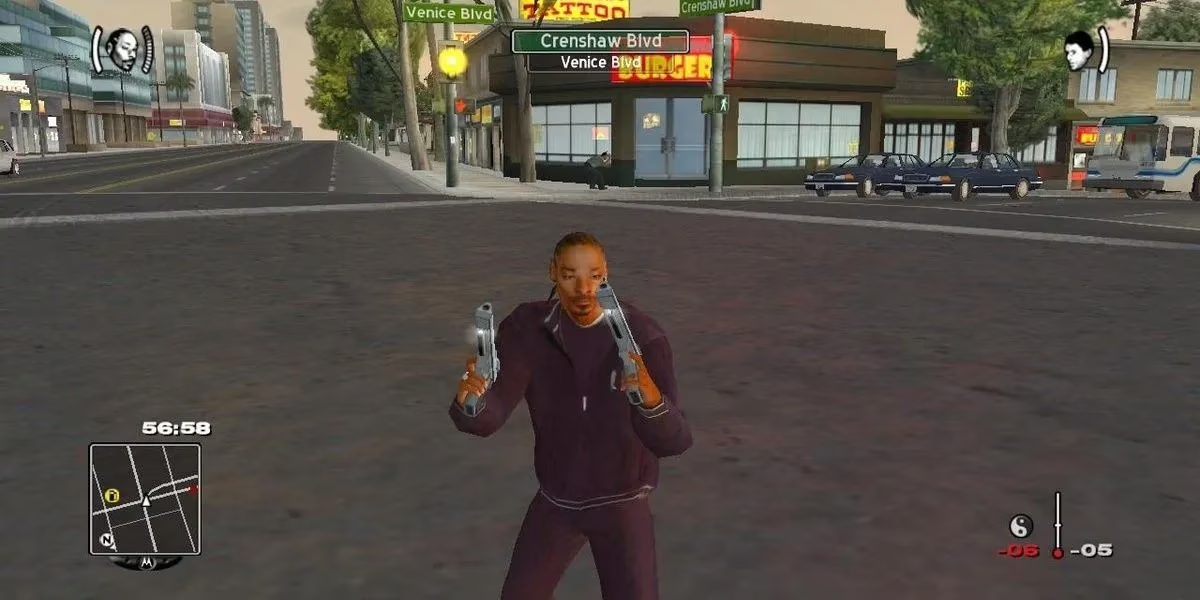
Before Grand Theft Auto V perfected its version of Los Santos, True Crime: Streets of LA dared to recreate Los Angeles with an almost obsessive geographical accuracy. This was its killer feature. You could drive from the Sunset Strip to the real-life LA Convention Center (then home of E3) with recognizable landmarks guiding your way. This attention to detail made the open world feel tangible and grounded, a living diorama of the city. While it had its rough edges, its ambition was clear: to offer a true cop's-eye view of LA, complete with martial arts combat and a branching storyline. Its DNA is visible in later, more polished open-world games, marking it as a true pioneer.
Platforms: PlayStation 2, Xbox, GameCube, PC, Mac
3 Spider-Man 2 (2004)
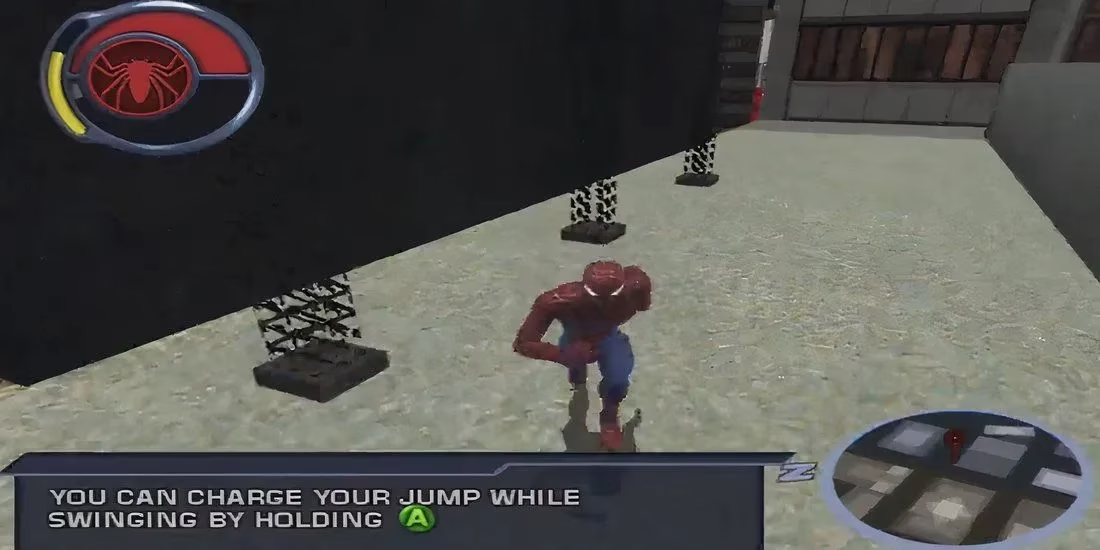
Before Batman donned his Arkham armor, Spider-Man 2 on the PS2 and Xbox was the undisputed king of superhero games. Why? It finally, perfectly, solved the puzzle of web-swinging. The physics-based system made traversing a scaled-down New York City an absolute joy—a feeling of freedom and momentum that was as exhilarating as catching a perfect wave and riding it forever. It wasn't just a movie tie-in; it was a celebration of Spider-Man lore, pulling in comic book villains and featuring voice acting from the film's cast. It set the standard for superhero movement and open-world design, proving that a licensed game could be a genre-defining masterpiece. Every time I swing through a virtual city in a modern game, I feel the ghost of this title's innovation guiding the way.
Platforms: PlayStation 2, Xbox, GameCube
2 Vampire: The Masquerade - Bloodlines (2004)
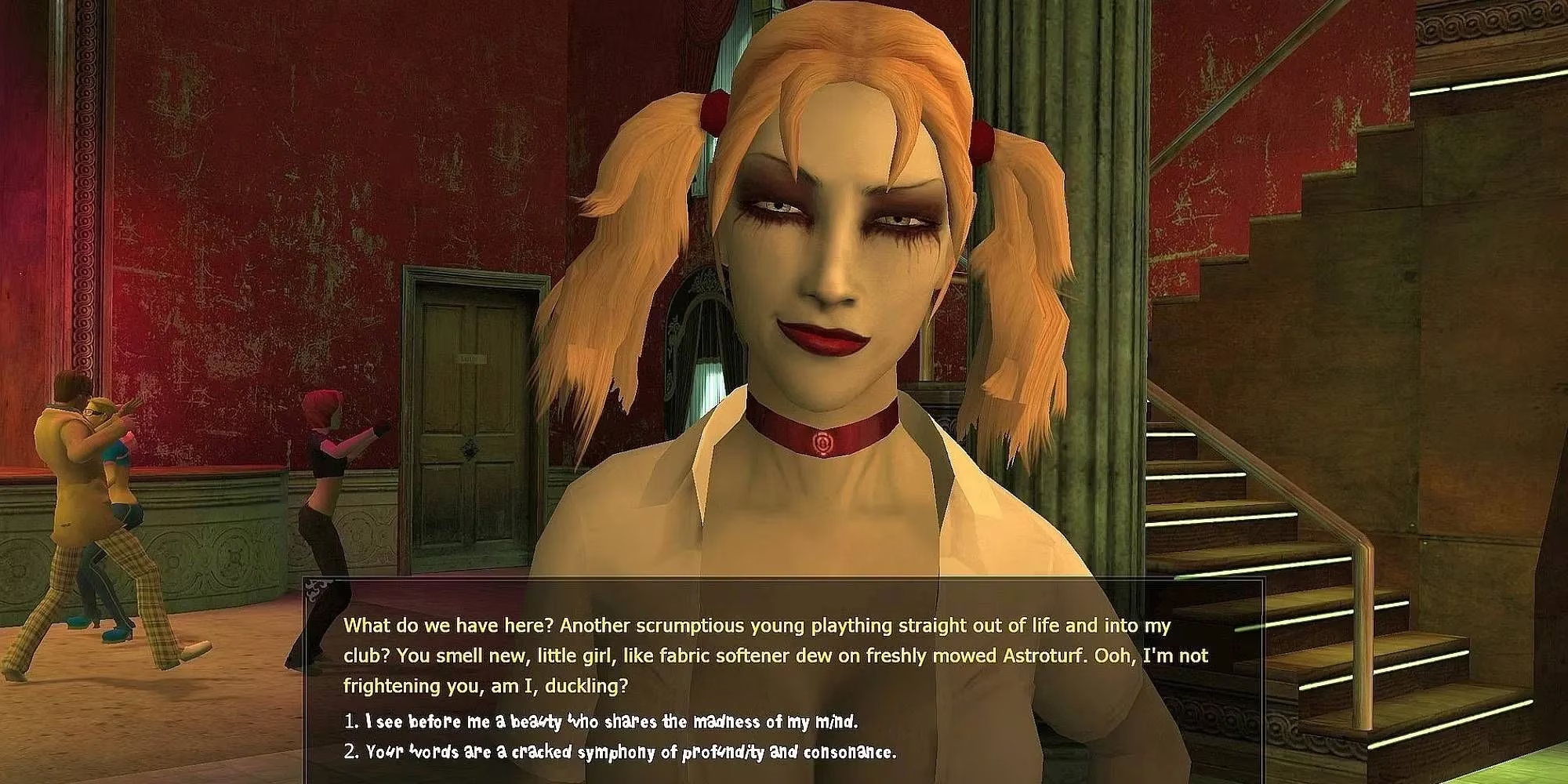
Vampire: The Masquerade - Bloodlines is more than a game; it's a cult, a lifestyle, a piece of interactive literature. Using Valve's Source Engine, it created a dark, decadent, and utterly absorbing vision of Los Angeles as a playground for warring vampire clans. Its RPG systems were deep, but its soul was in the writing and characters. From the smoky-voiced bar owner to the tragic, Malkavian insights, every interaction felt layered and meaningful. The narrative experience it offers is unique and unrepeatable, a quality it shares with titans like Silent Hill 2. Despite a notoriously buggy launch (forever patched by a dedicated fan community), its world, atmosphere, and storytelling have cemented it as a timeless PC classic that players in 2026 still discover and cherish.
Platform: PC
1 Call of Duty 4: Modern Warfare (2007)
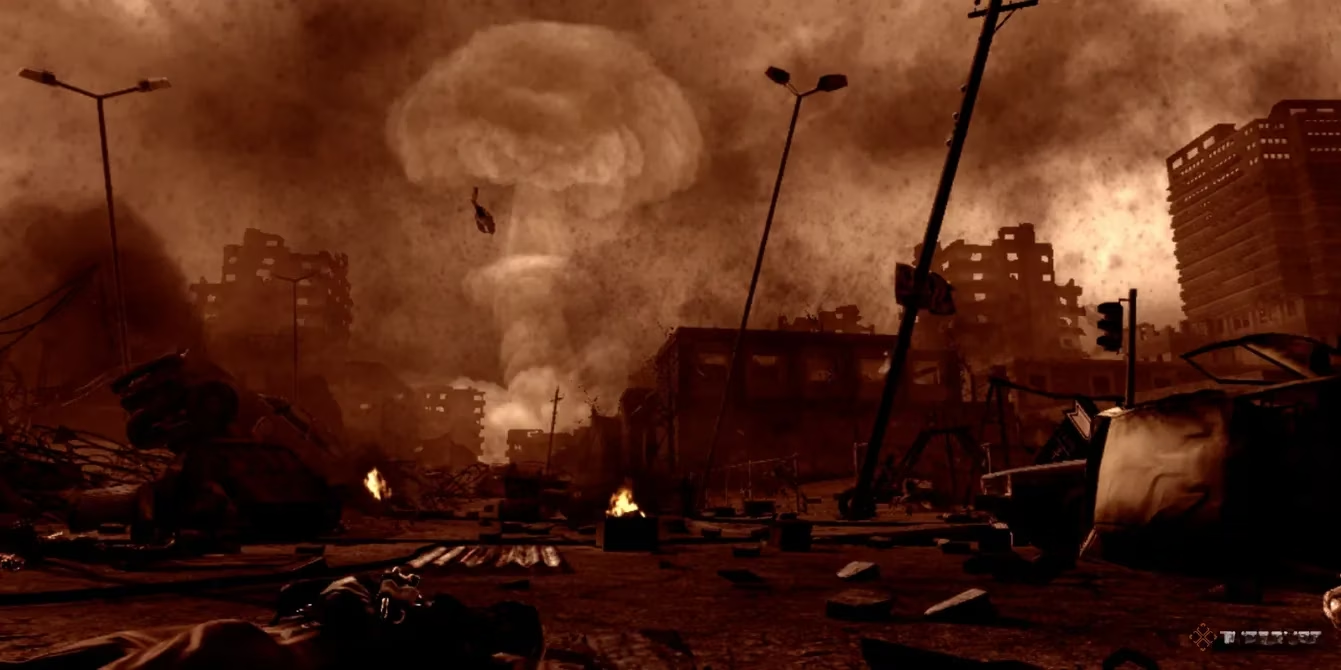
And here we are at the summit. Call of Duty 4: Modern Warfare wasn't just a great game; it was a cultural reset for the entire first-person shooter genre. Its campaign was a cinematic rollercoaster, delivering moments like 'All Ghillied Up' and the shocking nuke sequence—a moment that hit players with the disorienting force of a suddenly snapped guitar string. But its true revolution was multiplayer. It introduced a seamless progression system, addictive create-a-class mechanics, and a map roster so flawless it's still studied today. It single-handedly shifted the genre's focus from historical battles to modern warfare, creating a blueprint that countless games would follow for over a decade. As the last major classic from the pure Activision era before the merger, it stands as a monumental achievement, a perfect storm of design, timing, and execution that changed gaming forever.
Platforms: Xbox 360, Xbox One, PlayStation 3, PlayStation 4, Wii, PC, Mac
Looking back from 2026, this curated list of pre-merger Activision games feels like a tour through a museum of digital evolution. Each title, from the simple panic of Kaboom! to the genre-defining scope of Modern Warfare, represents a bold step forward. They remind us that before quarterly earnings reports and live-service models, games were often wild experiments, passionate projects that defined eras and shaped tastes. These classics are more than just entries in a catalog; they are the foundational layers of my—and many others'—gaming identity, proving that the best interactive experiences are truly timeless.