Every single week, the team behind PUBG: BATTLEGROUNDS pulls back the curtain just a little. They publish a list—a stark, asterisked roster of in-game nicknames that tells its own silent story. The most recent wave, covering December 15th through the 21st, 2025, is no different. Behind those masked first three letters lie accounts that will never drop into Erangel or Miramar again. It’s a permanent goodbye, delivered by the anti-cheat team, and a reminder that the fight for fairness never really pauses.
The list itself is a blunt instrument. PUBG reveals only the altered nicknames, stripping away everything but the consequence. You won’t find flashy stats, the hours sunk, or the specific cheat that tripped the wire. You’ll just see a string of identities replaced with asterisks—like fictional prisoners in a public report. Yet for fellow players, it’s a small catharsis. Someone who might have ruined a top-ten finish with a burst of impossible recoil is now out of the queue. That knowledge alone keeps a segment of the community checking the lists as ritualistically as their own stats.
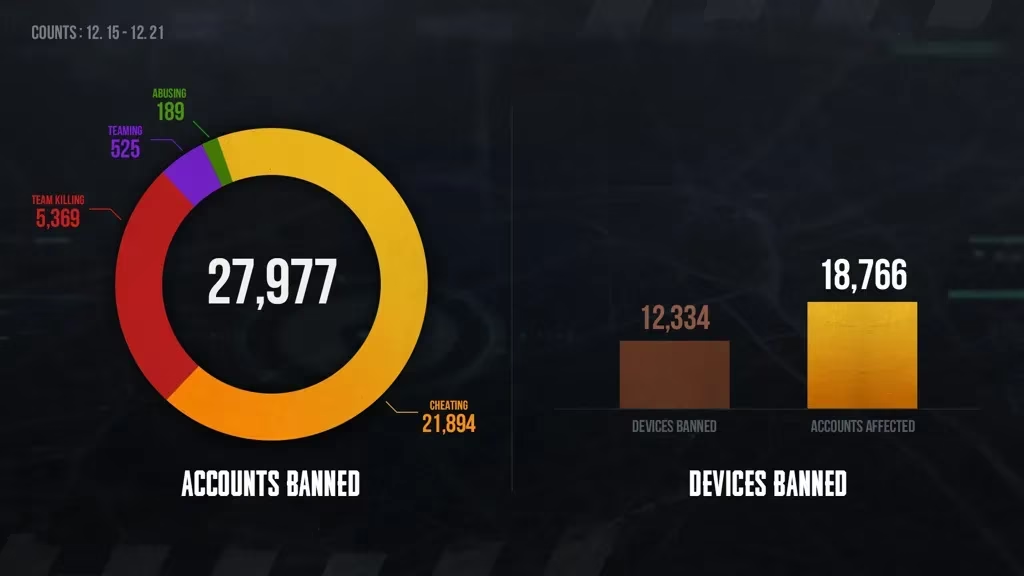
But why does a game that launched back in 2017 still need such public accountability in 2026? Because the cat-and-mouse game with illegal software never ended. As detection tools grow sharper, cheat developers simply burrow deeper. Some tools now try to mimic human reaction times or inject only at the exact moment of firing, avoiding constant memory scans. This is why the investigation period matters—note that the bans we see from that December week were not necessarily triggered on the exact dates players thought they got away with something. Some cheats were uncovered through delayed forensic analysis, behavioral models, and cross-referencing replays. A player might have used a subtle wallhack in early December, felt safe, and then found themselves locked out just before the holidays. The anti-cheat team’s patience is a weapon.
PUBG’s approach isn’t just reactive, however. There’s a quiet insistence on prevention woven into every announcement. The notice that accompanied the December list stressed something that can feel like an afterthought but is actually a shield: Steam Guard Mobile Authenticator. It reads almost like a public service announcement nestled between warnings about illegal software. Signing up for that extra layer of security doesn’t just protect your cosmetics and BattleStat progress from hijackers; it also prevents a scenario that’s depressingly common. A compromised account can be sold and then loaded with cheats by a buyer who has no stake in the original owner’s reputation. When that account gets banned, the genuine player awakens to a permanent loss they didn’t cause. Setting up the authenticator is a simple, almost boring act of account hygiene that can block a world of pain later.
What about the player on the ground, though? The squad member who suddenly sees a teammate snap-aiming from Pochinki to the hills above? The game’s advice remains consistent: the in-game report button is the first and most direct tap on the anti-cheat team’s shoulder. A real-time flag from multiple players in a match elevates the suspect’s data to a higher priority bucket. And if that in-game report doesn’t feel like enough, or if the suspicion spans multiple matches, the support team stands ready to examine additional evidence. That human layer—actual staff reviewing clips and logs—still exists because no automated system is flawless. A notorious streamer might get mass-reported out of spite; a clever cheater might toggle off just before the algorithm checks. Human investigation fills the gaps.
The rhythm of these weekly ban reports, now stretching into 2026, has created an unexpected subculture. Players debate in Discord servers about whether ban totals are trending up or down. Some see a spike and celebrate the anti-cheat’s renewed vigilance; others see the same spike and worry that cheating is becoming more rampant. The truth is usually opaque, buried in proprietary data. What remains visible is the steady stream of asterisked names, each representing a silenced gun barrel, a wiped inventory, and a message that there is a cost to trying to outsmart the system. The December 2025 list might be old history by now, but the next list is already being compiled, pulling from fresh investigations and new detection methods that the team will never fully disclose. So the game rolls on. Drop in, loot up, keep your account secure, and if you see something unnatural in the death cam, hit that report button. The asterisks will claim the next batch soon enough.