I remember the first time I dropped into Urzikstan, the air thick with the scent of decay and the distant, guttural moans of the undead. It was 2026, and for the first time in my long history with this war, the entire expanse of a Warzone map was our playground, our purgatory, in this new Zombies mode. The landscape, once familiar from frantic battles against living foes, now held a different, more primordial terror. And amidst this chaos, a new rhythm emerged, dictated not just by survival, but by contracts. These pacts, offered by some unseen hand, became our lifeline, a structured path to earning the precious Essence that pulsed through this corrupted realm and pushing back the narrative darkness, one mission at a time. For a fireteam of three, they were the heartbeat of our incursions.
8. Deliver Cargo: The Solitary Pilgrimage
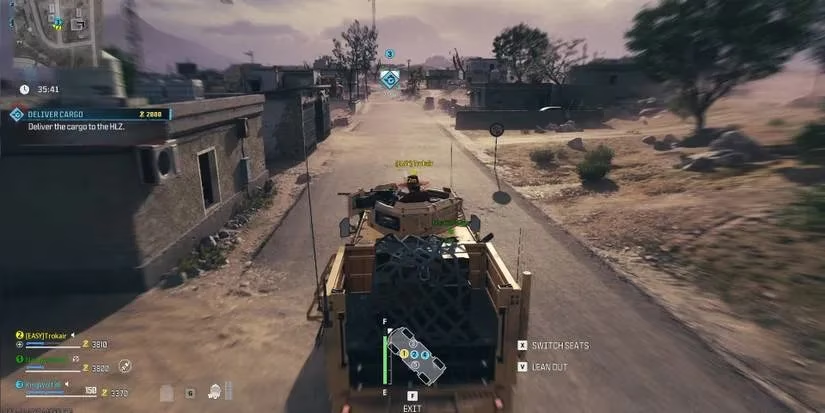
This was my sanctuary, my moment of solitary reflection. When the cacophony of the horde became too much, I sought the simplicity of the Deliver Cargo contract. It asks for no grand strategy, only a steady hand and a lead foot. The ritual is simple: find a garage, wrest a rugged vehicle from the cold, dead hands of mercenary guards, and chart a course to a distant beacon on my tactical map. The journey is a ballet of evasion, with mercenary helicopters casting long shadows and pursuing vehicles nipping at my heels. Yet, there is a profound peace in the roar of the engine, a sense of agency as I weave through the desolation. The reward is twofold: the Essence that fuels my progression, and the vehicle itself, a steel companion I could keep, one of the sturdiest mounts in this blighted land. It is the easiest pact, a testament to individual perseverance.
7. Spore Control: The Gardener of Ruin
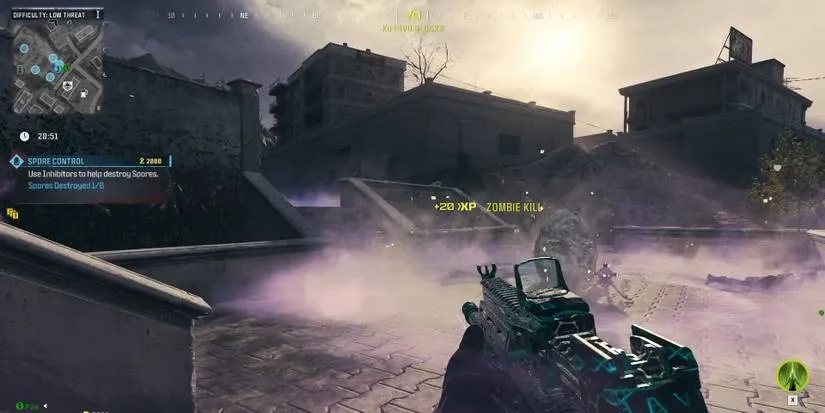
In the Low-Threat zones, where the dread is a simmer rather than a boil, the Spore Control contract feels like a grim form of gardening. My squad would fan out, collecting the peculiar Inhibitor devices that hummed with anti-Aether energy. Then, the map would bloom with six malignant markers—giant, pulsating eggs, the womb of the swarm. Our task was not immediate destruction, but patient, systemic decay. Placing one Inhibitor near each egg, we would watch as the device's aura slowly sapped the life from the grotesque orbs, turning them from a sickly purple to a vulnerable, hemorrhaging red. All the while, the ground would tremble with the approach of the undead, a relentless tide we had to hold back. It was a dance of patience and perimeter defense, easier in its execution than the horrific imagery suggested, a methodical cleansing of the land.
6. Outlast: The Vigil in the Warehouse
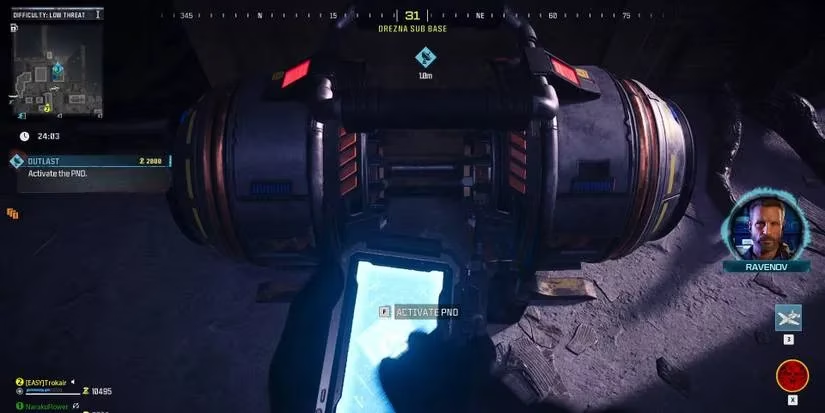
Among the contracts that demanded we hold our ground, Outlast was the most forgiving chapel. It led us to a vast warehouse, its interior choked with the ethereal, green mist of the Aether. Activating the analysis terminal within was like lighting a beacon in the storm. Then, the siege would begin. Zombies clawed their way in from every breach, but the warehouse's cavernous interior was our greatest ally. It granted space to maneuver, to kite, to create killing fields. Here, tactical tools became extensions of our will. Laying claymores and proximity mines at the entry points transformed the architecture into a deadly puzzle for the encroaching dead. A peculiar note of this vigil was the increased presence of Hellhounds—fiery, agile beasts that tested our reflexes. Yet, with room to breathe and plan, even a duo could weather this storm with grim efficiency.
5. Raid Weapon Stash: The Claustrophobic Prize
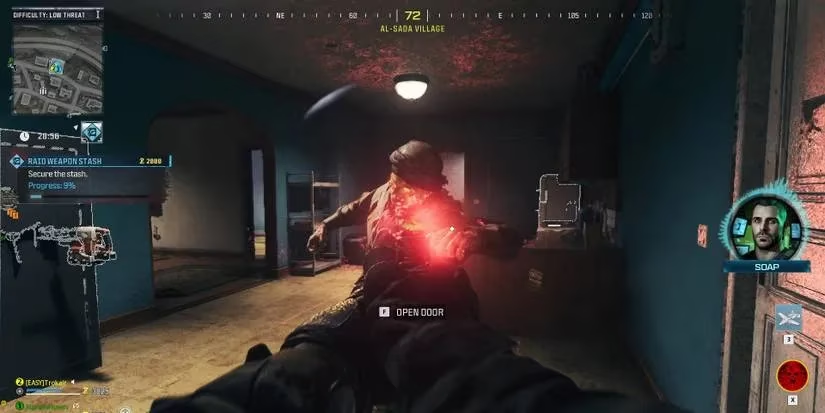
If Outlast was a cathedral, the Raid Weapon Stash was a tomb. This contract traded open space for desperate, close-quarters defense within the tight, suffocating corridors of a nondescript house. The objective was similar—guard a drilling device as it bored into a hidden cache—but the environment amplified every threat. Zombies funneled through narrow hallways and staircases, creating compressed waves of rotting flesh. In this confined hell, trap mines ceased to be tools and became salvation. A well-placed explosion in a chokepoint could disintegrate an entire wave in a cathartic blast. The reward, however, sweetened the terror. Beyond the standard Essence, the breached stash would yield one or two pristine weapons, a tangible upgrade to our arsenal pulled directly from the jaws of the undead.
4. Eliminate The Bounty: The Colossal Hunt
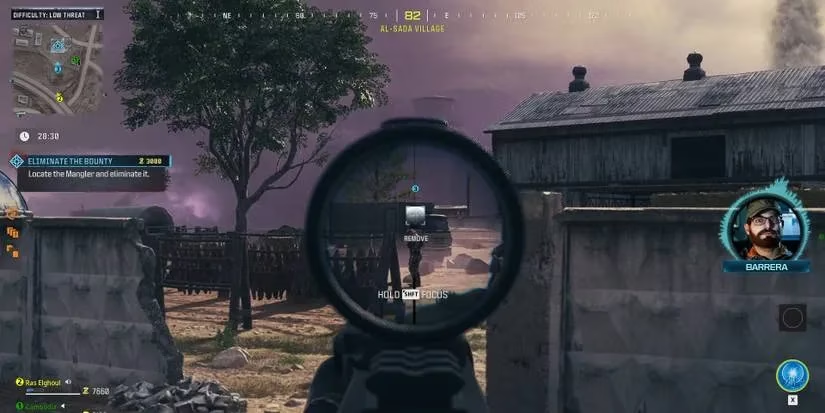
This contract was a declaration of war against a specific horror. Accepting the Bounty would paint a massive, uniquely powerful abomination on our maps—a behemoth that soaked up bullets like a sponge. In the verdant, lower-threat areas, it was a challenging hunt. But venturing into the amber and crimson hues of the Medium and High-Threat zones with such a target turned the hunt into a potential suicide mission. The titan was never alone; it served as a morbid lighthouse, attracting swarms of lesser zombies that sought to overwhelm us as we focused our fire. This was where the sustained, thunderous roar of an LMG became a prayer, and where the mystical enhancement of a Pack-A-Punched weapon was not a luxury, but a necessity for survival. Solo attempts were tales of folly; this was a contract that sang the hymn of the trio, requiring synchronized fire and unbreakable trust.
3. Aether Extractors: The Mercenary Gambit
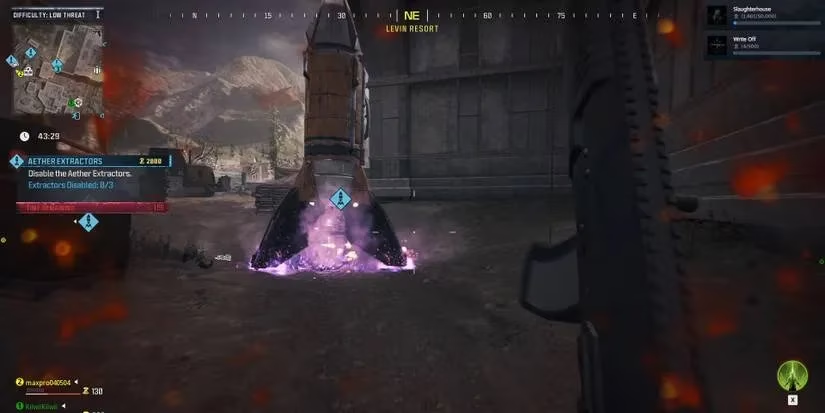
A chilling change of pace, the Aether Extractors contract reminded us that not all threats in Urzikstan were mindless. Here, our enemy was the cold, calculated fire of human mercenaries. The goal was to locate and disarm three of their humming Aether extraction devices. This shifted our entire paradigm. The run-and-gun chaos effective against zombies was a death sentence here. We traded shotguns and SMGs for the precise, distant language of Rifles and Sniper Rifles. Every corner was a potential ambush, every window a sniper's nest. The AI was shrewd and punishing, demanding cautious, tactical play—a game of hide, peek, and eliminate. Success meant watching a disarmed extractor erupt in a cascade of volatile energy, a small victory in a very intelligent war.
2. Escort: The Relentless Tide
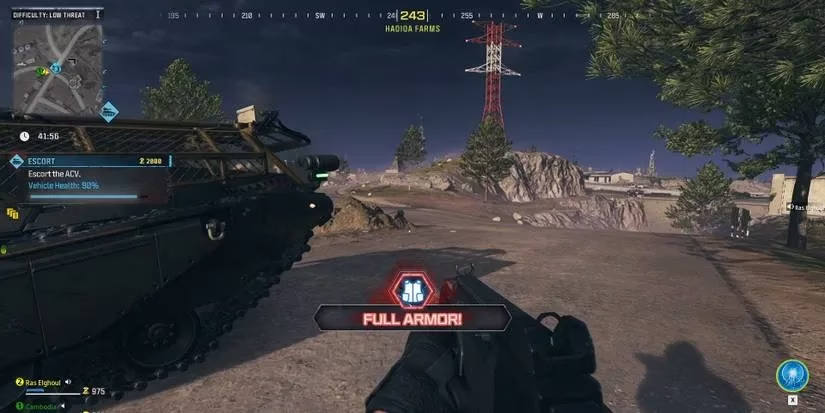
This was the zenith of undead pressure, the Escort. Our charge was not a point on a map, but a slow, grinding vehicle we had to shepherd on foot. It created a moving fortress of responsibility. We fought not just for our own lives, but for the integrity of our metallic ward. The horde it attracted was biblical in scale, a relentless, converging tide from every hill, every ruin, every shadow. Among the common shamblers, rarer, more deadly variants would appear, creatures usually reserved for the map's deepest, most dangerous regions. It was a chaotic, exhausting ballet of defense-in-motion. Deployable traps became our anchor points, allowing us to fortify a flank momentarily and redirect our fury to another breach. This contract was a pure, unadulterated test of endurance against the swarm.
1. Defend Ground Station: The Mercenary Onslaught
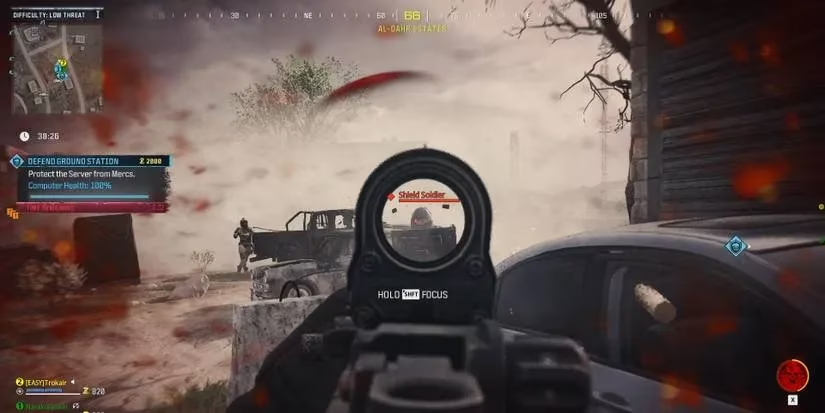
And finally, the crucible: Defend Ground Station. Ironically, the most difficult trial in the Zombies mode involved barely a zombie. This was a mercenary siege of the highest order. The ritual began by activating three peripheral antennas, then retreating to a central data uplink device. For two endless minutes, we had to hold that position as waves of highly trained, aggressive mercenaries descended. The true terror came in the form of shield-bearers—heavily armored units that advanced with implacable purpose, demanding focused team fire to break. In this maelstrom of grenades, gunfire, and advancing shields, trap mines were again the great equalizer, buying precious seconds to regroup. To attempt this alone was the stuff of nightmares. But with a coordinated trio, communicating, covering angles, and sharing the burden, it transformed into the most thrilling, pulse-pounding experience the mode had to offer—a symphony of coordinated defiance against impossible odds.
In the end, these contracts are more than mere tasks; they are the stanzas of an epic poem written in gunfire and Essence. They define our journey through the haunting, beautiful hellscape of Modern Warfare 3's Zombies, challenging us, rewarding us, and forever binding our fireteams in shared moments of terror and triumph.